The deployment, in detail How we built Victoria's Secret & PINK's install — operator to operator.
A long-form walkthrough of the brief, the hardware decisions, and the live result. The version we'd send another business owner if they asked us how this kind of program actually ships.
Inside the brief
When Victoria's Secret + PINK chose 640 Fifth Avenue for their Manhattan flagship, the address told us most of what we needed to know. Fifth Avenue and 51st Street is a four-million-pedestrian-a-month corridor — Saks across the street, Rockefeller Center two blocks south, the Olympic Tower next door. The brief was never going to be a generic retail signage program. The store had to read as flagship from the sidewalk, all the way through 24,000 square feet of shop floor and up into a dedicated event space on the upper floor.
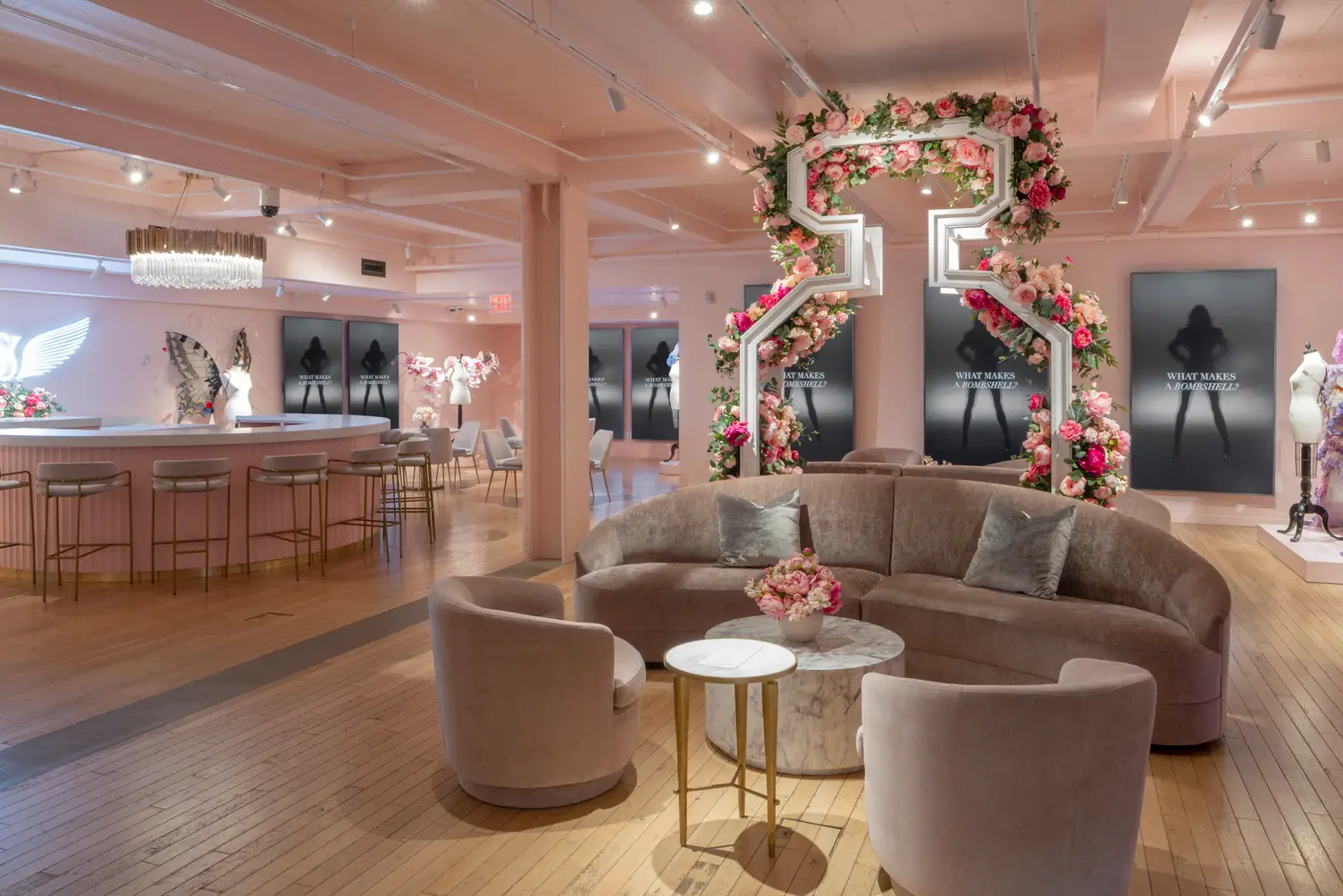
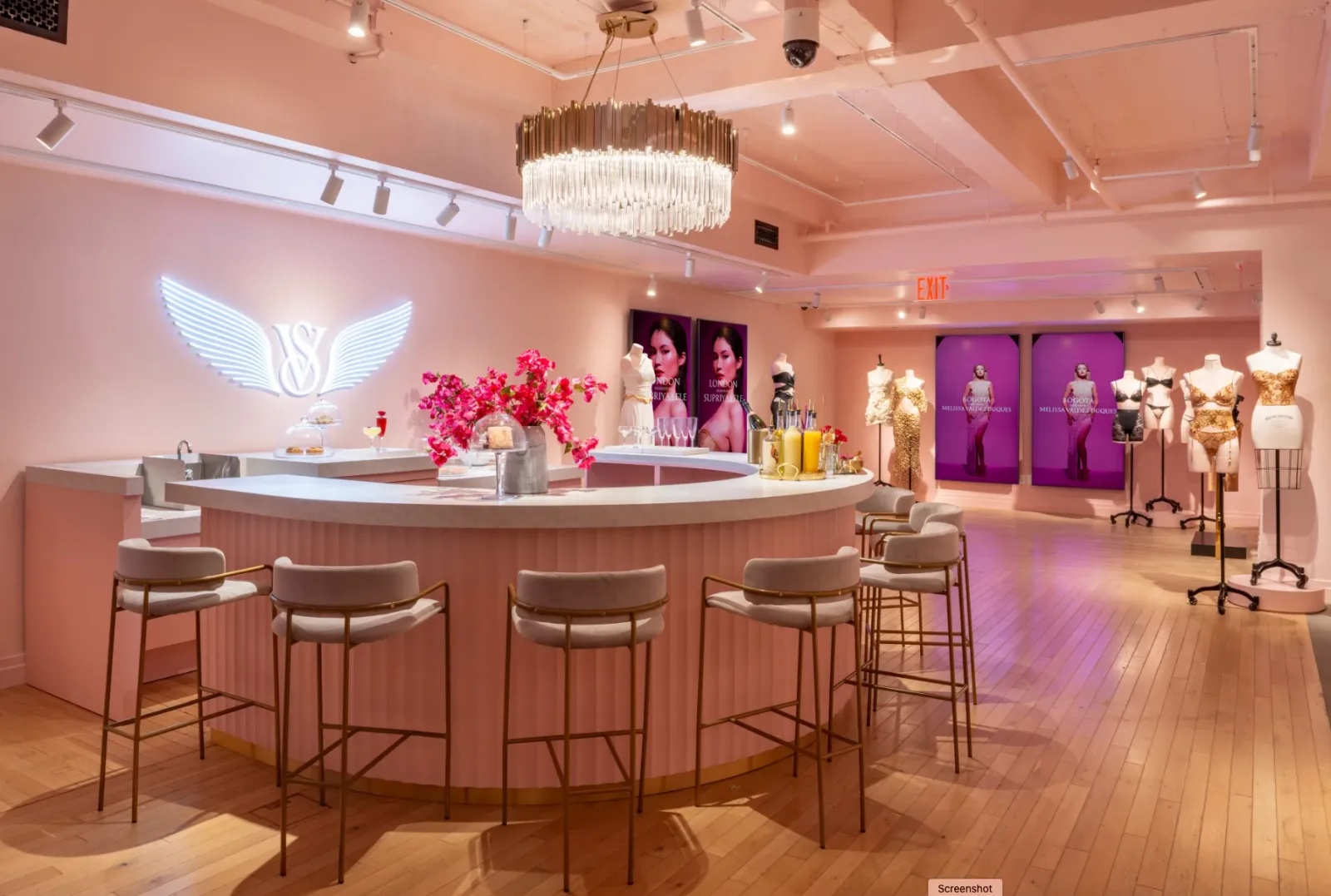
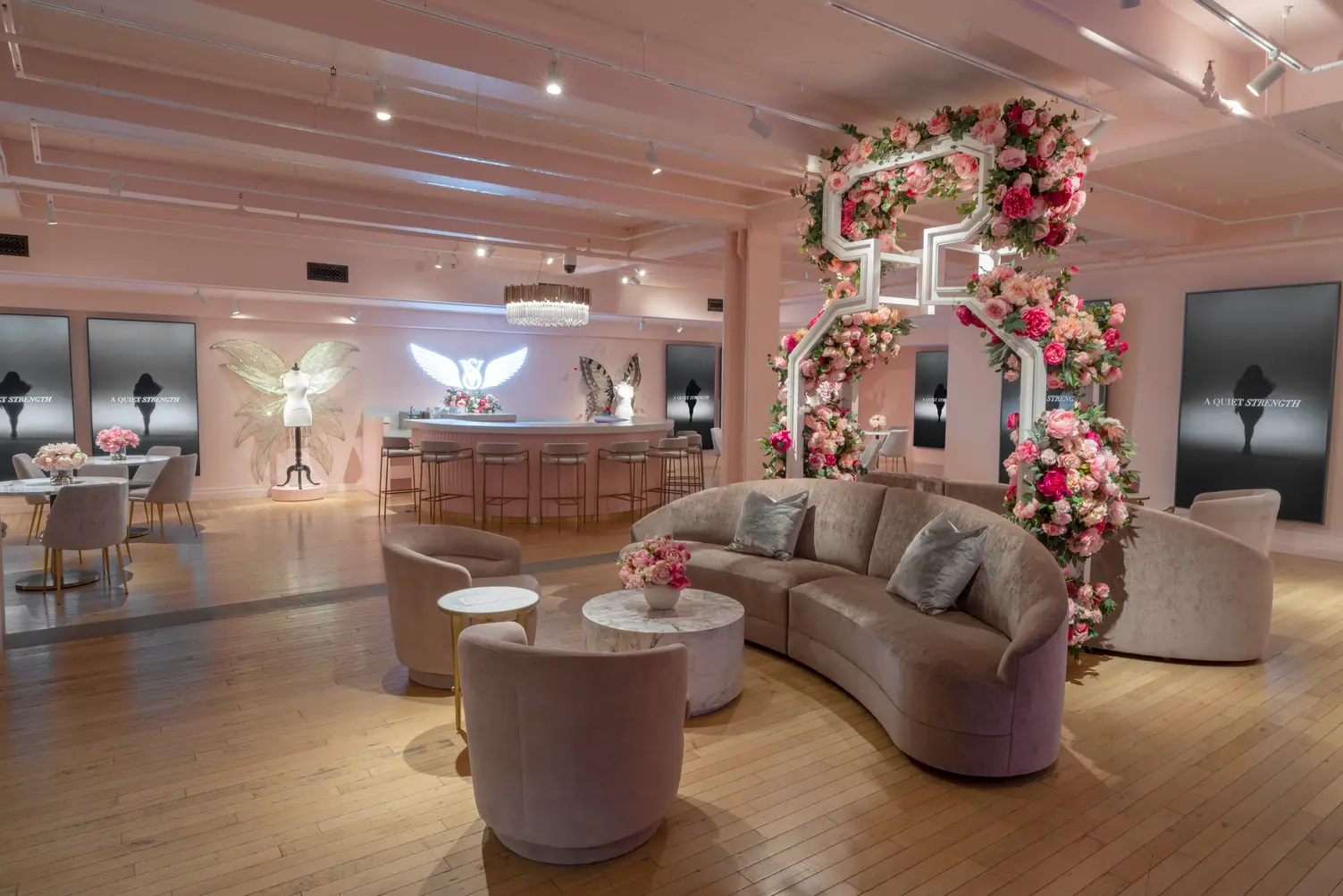
Two practical constraints shaped every decision after that. First, the upper floor was experiential — it would host launches, press events, and influencer activations on a rotating calendar, not just sit as static retail real estate. The signage there had to switch between an event-mode feed and a default brand-loop without an installer climbing a ladder. Second, the physical architecture was generous but specific: a curved bar set into the upper-floor lounge with a VIP seating area behind it, and high ceilings on the main retail floor that could carry 98-inch panels without feeling crowded. Portrait-orientation screens by the bar became a non-negotiable design element — that's where guests would actually sit, and the panel had to read at seated eye level.
Victoria's Secret + PINK was already working with two heavyweight design partners — MG2 on architecture and The Lionesque Group on the experiential retail program — and CrownTV joined the team specifically to own the digital screen estate end-to-end. Hardware spec, mounting, signal flow, CMS, and live-event content choreography all sat on our scope of work. The internal brand and events teams kept full creative ownership. We owned the system that made it possible to ship that creative to fifteen synchronized screens without a phone call to anyone in IT.
Inside the install
The hardware mix is the headline of the install: fifteen Samsung commercial displays — a combination of QM98 (98-inch 4K) and QM85C (85-inch 4K) panels — synchronized in groups of three. We chose two panel sizes deliberately. The QM98 carries the hero moments at the front of the main retail floor and the long sightlines from the entrance — those are screens you read from twenty feet away across a crowded floor on a Saturday afternoon. The QM85C sits where seated guests interact with content at closer range, including the upper-floor lounge near the bar. Both panels are commercial-grade and both run 4K — there is no consumer hardware anywhere in this install. A 24,000 sq ft Fifth Avenue flagship runs on commercial panels rated for 16-hour daily operation. Anything else fails in the first season.
Synchronization in groups of three is what gives the install its rhythm. A retail-only program would synchronize every screen on the floor as one big loop — the same content on every panel at the same moment. That works for a video wall, not for a flagship with five distinct zones across two floors. Grouping the screens in clusters of three lets the brand team treat each cluster as its own canvas: hero campaign on the main-floor cluster, secondary product story on the upper-floor brand wall, live event feed on the curved-bar cluster. When an event is running upstairs, the curved-bar cluster switches feeds independently while the rest of the store stays on the seasonal loop. The CrownTV Dashboard handles the cluster definitions, the schedules, and the override rules from one screen.
MG2 owned the architectural drawings and the millwork specifications; we joined those review cycles early so every display location had a power and signal route designed in, not bolted on afterward. The mounting hardware was specced with the upper-floor curved-bar geometry in mind — portrait orientation requires more thoughtful bracketing than landscape, especially with a 98-inch panel, and we co-engineered the back-of-house cabling so the signal paths never showed. The Lionesque Group ran the experiential program — we sized the event-feed switching latency against their content templates so the team could execute a launch cue from a tablet behind the bar without thinking about the technology.
The control plane is the CrownTV Cloud Dashboard. The brand team uploads creative, schedules cluster-level loops, and switches feeds in real time. There is no per-screen production process — content is published to a cluster and propagates to every member of that cluster instantly, frame-synchronized. Permissions are scoped: the in-store event team has runtime control over the upper-floor lounge cluster but cannot push to the main retail floor without sign-off. Our remote monitoring runs alongside, watching every panel for status, and the team in our New York operations center sees a fault before the in-store team does. That redundancy matters on Fifth Avenue — a black screen on the floor reads as a brand failure, and the response window has to be measured in minutes.
After go-live
The flagship opened with all fifteen screens live and synchronized in their grouped clusters from day one — that is the result that matters most. There was no soft launch with half the panels dark while the team caught up. The architecture decisions we made in the design phase — power-routed locations, pre-installed mounts, pre-tested cluster definitions in a staging environment that mirrored the floor plan — paid back in a clean go-live.
After opening, the day-to-day pattern is simple: the brand team schedules seasonal campaign loops from headquarters, the upper-floor cluster handles event days independently, and the rest of the screens run the standard creative without intervention. Real-time content updates ship from a desk to fifteen 4K panels on Fifth Avenue in under a minute. The events team has executed launches, press receptions, and brand activations on the upper floor with no signage-related delays. Our remote monitoring has caught two device-level issues since opening — both were resolved on the same business day, neither was visible to a customer on the floor.
The flagship is now a reference install for the brand. It is the proof we point to when retail clients ask whether their multi-zone, multi-feed, mixed-orientation program can be operated as one system from one dashboard. The answer is yes — we built that exact system on Fifth Avenue, and it has been running clean since opening day.