Video walls: configurations, hardware, and what flagship installs actually cost
A video wall is more than a row of TVs. It's a tiled canvas where the bezels, the mounts, the calibration, and the content all have to be engineered to read as a single image. Get any one of those wrong and you've shipped four screens, not one wall.
The visible difference is the seam. Consumer TV bezels run roughly 10mm. Mid-tier commercial panels run 3–5mm. bezel-tight commercial video-wall — the tile we ship for every video-wall install at CrownTV — runs 0.44mm tile-to-tile. At a 6-foot viewing distance the seams disappear and a horizontal pan reads as motion across one canvas, not as motion shearing across a window grid.
Standard configurations and what each is for
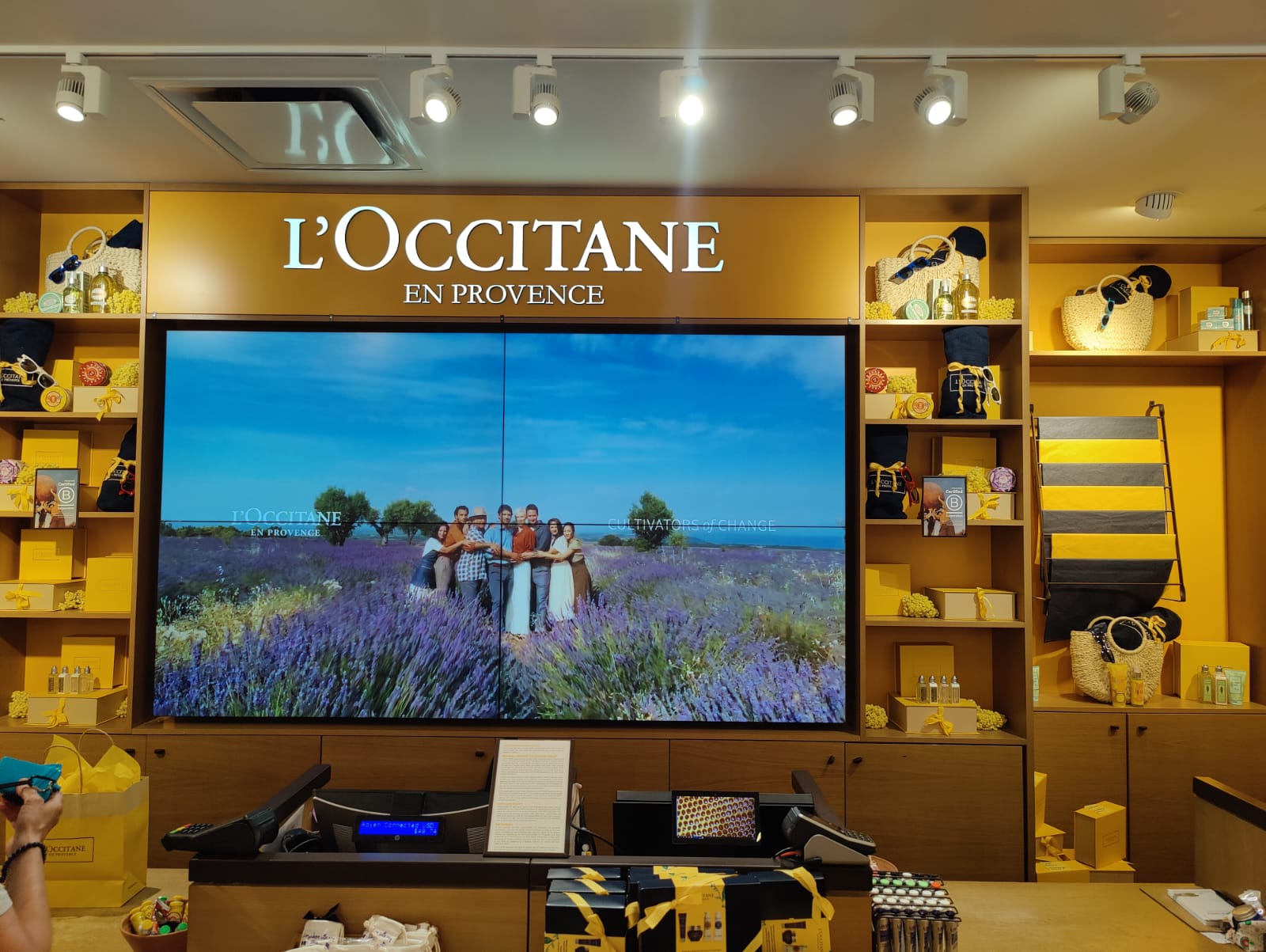
- 2×2 — the classic. Four 55″ tiles make a roughly 110″ canvas. Most retail flagship hero moments and corporate-lobby focal points land here. Hardware comes in around $15–25K plus install.
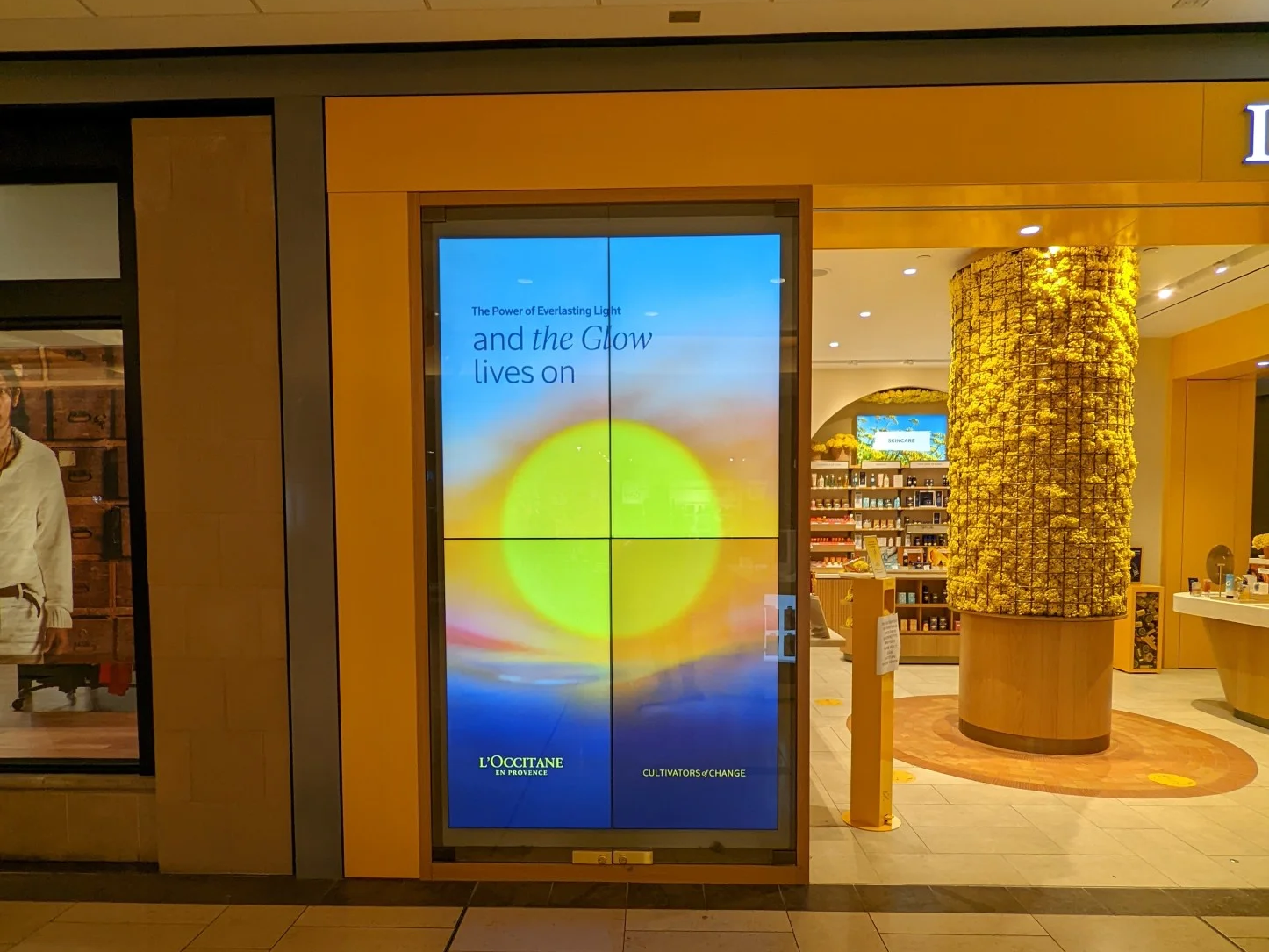
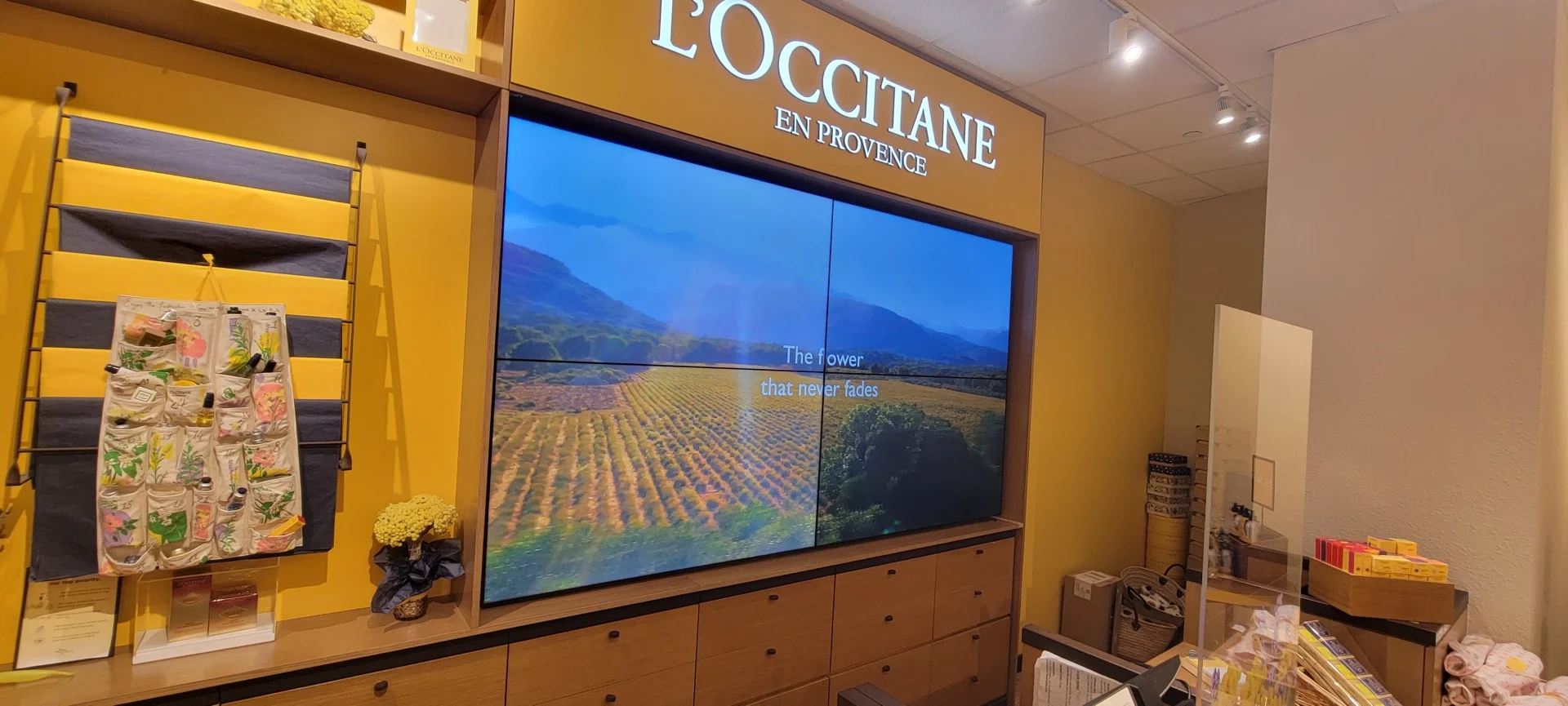
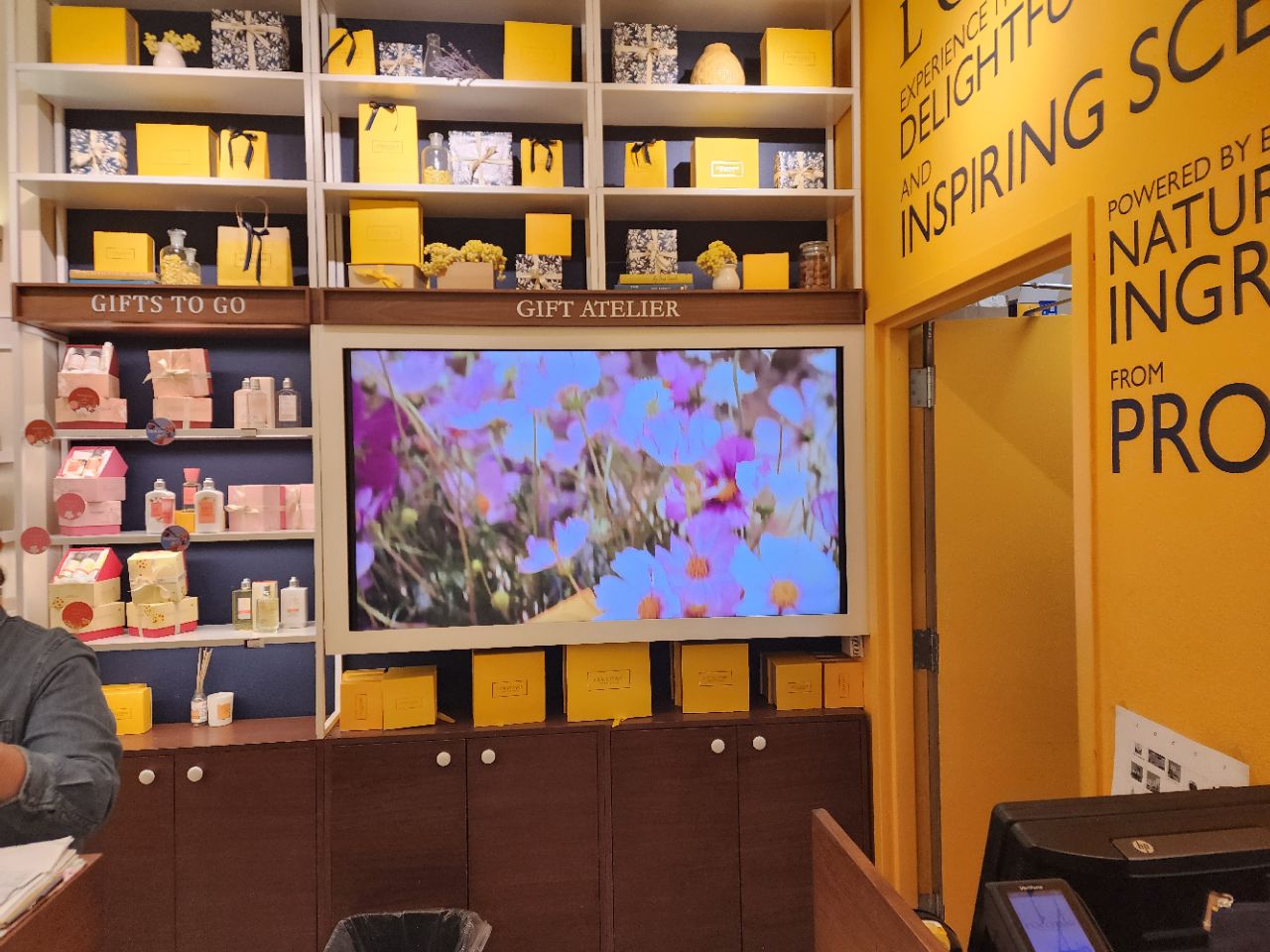
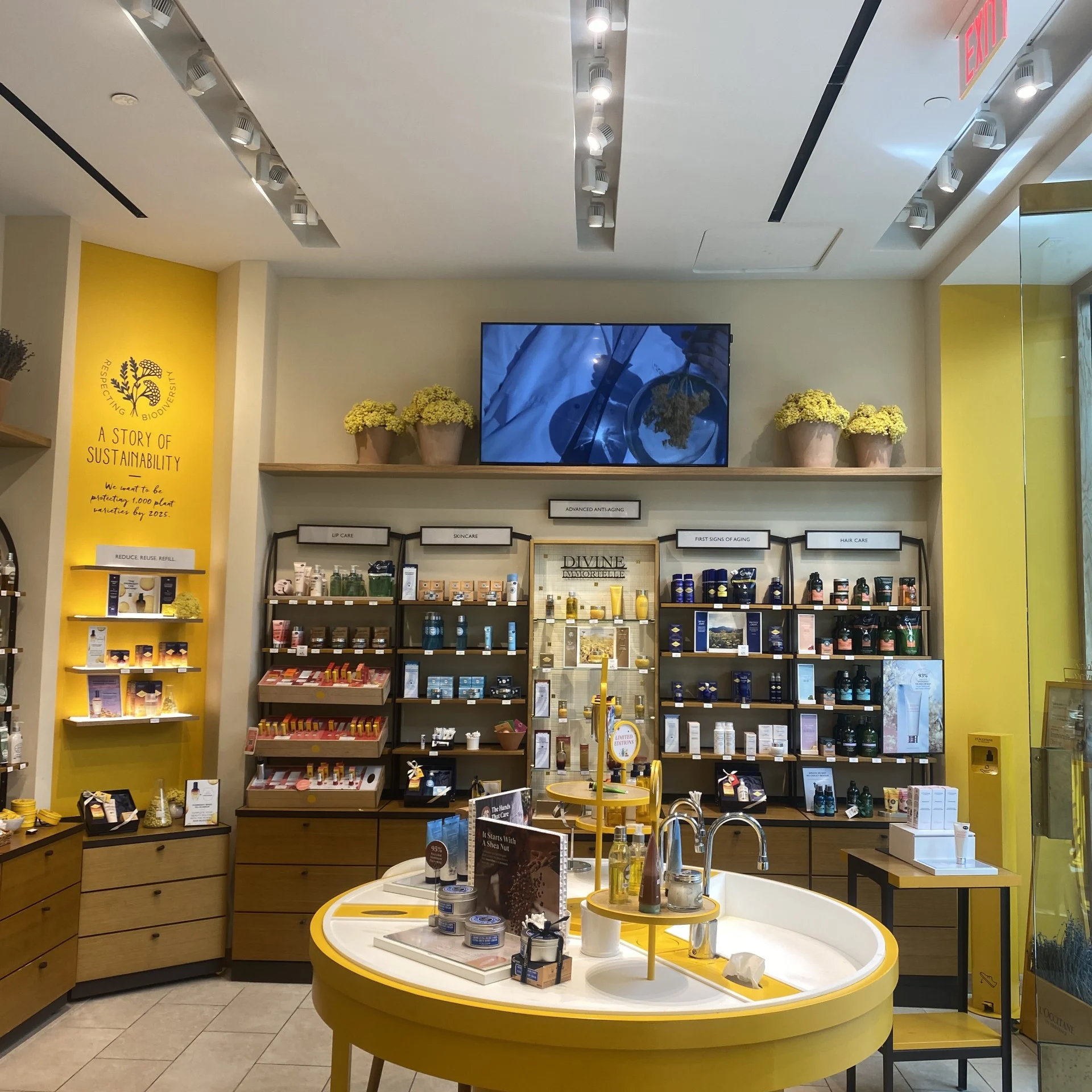
- 3×3 — flagship moment. Nine tiles make a roughly 165″ canvas. L'Occitane Fifth Avenue runs a hybrid 98″/85″ at this scale, Victoria's Secret Fifth Avenue runs a similar configuration. The right call when the wall is the brand surface, not the supporting cast.
- 1×3 strip — reception. Three 55″ panels in landscape behind a check-in desk make a 48:9 canvas that reads like a banner across the room. The cheapest hero moment a corporate building can buy.
- Custom and irregular — architectural. Tile wraps a column, breaks at a staircase, snakes around a feature wall. Scoped per project, calibrated per layout, content designed for the actual canvas.
What we've installed
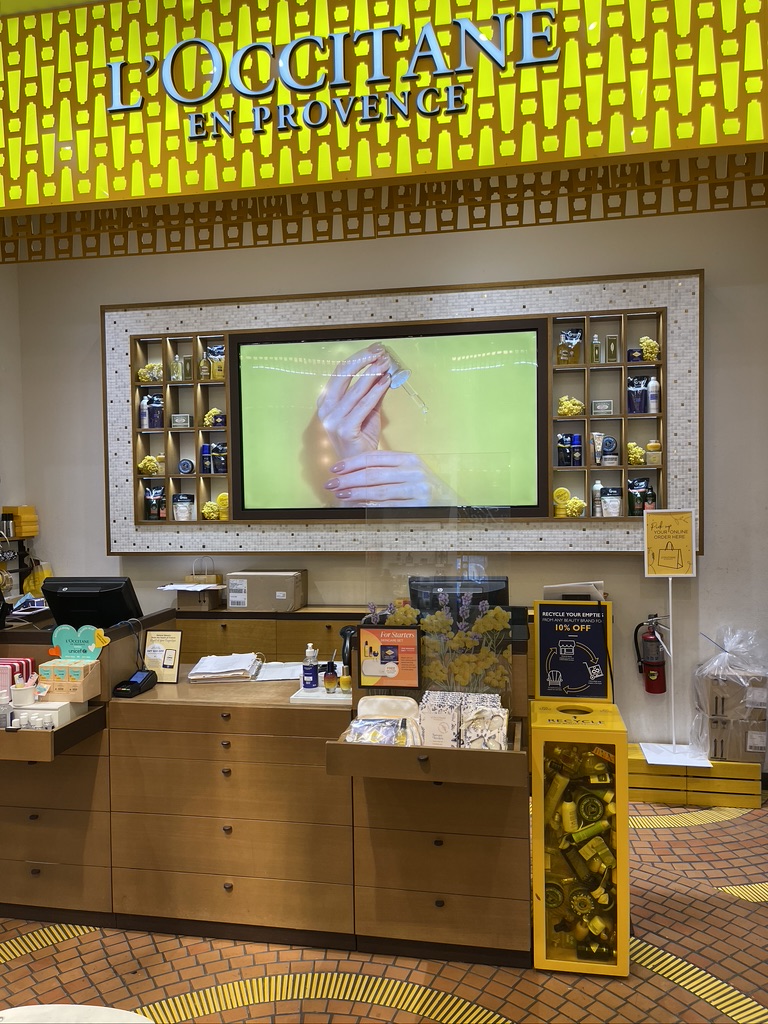
L'Occitane Fifth Avenue runs a hybrid 98″ + 85″ video wall as the flagship hero moment in the boutique. Victoria's Secret Fifth Avenue runs a hybrid hero install at flagship-retail scale. L'Occitane's broader 150+ boutique program includes additional video walls in the strongest brand-moment stores. Corporate trading floors and brokerage environments run multi-zone walls for live data; hospitality lobbies and stadium concourses run them for brand and utility overlay.
Why video-wall tile and not tiled commercial-grade
It's tempting to ask why CrownTV doesn't just tile cheaper commercial-grade panels into a wall. Two reasons. First, the bezel: even the thinnest commercial-grade bezel is 5–10× the video-wall tile tile-to-tile gap and the wall reads as a grid, not a canvas. Second, the heat density: tiling thirty-pound consumer-grade panels into a 3×3 creates a thermal envelope none of those panels are rated for, and the warranty voids the day the wall powers up. video-wall tile is purpose-built for this scope. We ship video-wall tile or we don't ship a tiled wall.
Pricing a video-wall install
A 2×2 of 55″ video-wall tile tiles plus mounts plus media player runs roughly $18–25K hardware, plus a 1–2 day install at flat install fee. A 3×3 runs $40–60K hardware. Larger and custom configurations price per project. The install timeline is short relative to the hardware cost — most 2×2 and 3×3 walls ship in 1–2 days from arrival on site to content live. We publish the rest of the pricing model on the pricing page; quotes return inside four business hours.
Live-data zones and dashboard embeds
The single most under-used feature on a video wall isn't the brand video — it's the live-data zone. A 3×3 wall can split into a primary brand canvas, a live ticker strip, a KPI dashboard zone, and a utility overlay (weather, time, event-of-the-day) at the same time. We embed Tableau, Looker, Power BI, Salesforce reports, sports tickers, social-feed aggregators, weather APIs, and any URL-accessible dashboard into individual zones. Zones refresh independently — the brand video can loop on a 12-second cycle while the KPI dashboard refreshes every 60 seconds.
Trading-floor walls are the most common live-data video-wall deployment we ship. A 4×3 wall behind the trading desk runs market data on the left, internal P&L on the center, news ticker across the bottom, and a brand-room zone on the right. Stage managers in broadcast environments run run-of-show, sponsor logo cycling, and pre-roll on the same hardware. Hospitality lobbies run brand video plus a daily-event utility strip plus weather. The wall is one canvas physically; it's many channels operationally.
What can go wrong, and how we keep it from going wrong
Video walls fail in three predictable ways. First, content built at the wrong canvas resolution — a 1920×1080 video stretched 3× horizontally on a 1×3 strip looks like a smudge. We design or commission content at the actual canvas resolution, every time. Second, color drift between tiles as panels age — backlight aging is uneven across panels and the wall reads as a quilt by month 18 if nobody recalibrates. We schedule quarterly recalibration on managed-service contracts. Third, single-point-of-failure media players — one media player driving a 3×3 means one failure takes the wall down. On critical installs we ship dual media players in active/passive failover so a hardware fault is invisible to the customer experience.
Synchronized playback across the wall
Frame-accurate sync is the difference between a video wall and a row of TVs that happen to be next to each other. The CrownTV media player drives video-wall tile tiles over a daisy-chained DisplayPort + HDBaseT path with hardware genlock — every panel renders the same frame at the same instant. A horizontal pan reads as one motion across the canvas, not as nine versions of the pan with a couple of frames of jitter on the edge tiles. The customer doesn't think about sync because they don't see the lack of it.
For walls that span more than a single media player's output capability — typically 5×3 and larger — we ship a multi-player config with a master clock that genlocks the players to each other. Same frame, same instant, every tile in a 30-tile install.
Sub-types: indoor LED, outdoor LED, narrow-bezel LCD, transparent OLED
The video-wall category breaks into four sub-types, each scoped to a different brief. Narrow-bezel LCD video walls (narrow-bezel video-wall panels at 1.7mm bezel-to-bezel) are the workhorse for 2×2, 3×3, and 4×4 configurations — most retail flagship walls, corporate lobbies, and hospitality moments land here. Indoor direct-view LED (direct-view LED at 1.5–2.5mm pixel pitch) is the right call when bezel-zero is non-negotiable or pixel pitch matters more than budget — flagship retail, jumbotron-scale concourses, and broadcast studios run this. Outdoor LED (outdoor LED / weather-ready outdoor displays at 4,000+ nits) covers stadium concourse exterior walls, plaza pylons, and parking-garage entries; see the outdoor LED catalog for spec detail. Transparent OLED is a niche choice for retail and museum environments that need the wall to disappear when the content is off; we scope these per project on a custom-quote basis. Every sub-type runs on the CrownTV Dashboard with the same content workflow; the hardware is what changes.
The flagship installs we have shipped
Two named-customer references anchor the CrownTV video-wall portfolio. L'Occitane Fifth Avenue runs a hybrid 98″+85″ video wall as the flagship hero moment in the boutique and ships hybrid walls into the strongest brand-moment locations across its 150+ boutique program. Victoria's Secret Fifth Avenue runs a flagship video wall on the same engineering tolerance, the same media player, and the same support contract. Beyond the named references, corporate trading floors and brokerage environments run multi-zone walls for live data; hospitality lobbies and stadium concourses run them for brand and utility overlay. Every flagship install is engineered with the same load math, calibration probe, and quarterly-recalibration cadence on managed-service contracts.
The install scope and managed service
Video-wall installs sit at the high end of CrownTV's install complexity. The installation services page covers the on-site engineering — substrate verification, structural load math, mount installation, tile leveling, calibration, and sign-off — for every wall scope from a 1×3 reception strip to a 4×4 trading-floor build. The managed digital signage service covers per-tile health monitoring, brightness/color drift alerts, quarterly recalibration, and 24/7 phone support from a CrownTV operator. For the full one-contract bundle, see turnkey digital signage.