
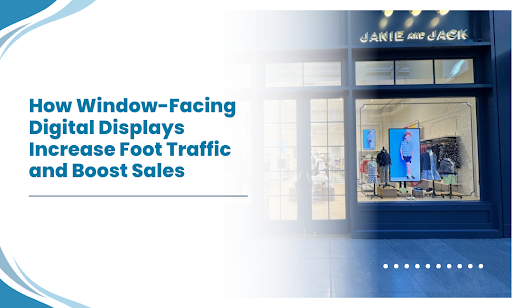
Your storefront window gets hundreds of daily glances. But how many of those glances convert into actual customers walking through your door? Most businesses treat window displays as static decoration, a missed opportunity that costs thousands in lost revenue every month.
Window-facing digital displays flip this script entirely. They transform passive window shoppers into active customers by grabbing attention, communicating value, and creating an irresistible reason to step inside. The data backs this up: stores with digital window displays report foot traffic increases of 30-200% and sales lifts averaging 32%.
Here’s what we’ll cover:
- How window-facing digital displays pull more people through your doors (and the psychology behind why they work)
- How these displays convert that increased traffic into actual sales (with proven tactics you can implement today)
The difference between a busy store and an empty one often comes down to those critical first three seconds when someone walks past your window.
Window Displays That Stop Foot Traffic in Its Tracks
Your brain processes movement faster than any other visual stimulus. It’s hardwired from evolution: moving objects could mean food or danger, so your ancestors who noticed motion survived. Static posters and printed signs fade into background noise, but a screen with changing content activates this primal attention system. Digital screens function as a powerful tool to attract attention in ways that window graphics simply cannot match.
Digital displays exploit this biological advantage. When someone walks past your storefront, their peripheral vision picks up the movement on your screen before their conscious mind registers what they’re looking at. This split-second advantage makes the difference between a casual glance and a full head turn.
The effect compounds when you rotate content every 8-10 seconds. Each transition creates a fresh motion event that re-triggers attention, giving you multiple chances to hook passersby who might have missed your first message. The ability to showcase dynamic content keeps customers engaged far longer than static alternatives.
Brightness Cuts Through Urban Visual Clutter
Walk down any commercial street and count how many things compete for attention. Awnings, banners, sidewalk signs, parked cars, other pedestrians, and dozens of storefronts all fight for the same eyeballs. Digital screens produce their own light, making them visible in conditions where traditional displays disappear. This enhanced visual appeal directly impacts brand visibility in crowded commercial districts.
Morning glare that washes out printed posters has no effect on a backlit screen. Evening shadows that hide static signs make illuminated displays like Samsung OM75 that stand out even more.
Optimal Brightness Levels by Time of Day
| Time Period | Brightness Setting | Why It Works |
| Morning (6am-10am) | 80-100% | Competes with direct sunlight and morning glare |
| Midday (10am-4pm) | 60-80% | Adjusts for changing sun angles and natural shade |
| Evening (4pm-8pm) | 40-60% | Stands out as the ambient light decreases |
| Night (8pm-close) | 30-50% | Becomes the primary light source with maximum contrast |
Stunning video walls create unforgettable first impressions that draw customers from across the street, while compact single-screen setups save space in smaller storefronts without sacrificing impact.
Color Psychology Influences Shopping Behavior
Different colors trigger different emotional responses and purchasing decisions. You can align your display content with the psychological state that benefits your business most. Understanding color psychology enhances the customer experience by creating emotional connections before customers enter.
- Red: Sales promotions and limited-time offers perform better when displayed in red because viewers feel compelled to act before missing out. Restaurants use red to stimulate appetite and encourage impulse purchases. Red works particularly well for flash sales and time-sensitive offers.
- Blue: Banks, healthcare providers, and service businesses benefit from blue because it signals reliability and professionalism. Customers feel safer making significant purchases when blue tones dominate the visual environment. Blue reinforces your brand message of dependability and expertise.
- Yellow: Clearance events and new product launches work well with yellow because it stands out without the aggressive pressure of red. The color suggests opportunity rather than scarcity.
- Green: Organic food stores, wellness centers, and eco-friendly brands use green to reinforce their positioning. It also reduces eye strain, making people comfortable looking at your display longer. Green supports brand recognition for environmentally conscious businesses.
Color Application by Business Type
| Business Category | Primary Color | Secondary Color | Use Case |
| Restaurants/Food | Red, Orange | Yellow | Menu items, daily specials |
| Retail Fashion | Black, White | Seasonal accent | Product showcases, sales |
| Health/Wellness | Blue, Green | White | Service offerings, testimonials |
| Financial Services | Blue | Gray | Trust-building messages |
| Entertainment | Purple, Yellow | Red | Event promotions, tickets |
Dynamic Content Delivers Multiple Messages
A static poster shows one message to every person who walks by. A digital display like Samsung OM75 can show different messages to different audiences throughout the day, maximizing relevance for each viewer. This ability to showcase dynamic content across the customer journey transforms how you engage customers at different decision stages.
You can schedule content based on traffic patterns and viewer needs:
- Morning commuters (6am-9am): Quick-service options, breakfast deals, coffee promotions
- Lunch crowds (11am-2pm): Combo meals, express service, group dining options
- Afternoon browsers (2pm-5pm): Full product range, detailed information, lifestyle content
- Evening shoppers (5pm-8pm): Dinner specials, after-work activities, happy hour offers
- Night owls (8pm-close): Late-night menus, entertainment options, next-day previews
Product variety matters too. Instead of betting everything on one featured item, you can showcase your full range. A clothing store might rotate between dresses, accessories, shoes, and outerwear every few seconds.
This increases the odds that something on screen matches what a specific passerby wants to buy. Content from social media platforms can be integrated to show real customer experiences and user-generated content, prompting shoppers to visit based on authentic social proof.
Social Proof Builds Credibility Fast
People trust other people more than they trust brands. Your window display, such as Samsung OM75, can leverage this by showing customer reviews, user-generated content, and popularity indicators. Strong social proof elevates customer engagement and influences store visits by reducing perceived risk.
High-Impact Social Proof Elements
| Proof Type | What to Display | Psychological Trigger |
| Star Ratings | 4.8/5.0 with review count | Safety (others validated this) |
| Live Counters | “347 served today” | Popularity and urgency |
| Testimonial Quotes | “Best service in the city” – Real Name | Relatability and trust |
| Before/After Images | Visual transformations | Tangible proof of results |
| Media Mentions | Logo badges from publications | Authority and credibility |
Star ratings and testimonial snippets answer the question every potential customer asks: “Is this place actually good?” Seeing that hundreds of others had positive experiences removes the risk of trying something new.
Live counters showing real numbers create both credibility and urgency. The numbers prove you’re busy (which means you’re probably good), and they suggest scarcity (which means waiting might mean missing out). Analyzing sales data helps you determine which social proof elements drive the most conversions.
Strategic Placement Maximizes View Time
Not all window space delivers equal results. You need to position your display where it intercepts the most eyeballs for the longest duration. Proper placement shapes the entire shopping experience from the first glance to the decision to enter.
Critical Placement Factors
- Eye-level positioning (4.5-5.5 feet): Captures attention from the largest number of viewers who naturally scan this zone first
- Pedestrian flow direction: Position displays on the approach side so people see it earlier with more exposure time
- Viewing angle optimization: Slight inward tilt (10-15 degrees) expands the viewing cone to catch people from either direction
- Sidewalk distance consideration: Closer placements need larger text and simpler graphics; deeper placements allow complex content
Optimal Screen Angles by Window Depth
| Window Depth | Recommended Angle | Content Complexity |
| 0-12 inches | 5-10 degrees inward | Simple, large text |
| 12-24 inches | 10-15 degrees inward | Moderate detail |
| 24+ inches | Perpendicular or slight | Complex graphics OK |
Distance from the sidewalk changes how you should design content. Displays close to the glass need larger text and simpler graphics because viewers see them from extreme angles. Deeper window placements allow more complex content because viewers have a straighter sight line.
Interactivity Converts Curiosity Into Action
Touch-enabled displays or QR code integrations turn passive viewing into active engagement. Once someone interacts with your screen, they’ve already committed a small action toward becoming a customer. Interactive displays and touchscreen kiosks transform windows into 24/7 engagement tools that enhance customer engagement even outside business hours.
Interactive features that drive engagement:
- Product catalogs: Let browsers explore full inventory outside business hours
- Gamification: Spin-to-win promotions, trivia with discount prizes, product quizzes
- Wayfinding tools: Help confused visitors locate specific departments or services
- Custom recommendations: Quiz-based product matching for personalized suggestions
- Instant pricing: Real-time quotes or package builders for complex services
Product catalogs let browsers explore your full inventory without entering the store. This works after hours too, turning your window into a 24/7 sales tool. Someone walking by at 10 pm can browse, save favorites, and return during business hours to complete their purchase.
Gamification adds entertainment value that keeps people at your window longer. Spin-to-win promotions, trivia games with discount prizes, or interactive product quizzes make the experience memorable enough to share with friends. Special promotions delivered through interactive elements create excitement and urgency that static displays cannot replicate.
Contrast and Readability Standards
The best content in the world fails if people can’t read it. Contrast between your text and background makes the difference between instant comprehension and frustrated squinting.
Minimum Contrast Ratios for Legibility
| Content Type | Contrast Ratio | Example |
| Headlines & CTAs | 7:1 | White text on dark navy |
| Body text & details | 4.5:1 | Black text on light gray |
| Decorative elements | 3:1 | Brand colors with tints |
Background Color Strategies
- White text on black backgrounds provides maximum contrast and works well in all lighting conditions. The dark background also makes colors pop when you add product images or brand elements.
- Dark text on light backgrounds reduces eye strain for longer messages but requires higher screen brightness to maintain visibility in daylight. This approach works better for detailed information like menus or service lists.
- Colored backgrounds can support your brand identity, but often sacrifice readability. Test your color combinations at different times of day to confirm they remain legible in varying light conditions.
Message Frequency Prevents Ad Fatigue
The same people walk past your store every day. Show them identical content repeatedly, and they’ll start ignoring your display like they ignore everything else they see daily.
Content Rotation Strategies
| Rotation Type | Frequency | Best For |
| Intra-day | Every 8-10 seconds | Product variety, multiple offers |
| Daily | New content each day | Regular commuters, repeat foot traffic |
| Weekly | Themes tied to days | Cultural moments, predictable patterns |
| Seasonal | Monthly or quarterly | Major inventory changes, holidays |
Content rotation schedules keep your messaging fresh for regular passersby. A coffee shop might run a 14-day rotation where each day features different drinks, food items, or customer stories. Office workers who pass by twice daily never see the same display two days in a row.
Dayparting strategies align content with the viewer’s mindset:
- Morning: Energizing messages and quick-service options for rushed commuters
- Afternoon: Detailed product showcases for leisurely browsers
- Evening: Entertainment-focused content or special events for after-work crowds
- Weekend: Lifestyle content and experience-based messaging for relaxed shoppers
Weekly themes tied to cultural moments maintain relevance. Monday motivation quotes, Wednesday wellness tips, Friday celebration messages, and weekend activity suggestions make your content feel timely and thoughtful.
From Window Shoppers to Paying Customers
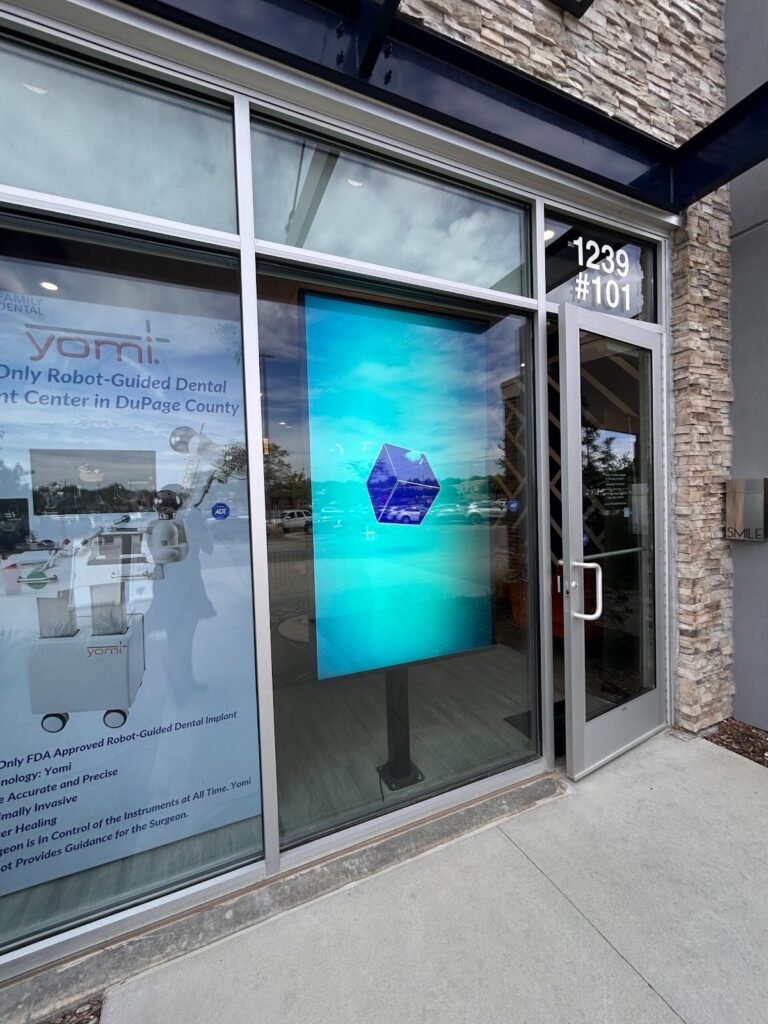
Getting someone to stop and look at your window is only half the battle. You need to tell them exactly what to do next. Vague displays that show products without direction leave people wondering if they should come in now, return later, or keep walking. A well-crafted digital signage strategy turns passive viewers into active buyers.
High-Converting CTA Frameworks
| CTA Type | Example Phrase | When to Use |
| Direct Entry | “Step inside for 20% off” | Sales events, promotions |
| Time-bound | “Today only: Free gift with purchase” | Daily specials, limited offers |
| Value-focused | “See our $49 starter packages” | Price-sensitive shoppers |
| Experience-driven | “Try before you buy” | High-consideration products |
| Exclusivity | “VIP early access starts now” | New launches, memberships |
Your CTA needs three elements to work:
- Action verb: “Shop,” “Save,” “Get,” “Claim” tell people what to do
- Value statement: The benefit they receive for taking action
- Urgency factor: Why they should act now instead of later
Test different CTA placements on your screen. Bottom-third positioning catches people after they’ve absorbed your main message. Top-corner placement works for quick-decision items where the offer alone drives action. Understanding customer behavior patterns helps you position calls-to-action where they’ll have maximum impact.
Strategic Pricing Displays Remove Purchase Barriers
Price uncertainty keeps people outside. They want to know if your products fit their budget before investing time in browsing. Your window Samsung OM75 display can answer this question and pull in qualified buyers who are ready to spend. Digital signs excel at communicating value propositions that traditional signage struggles to convey effectively.
Price Anchoring Techniques
Show your premium option first, then reveal more affordable alternatives. A $200 jacket displayed before a $89 option makes the lower price feel like a bargain. The same $89 jacket shown alone might seem expensive to budget-conscious shoppers.
Effective Price Display Methods
| Display Format | Psychological Effect | Best Application |
| “Starting at $X” | Accessibility signal | Service packages, tiered products |
| “$X – $Y range” | Options confirmation | Varied inventory, multiple price points |
| “Was $X, Now $Y” | Savings emphasis | Clearance, promotions |
| “Only $X” | Affordability focus | Impulse items, entry products |
| “$X/month” | Payment accessibility | Subscriptions, financing available |
Bundle pricing creates perceived value that individual item pricing cannot match. “3 for $30” performs better than “$10 each” even though the math is identical. The bundle format suggests a deal worth acting on.
Premium positioning works when you highlight what justifies the cost. Display materials, craftsmanship details, or longevity benefits next to higher prices. People will pay more when they understand the value equation. Retail brands that communicate quality effectively see higher conversion rates on premium products.
Product Demonstrations Answer Unspoken Questions
Seeing a product in action removes doubt about how it works, what results it delivers, or why it’s worth buying. Video demonstrations on your Samsung OM55B digital window display educate prospects who haven’t decided to enter yet. Dynamic visuals outperform static images when educating customers about product features and benefits.
Effective demonstration content includes:
- Problem-solution sequences: Show the issue your product solves, then demonstrate the solution
- Before-and-after comparisons: Visual proof of transformation or improvement
- Feature highlights: Close-ups of details people can’t see from the sidewalk
- Usage scenarios: Real contexts where customers would use the product
- Size and scale references: Help viewers understand dimensions and fit
Restaurants benefit from food preparation videos that showcase fresh ingredients and cooking techniques. The sizzle of a steak or the stretch of mozzarella cheese triggers appetite and justification for premium pricing.
Salons can loop transformation videos showing haircuts, color treatments, or styling techniques. Potential clients see the skill level they’re paying for and visualize their own results.
Retail stores should demonstrate product versatility. A handbag shown five different ways appeals to more shoppers than a single static image. Each styling variation represents a different customer who might see themselves using it. Dynamic displays allow you to showcase dynamic promotions alongside product demonstrations for maximum impact.
Urgency Tactics Overcome Decision Paralysis
People default to inaction when faced with too many choices or no deadline. Your Samsung OM55B display can create the pressure needed to convert consideration into immediate action. Eye-catching window displays that incorporate urgency elements significantly boost retail traffic and conversion rates.
Urgency Mechanisms That Drive Store Entry
| Tactic | Implementation | Conversion Impact |
| Countdown timers | “Sale ends in 2:47:33” | Creates deadline anxiety |
| Stock indicators | “Only 3 left at this price” | Triggers scarcity response |
| Daily limits | “First 20 customers get…” | Rewards early action |
| Flash windows | “Next 15 minutes only” | Catches impulse deciders |
| Event-based | “While supplies last today” | Leverages the present moment |
Countdown timers work best for offers ending within 24 hours. Longer countdowns (days or weeks) lack the immediate pressure that drives foot traffic. Someone seeing “5 days remaining” will likely walk past, planning to return later, then forget entirely.
Stock indicators need to show believable scarcity. “Only 3 left” feels real and urgent. “Only 47 left” suggests you have plenty and undermines the scarcity claim. Measuring signage effectiveness through foot traffic analytics helps you refine which urgency tactics work best for your target audience.
Flash promotions reward people who happen to be walking by at the right moment. Rotating hourly offers throughout the day means every passerby encounters a different deal, reducing ad fatigue for regular foot traffic. Promotional banners integrated into your content rotation keep messaging fresh and relevant.
Cross-Sell Opportunities Increase Transaction Value
Someone interested in one product often needs complementary items. Your window display can suggest these combinations before customers enter, priming them to buy more. Smart retail signage ideas leverage cross-selling to maximize revenue from each customer who walks in.
Complete-the-Look Merchandising
Fashion retailers should pair outfits on screen showing the dress, shoes, bag, and jewelry together. Shoppers see the full vision and mentally add multiple items to their shopping list before stepping inside.
High-Performing Product Combinations:
| Anchor Product | Complementary Items | Average Basket Lift |
| Main course | Appetizer + drink | +$12-18 per order |
| Phone case | Screen protector + charger | +$25-40 per sale |
| Skincare product | Cleanser + moisturizer | +$35-60 per transaction |
| Fitness equipment | Accessories + apparel | +$45-75 per purchase |
| Home decor item | Coordinating pieces | +$30-90 per visit |
Technology stores can display phones alongside cases, screen protectors, and wireless chargers. The package approach shifts the customer’s mental budget from a single $30 case to a complete protection system at $75.
Food service benefits from combo suggestions that pair entrees with sides and beverages. “Add fries and a drink for $3 more” converts single-item buyers into higher-value customers. Optimizing your retail space with strategic product combinations drives business success and improves profit margins.
Impulse Purchase Triggers Lower Decision Thresholds
Small, affordable items displayed prominently capture impulse buyers who weren’t planning to shop. These quick-decision products increase transaction frequency without requiring major consideration. A well-managed digital signage network across multiple locations ensures consistent impulse-driving messaging.
Impulse-Friendly Product Characteristics
- Low price point: Under $25 requires minimal justification
- Immediate utility: Solves a problem the customer has right now
- Small physical size: Easy to carry, doesn’t require planning
- Emotional appeal: Brings joy, nostalgia, or excitement
- Gift potential: Works for someone else, not just the buyer
Display rotation keeps impulse offerings fresh. Swap out featured small items weekly so regular passersby always see something new to tempt them. A coffee shop might rotate between pastries, bottled drinks, packaged snacks, and local artisan goods.
Checkout-zone items appear on your window display to plant the purchase idea before customers enter. They’ll be primed to grab that item when they see it again at the register. This strategy helps attract passersby who might not have planned a purchase but find themselves tempted by accessible price points.
Simplified Purchase Paths Reduce Friction
Every extra step between interest and purchase loses potential customers. Your Samsung OM55B display should make the buying process feel effortless and straightforward. Improving the in-store experience starts before customers even walk through the door.
Mobile-First Payment Options
QR codes on your display let customers scan, browse, and buy without speaking to anyone. This appeals to introverts, people in a hurry, and anyone who prefers self-service shopping. This approach can even bring online shoppers into physical locations by bridging digital and physical experiences.
Friction Reduction Checklist
| Friction Point | Display Solution | Customer Benefit |
| Store hours uncertainty | Operating hours on a loop | Confirms you’re open now |
| Payment method questions | “We accept all cards + mobile pay” | Removes cash concerns |
| Returns policy concerns | “30-day returns, no questions” | Lowers purchase risk |
| Parking availability | “Free parking in rear” | Solves logistics barrier |
| Wait time anxiety | “Average wait: 5 minutes” | Sets expectations |
After-hours shopping options extend your sales window. Display your website URL or app download QR code for people who see your products at 11 pm. They can browse and buy from home, then pick up during business hours or arrange delivery.
Pre-order capabilities work for restaurants, bakeries, and service businesses. Someone walking past at 3 pm can order dinner for 6 pm pickup, guaranteeing their business and reducing wait times. Collecting customer feedback through digital touchpoints helps you refine the purchase experience continuously.
Value Proposition Clarity Justifies Premium Pricing
Customers need to understand why your product costs more than alternatives. Your Samsung OM55B display should communicate the differentiators that make the higher price worthwhile. Clear value communication contributes directly to retail success by reducing price objections.
Effective value communication includes:
- Materials and sourcing: “Made from organic cotton” or “Sustainably harvested ingredients”
- Craftsmanship details: “Hand-stitched by local artisans” or “Small-batch production”
- Longevity claims: “10-year warranty” or “Built to last a lifetime”
- Exclusive benefits: “Members-only access” or “Limited edition”
- Expertise involved: “Created by award-winning chefs” or “Designed by certified professionals”
Value Messaging by Price Tier
| Price Range | Focus Message | Supporting Elements |
| Budget ($0-50) | Affordability + quality | “Great value without compromise” |
| Mid-range ($50-150) | Quality + features | “Professional-grade at accessible prices” |
| Premium ($150-500) | Craftsmanship + exclusivity | “Investment pieces that last” |
| Luxury ($500+) | Heritage + uniqueness | “Irreplaceable quality and artistry” |
Comparison positioning helps when you’re competing with lower-priced alternatives. Show what customers give up by choosing the cheaper option. A mattress store might display “8-hour sleep guarantee vs. restless nights” to justify premium pricing.
Location-Specific Offers Convert Local Traffic
Passersby are already in your area. Offers tied to nearby landmarks, local events, or neighborhood culture resonate more than generic promotions. Engaging your local community through targeted messaging builds loyalty and repeat business.
Display these localized messages:
- Workplace proximity: “Office workers: Get your lunch in under 10 minutes”
- Event alignment: “Pre-game specials for tonight’s concert”
- Transit connections: “Subway riders: Grab and go options available”
- Neighborhood references: “Serving [neighborhood name] since [year]”
- Weather responsiveness: “Rainy day comfort food specials”
Universities and college areas should reference campus life. “Finals week fuel: Coffee and pastries” or “Game day gear available” speaks directly to students’ needs and schedules.
Tourist districts benefit from highlighting local authenticity. “Locally owned since 1987” or “Featured in [local publication]” differentiates you from chain competitors and helps you encourage customers to choose local businesses over corporate alternatives.
Exit Intent Messaging Captures Last-Chance Buyers
Some people walk past your store, reconsider, then look back. Your display should have messaging positioned to catch these second-glance viewers.
Strategic Exit Messaging
| Message Type | Example | Conversion Goal |
| Last-chance offer | “Don’t leave without checking our clearance section” | Pulls hesitators inside |
| Extended value | “Ask about our price-match guarantee” | Removes price objections |
| Low-commitment entry | “Just browsing? That’s fine, come look around” | Reduces pressure |
| Future incentive | “Visit today, get 15% off your next purchase” | Creates a return visit |
| Social validation | “Join 5,000+ happy local customers” | Builds trust before entry |
Dual-sided displays work well for high-traffic areas where people approach from both directions. They see your main message on approach, then catch exit messaging after passing, giving you two conversion opportunities per passerby.
Reminder messages about small commitments lower the barrier to entry. “Free samples available” or “No purchase necessary to browse” takes the pressure off and gets bodies through the door. Once inside, your sales environment handles the actual conversion.
Getting Started With Window-Facing Digital Displays
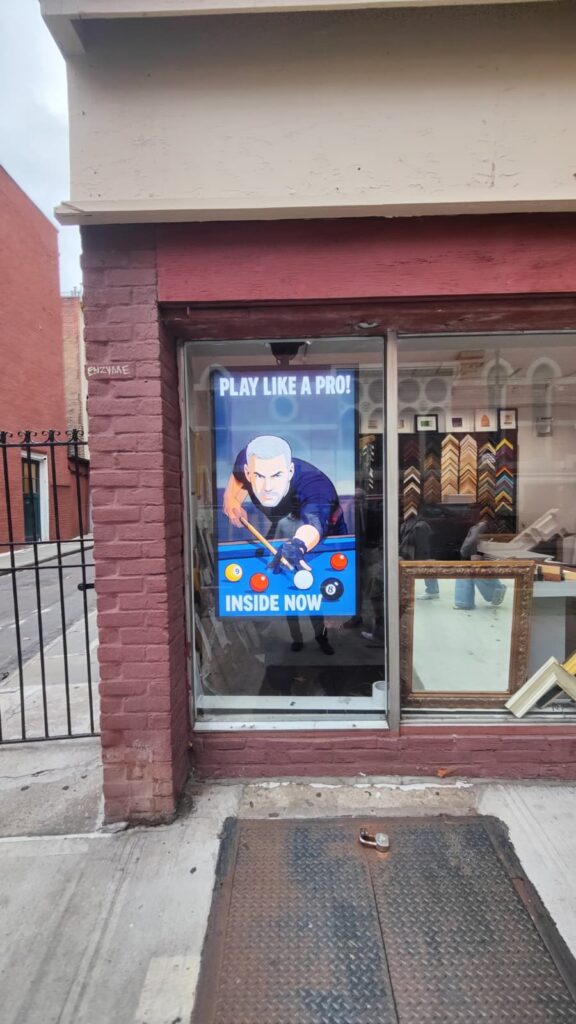
Everything we’ve covered in this article requires the right hardware and software working together seamlessly. You can’t execute dynamic content rotations, schedule dayparting strategies, or test different CTAs without a platform built for it.
CrownTV provides the complete system needed to implement these traffic-driving tactics. We’ve deployed over thousands of active displays across several businesses in the USA, with proven results in retail, restaurants, healthcare, salons, fitness centers, and more.
What You Get With CrownTV
| Component | What It Does | Why It Matters |
| Digital signage software | Manages content scheduling, rotation, and updates | Run all the dayparting and messaging strategies discussed above |
| Media players | Powers your displays with reliable performance | Handle motion graphics, video demos, and interactive content smoothly |
| Screen hardware | Commercial-grade displays built for storefronts | Maintain brightness and clarity in all lighting conditions |
| Professional installation | Expert setup and positioning | Get optimal placement and viewing angles from day one |
Our software handles every tactic covered in this article:
- Content scheduling: Set different messages for morning commuters, lunch crowds, and evening shoppers
- Template library: Pre-built designs for sales, promotions, product showcases, and social proof
- Real-time updates: Change pricing, offers, or messaging within minutes from anywhere
- Performance tracking: See which content drives the most foot traffic and sales
- Multi-location management: Control displays across multiple storefronts from one dashboard
The media players deliver the reliability you need for window displays that run 12-16 hours daily. They handle high-resolution product videos, smooth transitions between content, and interactive elements without lag or crashes.
Implementation Support That Removes Technical Barriers
You don’t need technical expertise to run effective window displays. Our team handles the complex parts so you can focus on your messaging and offers.
Full-Service Setup Process
- Site assessment: We evaluate your window space, lighting conditions, and foot traffic patterns
- Hardware recommendations: Get screens sized and positioned for your specific storefront
- Professional mounting: Technicians install displays at optimal heights and angles
- Software configuration: We set up your content management system and train your team
- Ongoing support: Technical help available when you need adjustments or troubleshooting
Small businesses with single locations get the same quality hardware and support as national chains with hundreds of displays. The platform scales to your needs without forcing you into enterprise-level complexity you don’t require.
Pricing That Makes Sense for Your Budget
Window-facing displays shouldn’t require massive upfront investment. CrownTV offers flexible options that work for different business sizes and budgets. Transparent pricing means you know exactly what you’re paying for screens, players, software access, and installation. No hidden fees for content updates, no surprise charges for technical support, no nickel-and-diming for features you need.
We also source screens at competitive rates and pass those savings to you. The same commercial-grade displays that other providers sell for $2,000-3,000 might cost you $1,200-1,800 through our partnerships with manufacturers.
Start Driving More Foot Traffic This Week
The tactics in this article work, but only if you actually implement them. Waiting for the “perfect time” means losing customers to competitors who’ve already installed window displays and are capturing the foot traffic you’re missing.
CrownTV handles the heavy lifting. You get professional installation, reliable hardware, intuitive software, and support from a team that’s deployed thousands of successful displays. Your job is simply deciding what messages will resonate with your specific customers and updating content as your offers change.
Schedule a demo to see the platform in action and discuss which setup makes sense for your storefront, budget, and business goals.
Your Window Works 24/7, Make Every Hour Count
You now have the playbook for turning casual foot traffic into paying customers. The science behind motion, brightness, and color psychology explains why some storefronts pull crowds while others sit empty. The tactics for CTAs, pricing displays, and urgency messaging give you the exact framework to convert window glances into sales.
Here’s what happens when you implement these strategies:
- Motion-triggered displays catch peripheral vision before conscious awareness kicks in, giving you 3-5x more attention than static signage from the same passersby
- Strategic dayparting means morning commuters see breakfast offers while evening crowds see dinner specials, matching your message to buyer intent throughout the day
- Clear pricing displays eliminate the “I wonder if I can afford this” hesitation that keeps budget-conscious shoppers outside your store
- Video demonstrations answer product questions before customers enter, pre-qualifying them as serious buyers who understand what you’re selling
- Scarcity indicators and countdown timers convert “maybe later” thinkers into “I need to act now” buyers who walk through your door within minutes
- Cross-sell combinations on your Samsung OM55B display prime customers to buy multiple items before they even step inside, lifting average transaction values by $25-75
The difference between implementing one or two of these tactics and deploying all of them consistently comes down to having the right system.