

In this guide, we explore everything you need to know about physical brand presence: why digital-only marketing falls short and how it can transform your business communications.
Your customers scroll past 300 ads before breakfast. They’ve learned to ignore pop-ups, skip pre-rolls, and swipe away notifications without a second glance. The digital space you’ve invested thousands into has become white noise.
But walk past a storefront with a compelling display, and something shifts. People stop. They look up from their phones. They notice. That’s the power of physical presence, and most brands have forgotten it exists.
We’ve spent the last decade chasing digital metrics, impressions, clicks, and engagement rates while the physical world sat empty and underutilized. The pendulum swung so far toward screens that we forgot humans still live in three-dimensional space. They walk down streets. They enter buildings. They experience the world with all five senses, not through a backlit rectangle.
The brands winning right now aren’t choosing between digital and physical. They’re telling stories that span both worlds, using physical touchpoints to cut through the digital clutter and create moments people actually remember.
Here’s what we’ll cover:
- How physical presence creates cognitive shortcuts that digital advertising can’t replicate
- Why storefront visibility acts as a 24/7 brand ambassador, your website never could be
- The psychology behind why people trust what they can see and touch more than what they scroll past
- How smart brands use digital signage to bridge physical spaces with digital storytelling
- The ROI difference between brands that show up in person versus those that live online only
The best part? You don’t need a flagship store on Fifth Avenue to make this work. You need a strategy that puts your brand where your customers already are, in formats they can’t ignore.
Physical Brand Presence: Why Digital-Only Marketing Falls Short: Physical Presence Creates Cognitive Shortcuts That Digital Advertising Can’t Replicate
Your brain processes a physical storefront in milliseconds. That’s faster than you can read a single word on a screen. When someone walks past your location, their brain doesn’t analyze your brand the way it filters through online ads. It categorizes. It shortcuts. It makes snap decisions based on what’s visible, tangible, and there.
This happens because physical spaces trigger different neural pathways than digital content. A screen asks your brain to focus, process, and decide to engage. A physical presence simply exists in your field of vision, demanding no conscious effort to notice.
The Science Behind Physical Recognition
Retail psychology experts have mapped how consumers process physical and digital brand encounters. The difference comes down to cognitive load.
Digital ads require:
- Active processing and conscious attention
- Time to read copy and interpret messaging
- Multiple decision points that create friction
- Permission to interrupt someone’s scrolling
Physical displays work through:
- Passive environmental scanning
- Automatic visual categorization
- Spatial memory activation
- Zero permission required
Digital ads need you to stop scrolling, read copy, interpret messaging, and decide if you care. Each step creates friction. Each moment of friction gives your audience a chance to bounce.
Physical displays occupy space in the real world, which means your brain processes them as environmental features, not marketing messages. You don’t “choose” to see a storefront display the way you choose to watch a video ad.
Why This Matters for Brand Recall
Consumers recall physical brand experiences more accurately than digital ones, even weeks later. The reason? Your brain treats physical spaces as navigational landmarks. When someone sees your storefront or in-store display, their brain files it alongside other spatial information: “the coffee shop on Main Street,” “that bright window display near the subway exit,” “the store with the video wall by the entrance.”
Online ads don’t get this treatment. They’re processed as temporary information, then discarded. No spatial anchor. No location-based memory trigger.
Retail advisory firms like RekonRetail and Envirosell have documented this pattern across thousands of physical retail environments. Physical presence creates mental shortcuts that digital platforms have to work exponentially harder to achieve.
Building Associations Without Asking Permission
Here’s what makes community presence powerful: it doesn’t need permission to build brand engagement.
| Digital Approach | Physical Approach |
| Needs opt-in or click-through | Exists where customers already are |
| Competes in saturated feeds | Occupies exclusive physical space |
| Requires active engagement | Builds familiarity passively |
| High cost per impression | One-time setup cost |
A digital ad needs someone to opt in, click through, or, at a minimum, not scroll past. Physical presence works during commutes, errands, lunch breaks any time your customers move through their day. Each exposure compounds. Not because they’re actively thinking about your brand, but because their brain keeps logging: “I’ve seen this before. It’s familiar. It belongs here.” That familiarity becomes trust. That trust becomes the shortcut your brain uses when making purchase decisions later.
The difference between digitally native brands that struggle with recognition and those that build lasting brand identity often comes down to whether they offer customers tangible proof of their existence. Physical and digital touchpoints working together create stronger emotional connections than either channel manages alone, shaping customer journeys that feel cohesive rather than fragmented.
As consumer demand shifts toward authenticity and verification, brands that invest in both physical and digital experiences position themselves to capture attention that purely digital engagement misses. This integrated approach transforms how you deliver immersive brand experiences while building the customer loyalty that keeps people coming back, regardless of whether they’re browsing your digital strategy online or walking past your door.
Storefront Visibility Acts as a 24/7 Brand Ambassador Your Website Never Could Be

Your website goes to sleep when customers close their browsers. Your physical location never does. A storefront works around the clock, building brand equity with every person who walks past. No ad spend required. No algorithm to appease. No competition for attention in an oversaturated feed.
The math here is straightforward: foot traffic compounds. A location on a street with 5,000 daily passersby generates 35,000 brand impressions per week. That’s 1.8 million per year, before a single person walks through your door.
Passive Impressions That Accumulate Value
Digital marketing operates on interruption. You bid for attention, craft compelling hooks, and hope people stop long enough to care. Physical visibility operates on presence. You occupy space, then people notice. The interaction costs you nothing beyond the initial setup.
What passive storefront visibility delivers:
- Continuous brand exposure during business hours and after
- Geographic authority in your specific market area
- Visual proof that your business exists and is established
- Credibility that comes from having a physical footprint in the community
- Cost efficiency that improves with every passing day
The Compounding Effect of Repeated Exposure
Marketing professors call this the “mere-exposure effect.” The more often people see something, the more they like it and trust it. No interaction needed.
Your storefront triggers this effect automatically. The person who walks past your location twice a day builds familiarity without ever consciously deciding to engage with your brand. This passive exposure shapes consumer expectations differently than digital interactions do, creating recognition that translates to purchase intent when they’re ready to buy.
Monthly exposure breakdown:
- Daily commuter: 40+ impressions
- Weekly shopper: 16+ impressions
- Occasional visitor: 4-8 impressions
Try replicating that digitally. You’d need a retargeting budget that would make a CFO cry, and you’d still face ad fatigue, banner blindness, and increasing cost-per-impression. Physical visibility doesn’t fatigue. It exists, doing its job, building your brand while you sleep.
Turning Glass Into a Growth Channel
Smart brands treat their storefronts like prime advertising real estate because that’s exactly what they are. A static window display is fine. A dynamic one that changes based on time of day, season, or current promotions? That’s a marketing channel that works 168 hours per week.
Digital signage in windows transforms dead glass into active brand storytelling. You can showcase new products at 8 AM when commuters pass by, shift to promotional products during lunch hours, and highlight different messaging for evening foot traffic. These interactive elements create the kind of hybrid shopping experiences that bridge what customers see in the digital world with what they encounter in person.
Benefits of active storefront displays:
- Content updates without printing costs or physical labor
- Seasonal campaigns that launch instantly across all locations
- Different messages for morning, afternoon, and evening crowds
- Allowing customers to preview offerings before stepping inside
The people walking past aren’t browsing your website. They’re not following you on social media. But they’re seeing your brand, processing your message, and building the mental associations that matter when they’re ready to buy.
Your physical experiences work differently from showing a product online. A window display communicates your brand’s values through design choices, quality signals, and aesthetic consistency. It positions you within your target audience’s mental map of the neighborhood, making you part of their daily landscape rather than a search query they might type when need arises.
This presence builds the foundation to foster loyalty and emotional engagement that online shopping alone struggles to create. Smart retailers enhance this further by hosting local events, running pop-up shops, or organizing community events that transform passive visibility into active participation, turning storefront real estate into a relationship-building asset that compounds value over time.
People Trust What They Can See and Touch More Than What They Scroll Past
A digital ad can be faked in Photoshop. A physical location can’t. That’s the trust gap brands face when they exist online only. Consumers have been burned too many times by slick websites that lead to dropshipped junk or straight-up scams. They’ve learned to be skeptical of anything that lives solely on a screen.
Physical presence changes the equation. It signals the following things:
- Investment
- Permanence
- Accountability
You can’t pack up a brick-and-mortar store and disappear overnight the way a sketchy online-only operation can.
The Credibility Premium of Physical Space
Consumer psychologists have studied this trust differential for decades. People assign higher credibility to brands with physical locations, even when they never plan to visit in person. This unique advantage separates established businesses from many brands that struggle to build trust through screens alone.
Why physical locations build trust faster:
- They represent capital investment that signals long-term commitment
- They create accountability through a fixed, verifiable location
- They demonstrate scale and operational capability
- They provide a fallback option if digital transactions go wrong
- They filter out fly-by-night operations through high barriers to entry
This applies across industries. A restaurant with a physical location feels more legitimate than a ghost kitchen. A retailer with stores feels more established than an online-only competitor. A service business with an office feels more professional than one run from someone’s apartment.
Tangibility as a Trust Signal
Here’s what digital marketing can’t replicate: the ability to walk in and verify that a business does what it claims. Online, everyone can look professional. A $50 Shopify theme and some stock photos, and boom, you’ve got a brand. Customers know this. They’ve seen enough fly-by-night operations to be wary.
| Physical Signals | What They Communicate |
| Storefront buildout | Real financial investment |
| Staff on-site | Operational legitimacy |
| Inventory visible | Actual product availability |
| Fixed address | Accountability and permanence |
Physical spaces require real investment, rent, buildout, inventory, staff, etc. These aren’t things scammers bother with. The barrier to entry filters out bad actors, which means legitimate businesses benefit from the credibility premium.
The tangible experiences you create through physical presence leave lasting impressions that digital channels struggle to match. When customers receive hands-on experiences with your products or services in real life, they connect at a deeper level than any screen-based interaction allows.
These sensory experiences create lasting memories that drive sales both immediately and over time, building the foundation for long-lasting relationships that survive competitive pressure.
Bridging Digital and Physical Trust
The smartest strategy isn’t choosing between digital and physical. It’s using physical presence to validate digital operations.
Your e-commerce site becomes more trustworthy when customers know you have real locations. Your social media feels more authentic when people can visit your stores. Your online reviews carry more weight when there’s a physical business behind them.
The omnichannel trust multiplier:
- Physical locations validate online claims
- Digital presence amplifies physical credibility
- Combined channels create verification through multiple touchpoints
Brands that span both worlds benefit from what researchers call “omnichannel credibility,” the perception that you’re established, legitimate, and worth doing business with because you exist in multiple verified ways. This creates a seamless experience where customers can start their journey online and continue in person, or vice versa.
The cohesive experience you deliver across both channels reinforces trust at every touchpoint, making your brand feel consistent and reliable. Smart brands extend this further through branded items and physical giveaways that keep their presence top-of-mind long after the initial interaction, turning momentary encounters into ongoing relationships.
Digital Signage Bridges Physical Spaces with Digital Storytelling
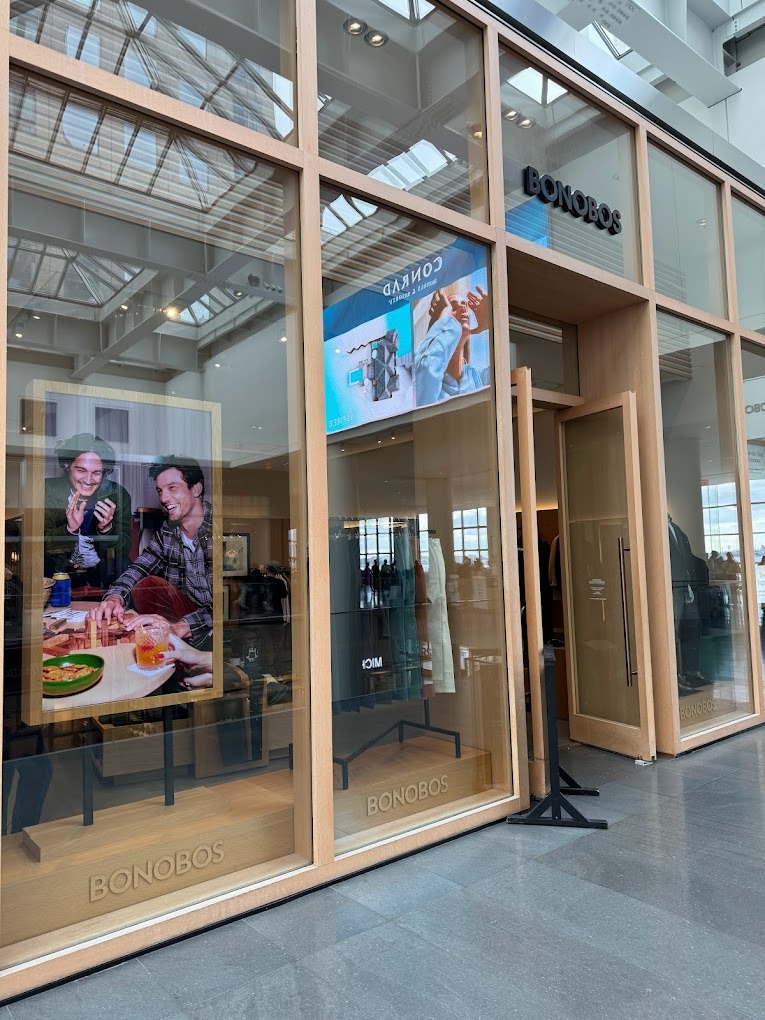
Static posters gather dust. Digital displays tell stories that evolve. The gap between your physical space and your digital content doesn’t have to exist. Digital signage eliminates it, turning your storefront, lobby, or sales floor into an extension of your online brand presence.
This isn’t about replacing physical presence with screens. It’s about amplifying what physical space already does well, commanding attention, building trust, and creating memory with the flexibility and targeting power that only digital content provides.
Merging the Best of Both Worlds
Physical locations give you presence. Digital content gives you agility. Digital signage delivers both simultaneously.
You get the cognitive shortcuts and trust signals that come from occupying real-world space, combined with the personalization and responsiveness that make digital marketing effective. The result is brand storytelling that adapts to your audience while maintaining the permanence that physical presence requires.
What digital signage enables in physical spaces:
- Content that changes based on time of day, season, or current events
- Product showcases that update the moment new inventory arrives
- Social proof through live customer reviews and user-generated content
- Promotional campaigns that launch across all locations instantly
- Analytics on what content drives foot traffic and conversions
Retail strategy firms like Retail Doctor Group and First Insight have tracked this shift across thousands of locations. Brands that integrate digital storytelling into physical spaces see measurably different customer behavior compared to those using static displays.
Dynamic Content That Matches Customer Context
Here’s where digital signage outperforms both static displays and purely digital marketing: contextual relevance. Your morning commuters see different content than your lunch-hour browsers or evening shoppers. The family walking past on Saturday gets different messaging than the solo professional on Tuesday morning. You can match your story to the moment without printing a single new sign.
| Time Block | Audience Type | Content Strategy |
| 7-9 AM | Commuters | Quick-service options, grab-and-go |
| 11 AM-2 PM | Lunch crowd | Meal deals, seating availability |
| 3-6 PM | After-work shoppers | Premium products, leisure browsing |
| Evenings/Weekends | Families, groups | Experience-focused, entertainment value |
This kind of targeting happens automatically. No manual updates. No, hoping your social media algorithm shows the right post to the right person. The screen adapts because you’ve programmed it to match the patterns you see in your foot traffic.
Modern platforms like CrownTV make this scheduling simple through a cloud-based dashboard that lets you control content across multiple locations from anywhere. Our media player connects to your displays and handles the heavy lifting while you focus on crafting messages that resonate with each audience segment.
Creating Continuity Across Channels
Your Instagram followers expect one brand voice. Your email subscribers expect another. Your in-store visitors deserve the same cohesion.
Digital signage lets you extend campaigns from online channels into physical spaces without losing the thread. Launch a product on social media, feature it on your storefront displays, continue the conversation in-store, and close the loop with email follow-up. The story stays consistent even as the medium changes.
Cross-channel campaign flow:
- Social media teases new product launch
- Storefront displays showcase arrival and key features
- In-store signage provides detailed specifications and styling ideas
- Email captures interested visitors who didn’t convert immediately
- Retargeting brings them back with relevant offers
The customer experiences one continuous narrative instead of disjointed messages that happen to come from the same brand. That continuity builds the kind of brand recognition that drives purchase decisions.
Real-Time Responsiveness Without Losing Physical Credibility
Digital-only brands can pivot messaging in minutes. Physical-only brands need days or weeks to change signage. Digital signage in physical spaces gives you both speed and legitimacy.
Weather changes? Update your displays to feature relevant products. Competitor launches a sale? Respond with your own promotion across all locations. A viral moment happens on social media? Bring that energy into your physical presence before the trend dies.
Responsive capabilities that static displays can’t match:
- Inventory-based messaging that highlights what’s actually in stock
- Emergency updates for hours, closures, or service changes
- Event-driven content tied to local happenings or cultural moments
- A/B testing different creative approaches based on conversion data
- User-generated content that shows real customers using your products
You maintain the trust and permanence that comes from physical presence while gaining the flexibility that makes digital marketing powerful. Your space stays relevant without sacrificing the credibility that drew customers to your location in the first place.
Technology That Enhances Rather Than Replaces
The point isn’t to turn your store into a screen farm. It’s to use digital displays strategically where they add value that static elements can’t provide.
Window displays benefit from motion and changing content. Product endcaps need pricing and feature callouts that update with inventory. Queue areas become opportunities for education instead of dead time. Digital signage fills these gaps without overwhelming your physical environment.
Smart implementation means knowing when screens help and when they hurt. A beautifully merchandised display doesn’t need a screen. A clearance section benefits from dynamic pricing. Your entrance wants eye-catching motion. Your checkout area needs quick-hit promotions.
Strategic placement considerations:
| Location | Best Use | Why It Works |
| Window/exterior | Brand storytelling, hero products | High visibility, 24/7 exposure |
| Entrance | Welcome messaging, current promotions | First impression sets the tone |
| Product areas | Specifications, styling tips, reviews | Aids purchase decisions |
| Queue lines | Educational content, upsells | Captive audience, dwell time |
| Checkout | Impulse items, loyalty programs | Point of conversion |
The goal is amplification, not replacement. Your physical space provides the foundation. Digital signage makes that foundation work harder, reach further, and adapt faster to what your customers need in the moment.
Getting the setup right matters. CrownTV’s installation service handles everything from screen mounting to player configuration, which means you can focus on content strategy instead of technical troubleshooting. Their software integrates with existing apps and widgets, so you’re not starting from scratch or rebuilding workflows you’ve already optimized.
ROI Difference Between Brands That Show Up in Person Versus Those That Live Online Only
Digital-only brands pay for attention every single time they want it. Physical brands own it. That’s the fundamental ROI difference. Every impression your physical location generates costs you nothing beyond the fixed overhead you’re already paying. Every impression a digital-only competitor generates comes with a price tag attached.
The math compounds fast. A digital brand spending $50,000 annually on paid advertising might generate 2 million impressions. A physical location in a moderate-traffic area generates the same number of impressions through passive foot traffic alone, with zero marginal cost per view.
The Cost Structure Advantage
Digital advertising operates on variable costs that scale with your ambitions. Want more reach? Pay more. Want better targeting? Pay more. Want to maintain visibility? Keep paying, forever.
Physical presence operates on fixed costs that improve over time. Your rent doesn’t increase because more people walk past your storefront. Your buildout cost gets amortized across every impression for years.
Digital-only cost structure:
- Pay-per-click advertising fees
- Social media promotion costs
- Retargeting campaign expenses
- Influencer partnerships and sponsorships
- Content creation for platform algorithms
- Rising CPMs as competition increases
Physical presence cost structure:
- Fixed rent and occupancy costs
- One-time buildout and design investment
- Signage that lasts years, not days
- Staff who serve multiple functions
- Utility costs that don’t scale with traffic
- Decreasing cost-per-impression over time
The digital brand needs continuous investment to maintain visibility. The physical brand’s investment pays dividends every day without additional spending.
Customer Acquisition Cost Comparison
Acquiring a customer digitally costs brands between $50-$200, depending on industry and competition. That’s what you pay to get someone from an ad impression to first purchase through purely digital channels.
Physical locations acquire customers differently. The person who walks past your store 20 times before coming in didn’t cost you $50. They cost you nothing. The ambient exposure, the repeated brand impressions, and the trust built through physical presence are all free byproducts of occupying space.
| Acquisition Channel | Typical Cost | Repeat Cost | Long-term Trend |
| Paid search | $45-$150 per customer | Every campaign | Increasing |
| Social media ads | $30-$100 per customer | Every campaign | Increasing |
| Foot traffic conversion | Rent ÷ customers | Fixed overhead | Stable/decreasing |
| Referral from a physical visit | $0 per customer | $0 | Stable |
The physical customer acquisition flywheel works differently. Your location attracts initial customers through visibility. Those customers tell others. Those referrals come in already warm because they’ve heard about a real place they can visit. Your acquisition cost drops while digital competitors keep paying the same rates or higher.
Lifetime Value Multipliers
Customers acquired through physical channels stick around longer and spend more over their lifetime. The reason connects back to trust and tangibility.
When someone finds your brand through a digital ad, they’re one retargeting pixel away from your competitor. When someone visits your physical location, they’ve invested time, effort, and mental energy in the relationship. That investment creates switching costs that your digital-only competitors don’t benefit from.
Physical customer advantages:
- Higher repeat purchase rates due to location convenience
- Increased basket sizes from in-person browsing and discovery
- Lower churn rates thanks to established relationships and trust
- More referrals generated through word-of-mouth
- Cross-channel behavior that boosts both online and offline sales
- Brand loyalty that survives competitive pricing pressure
Retail consultants at Parker Avery Group and McMillanDoolittle track these metrics across multi-channel and single-channel brands. The pattern holds: customers who interact with physical locations deliver measurably higher lifetime value than those acquired and retained purely through digital channels.
The Compounding Returns Problem
Here’s where the ROI gap becomes a chasm: digital marketing costs reset to zero every time you stop spending. Physical presence keeps working.
Pause your Facebook ads, and your impressions drop to zero overnight. Close your Google Ads account, and you disappear from search results. Physical presence doesn’t have an off switch. Your storefront keeps building brand equity, generating impressions, and attracting customers whether you’re actively marketing or not.
This creates compounding returns that digital-only models can’t replicate. Year one, your physical location might underperform digital channels on pure cost-per-acquisition. Year two, the metrics even out. Year three and beyond, physical presence pulls ahead as the fixed costs get spread across growing customer counts while digital costs keep climbing.
ROI trajectory comparison:
| Year | Digital-Only Brand | Physical + Digital Brand |
| Year 1 | High spend, fast growth | Moderate spend, steady growth |
| Year 2 | Increasing costs, sustained growth | Stable costs, accelerating growth |
| Year 3+ | Rising acquisition costs eat into margins | Fixed presence costs, improving margins |
The digital-only brand is always renting attention. The physical brand owns an asset that appreciates through established presence, customer relationships, and community integration.
Market Position and Negotiating Power
Physical presence gives you leverage that digital-only competitors lack. You can negotiate better terms with suppliers because you move real volume through real locations. You can command higher prices because customers trust the permanence of your business. You can weather market downturns because you’re not entirely dependent on ad platform algorithm changes.
Digital-only brands live at the mercy of platform policies, algorithm updates, and rising CPMs. Physical brands control their own destiny. That control translates directly to better unit economics, stronger margins, and more sustainable growth over time.
Your Physical Space Is Already Doing the Work—Make It Work Smarter
You’ve seen how physical presence cuts through digital noise, builds trust faster than any ad campaign, and generates ROI that compounds instead of resetting every month.
The brands winning this shift aren’t choosing between physical and digital. They’re using both strategically, letting each channel do what it does best while covering the weaknesses of the other.
What happens when you get this right:
- Foot traffic converts at higher rates because your displays speak directly to the moment and the audience in front of them
- Customer acquisition costs drop as physical presence generates free impressions that digital competitors pay thousands to replicate
- Brand recall strengthens through spatial memory and repeated exposure which requires zero ongoing ad spend
- Trust builds automatically because customers can verify your legitimacy by walking through your door
- Content stays fresh and relevant without the printing costs, labor, or lag time that make static signage obsolete
The gap between what your physical space could deliver and what it currently generates often comes down to one thing: whether your displays can adapt as fast as your customers’ needs change.
CrownTV bridges that gap. Their platform gives you the scheduling flexibility to match content to your foot traffic patterns, the cloud-based control to update messaging across all your locations instantly, and the installation support to get everything running without the technical headaches. You focus on the story you want to tell. The system handles making sure the right people see it at the right time.