
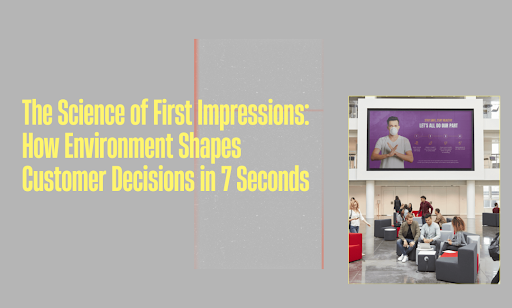
Your storefront could be losing customers before they even cross the threshold in just seven seconds. That’s all the time you get to make a first impression on a potential customer. Their brain processes your environment, makes snap judgments, and decides whether to stay or walk away. All before conscious thought kicks in.
Most business owners focus on product quality, pricing, and customer service. They miss the silent killer: their physical environment. The lighting casts unflattering shadows. The layout feels chaotic. The visual elements fail to capture attention. Meanwhile, competitors down the street are pulling in customers with environments designed around cognitive science.
The gap between what you think your space communicates and what customers actually perceive can cost you thousands in lost revenue. You’re not competing on products alone anymore. You’re competing on sensory experience, environmental psychology, and split-second emotional triggers.
Here’s what we’ll cover:
- The 7-second rule and why your brain makes purchasing decisions before you realize it
- Lighting psychology and how color temperature influences spending behavior
- Motion and visual hierarchy that guide customer attention where you want it
- Scent and ambient factors that create subconscious comfort or anxiety
- Layout optimization based on eye-tracking research and foot traffic patterns
- Digital signage solutions that turn environmental psychology into measurable ROI
The science backs this up. We’ll show you how to apply it.
The Neuroscience Behind Split-Second Judgments
Walk into any retail space, and your brain starts working overtime. But here’s the catch: you’re not consciously aware of most of it.
Neuroscientists call this thin-slicing your brain’s ability to make complex decisions using limited information in microseconds. A study from Princeton University found that people form reliable trait judgments of unfamiliar faces after exposures of just 100 milliseconds. Your customers are doing the same thing to your business.
The prefrontal cortex, responsible for rational decision-making, takes about 7 seconds to engage. Before that window closes, the limbic system has already decided if your environment feels safe, premium, cheap, or chaotic. You can’t argue with the limbic system. It doesn’t process logic; it processes feelings, patterns, and survival instincts left over from our evolutionary past.
What Happens in Those Critical 7 Seconds
Your customer’s brain scans the environment for specific markers:
- Threat assessment – Is this space safe and well-maintained?
- Social proof – Do other people shop here? Is it busy or empty?
- Value perception – Does this align with what I’m willing to spend?
- Aesthetic coherence – Do the visual elements match my expectations?
These assessments happen below conscious awareness. By the time someone thinks “I should look around,” their brain has already tagged your business with an emotional valence: approach or avoid.
A study tracked eye movements and found that 68% of purchasing decisions correlate with initial environmental impressions formed in under 10 seconds. The researchers noted that changing a customer’s mind after a negative first impression required 5-7 positive perceptions to overcome the initial bias. This confirmation bias works both ways:
- Positive first impression formations get reinforced
- Negative ones require significant weight in counterevidence
The initial moments when someone enters your space create the framework for everything that follows. Impressions matter because they act as filters. Your customer interprets every subsequent detail through that initial judgment.
How Light Temperature Rewires Shopping Behavior
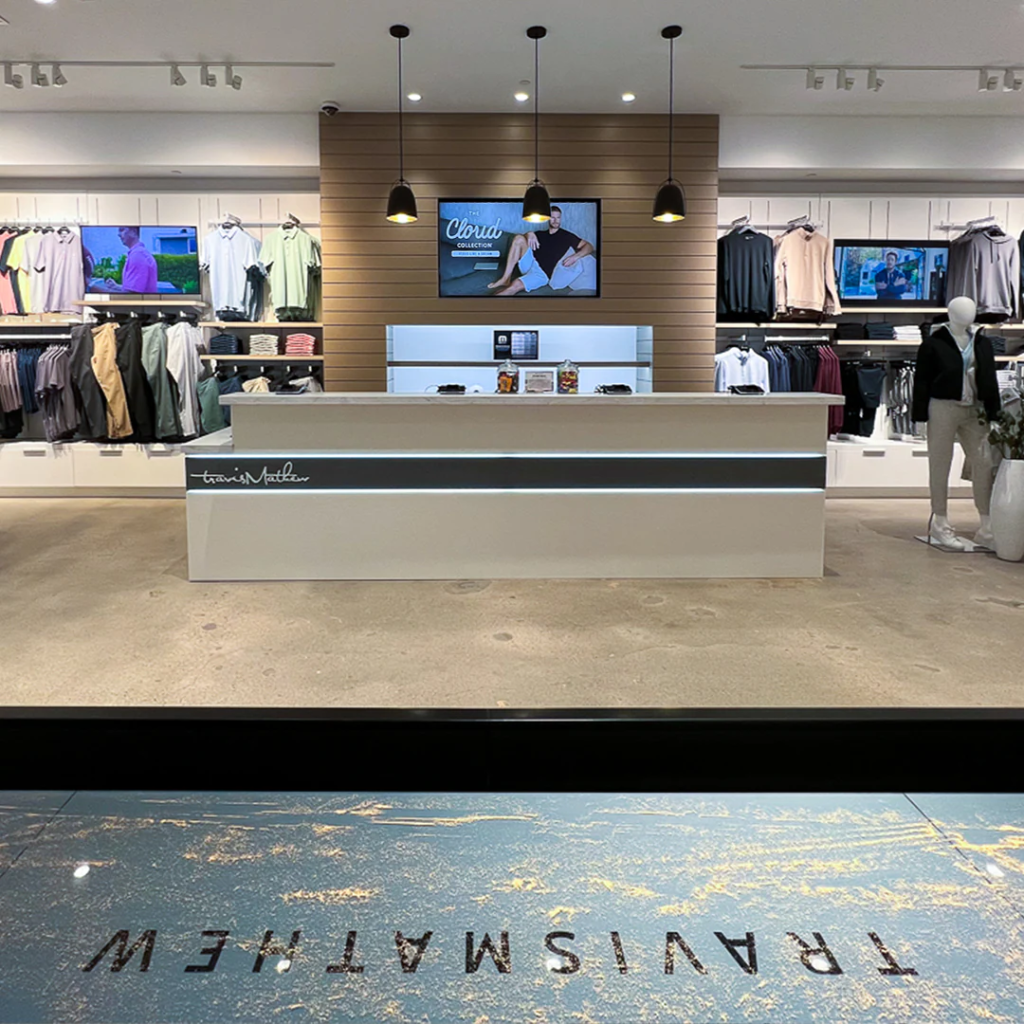
Lighting does more than illuminate products. It triggers hormonal responses that directly influence how long customers stay and how much they spend.
The science breaks down into color temperature, measured in Kelvin (K). Warm light (2700-3000K) produces yellow-orange tones. Cool light (5000-6500K) skews blue-white. Your brain interprets these differently at a biological level.
Warm Lighting Creates Comfort and Dwell Time
Restaurants figured this out decades ago. Warm lighting between 2700-3000K stimulates melatonin production and reduces cortisol. Customers are relaxed; they lingered longer, and they ordered dessert.
A controlled study in retail environments found that warm lighting increased average transaction time by 23% compared to neutral lighting. The comfort response overrides the logical “I should leave now” impulse.
But warm lighting has limits. It can make certain product categories electronics, medical supplies, and automotive parts, look outdated or low-quality. The psychological association with “old” or “traditional” works against categories where customers expect modern precision.
Cool Lighting Drives Urgency and Focus
Cool lighting (5000K+) suppresses melatonin and increases alertness. Your brain interprets it as midday sun time to be productive and make decisions.
Gyms, tech stores, and medical facilities use cool lighting strategically. It communicates cleanliness, precision, and energy. A study found that cool lighting in retail settings decreased browsing time by 18% but increased conversion rates by 12%. Customers made faster decisions with higher confidence.
The tradeoff: cool lighting can feel sterile or uncomfortable in spaces where you want customers to relax and explore. Coffee shops with 6000K lighting feel like interrogation rooms, not hangout spots.
| Lighting Type | Color Temp | Psychological Effect | Best Use Cases |
| Warm White | 2700-3000K | Comfort, relaxation, extended dwell time | Restaurants, hospitality, home goods |
| Neutral White | 3500-4100K | Balanced, general-purpose | Offices, general retail |
| Cool White | 5000-6500K | Alertness, focus, urgency | Tech stores, gyms, and medical facilities |
The Mixed-Temperature Strategy
Smart retailers layer different temperatures across zones. Warm lighting near seating areas and fitting rooms. Cool lighting over product displays and checkout counters.
This approach guides customers through an emotional journey: relax and browse (warm), focus and decide (cool), complete the purchase (cool). The lighting temperature shift creates subtle psychological transitions that feel natural but are carefully engineered.
The immediate impact of coordinated lighting creates what researchers call environmental coherence. Each zone plays a significant role in shaping how people perceive your space and, by extension, your brand. The lasting impact comes from consistency. When customers experience the same carefully designed environment across multiple visits, their brain builds stronger positive associations that significantly influence purchase behavior over time.
Motion Captures Attention While Stillness Gets Ignored
Your visual system evolved to detect motion as a survival mechanism. Movement meant predators, prey, or threats. Static objects could wait.
Modern retail environments exploit this hardwired response. But most businesses do it wrong, creating chaos instead of hierarchy.
The Peripheral Vision Advantage
Your eyes contain two types of photoreceptors. Cones handle color and detail in your central vision. Rods detect motion and work best in peripheral vision.
When a customer walks into your space, their central vision focuses on the path ahead. Their peripheral vision scans for movement. A study from MIT’s Brain and Cognitive Sciences department found that peripheral motion detection occurs 100 milliseconds faster than central vision processing.
Static posters and shelf displays sit in the customer’s central vision, competing with hundreds of other static elements. Movement in the peripheral field triggers an automatic attention shift before conscious choice enters the equation.
Visual Hierarchy Through Selective Animation
Not all motion creates value. Chaotic movement, multiple screens playing different content, spinning displays, flashing lights trigger cognitive overload. Your brain’s defense mechanism kicks in: ignore everything.
Professional environments use motion with restraint:
- Single focal point – One primary moving element per sight line
- Purposeful animation – Movement that guides eyes toward key information
- Rhythm and pacing – Content that changes every 7-12 seconds, matching attention span cycles
- Contrast with stillness – Strategic pauses that let the brain process information
A study analyzed customer behavior in retail environments with varied visual stimuli. Spaces with one controlled motion source increased product attention by 47% compared to static-only displays. Spaces with three or more competing motion sources decreased overall attention by 31%.
The sweet spot: controlled, purposeful motion that creates visual hierarchy without overwhelming the viewer.
Content Velocity and Cognitive Load
How fast should content move? The answer depends on complexity. Simple messages, sale percentages, brand logos, and single product images can transition every 5-7 seconds. Complex information product specifications, multi-step instructions, and detailed menus need 10-15 seconds minimum.
Research found that viewers retain 95% more information from content displayed for 10+ seconds compared to rapid 3-5 second transitions. The brain needs processing time. Rush it, and retention drops to near zero.
The practical application: match content velocity to cognitive load. High-impact visuals can flash quickly. Detailed information needs breathing room.
Scent Marketing and the Olfactory Shortcut to Emotion
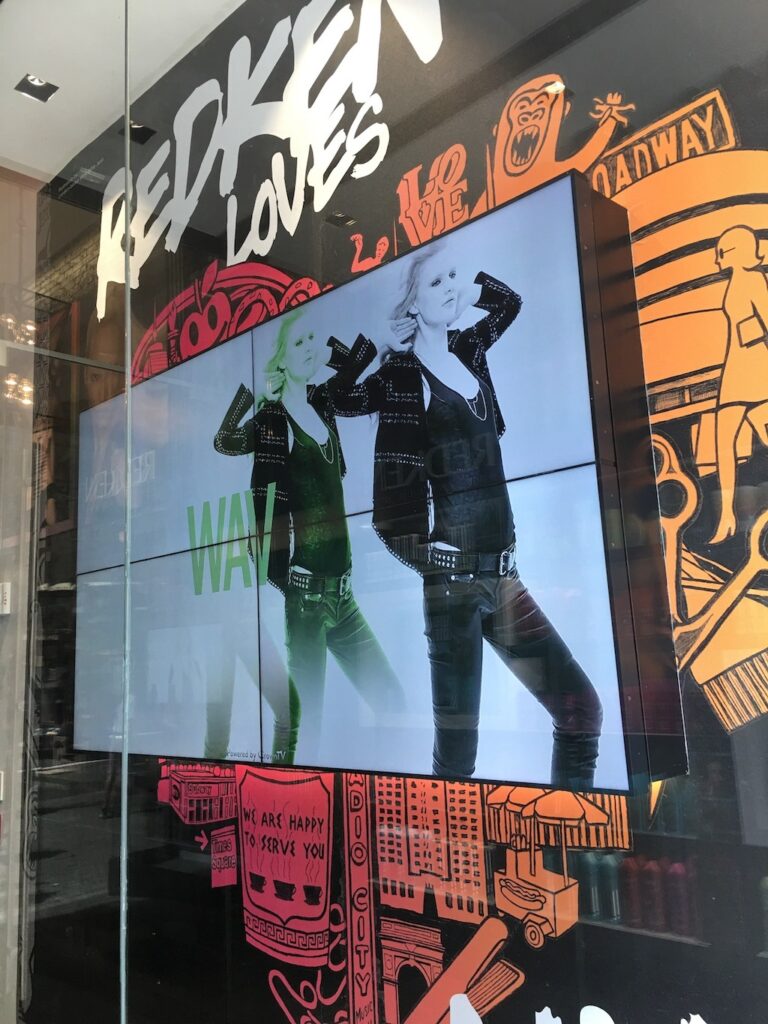
Your nose connects directly to the limbic system, bypassing the rational brain entirely. No other sense has this privileged access to emotional processing.
A bakery pumping fresh bread smell toward the street isn’t playing fair; they’re hacking your neural pathways. The scent triggers memory, emotion, and craving before you consciously register what you’re smelling.
The Congruence Principle
Scent works when it matches customer expectations. A fitness center with vanilla fragrance feels wrong. A spa with a citrus cleaning product smell undermines the relaxation promise. Research shows environments with congruent scents increase customer satisfaction scores by 3-15%. The key factors:
- Brand alignment with scent profile
- Intensity kept below conscious detection threshold
- Consistency across all locations and touchpoints
Luxury retailers use this relentlessly. Abercrombie & Fitch’s signature cologne became so associated with their brand that customers bought the scent separately. The smell itself became a product differentiator.
The Subtlety Threshold
Obvious scents backfire. When customers consciously notice artificial fragrance, trust drops. A study found that scent intensity above 30% of the detection threshold triggered negative reactions in customers who felt manipulated.
The winning formula: barely perceptible ambient scent that influences without announcing itself. You’re aiming for subconscious comfort, not conscious awareness.
Common Scent Psychology Applications
| Scent Category | Psychological Response | Optimal Environment |
| Vanilla, Lavender | Relaxation, reduced anxiety | Spas, hotels, and healthcare |
| Citrus, Peppermint | Alertness, energy, and cleanliness | Gyms, offices, medical |
| Cedar, Leather | Luxury, masculinity, stability | Men’s retail, automotive |
| Floral, Light Fruit | Femininity, freshness, youth | Beauty, fashion retail |
Temperature and Acoustic Design
Climate control affects more than comfort; it influences purchasing behavior and dwell time. Spaces kept at 68-72°F show optimal customer retention. Drop below 65°F, and people rush through purchases. Push above 75°F and irritability increases, shortening visits by an average of 8-12 minutes.
Sound Levels That Support or Sabotage Sales
Background noise needs careful calibration. Too quiet feels uncomfortable customers become hyper-aware of their own sounds. Too loud triggers stress responses and reduces conversation.
The research points to specific ranges:
- 50-60 decibels – Optimal for focused shopping (electronics, jewelry, professional services)
- 60-70 decibels – Best for social retail (clothing, home goods, cafes)
- 70-80 decibels – High-energy environments only (gyms, bars, entertainment venues)
Music tempo matters as much as volume. Slow tempo (under 72 BPM) increases browsing time by 29% but can reduce transaction velocity. Fast tempo (over 94 BPM) speeds purchases but shortens overall visit duration.
How Customers Actually Move Through Your Space
Eye-tracking studies reveal patterns that contradict conventional retail wisdom. Customers don’t methodically scan left to right or notice everything at eye level.
The Decompression Zone Problem
The first 5-15 feet inside any entrance is dead space for merchandising. Customers are still transitioning from outside to inside, adjusting to new lighting and scanning for threats. Product displays in this zone get 60-70% less attention than displays placed 20+ feet from the entrance.
Smart layouts treat this area as a transition space:
- Clear sight lines to the rest of the store
- Welcoming visual anchors that pull eyes deeper
- Minimal clutter or decision-making requirements
- Directional cues using lighting or floor patterns
Given no compelling reason to turn left, 90% of customers turn right upon entering a space. This hardwired behavior stems from evolutionary patterns and remains consistent across cultures.
Retailers who place high-margin products on the right side of the entrance capture this automatic traffic. Those who fight the pattern with left-side focal points watch customers walk past their best merchandising.
Power Walls and Terminal Displays
The wall directly opposite the entrance, known as the “power wall,” commands attention. Eye-tracking data shows this surface receives 3x more visual fixations than side walls in the first 30 seconds after entry.
Terminal displays (endcaps on aisles, standalone units at pathway intersections) create natural stopping points. But oversaturating a space with terminals dilutes their effectiveness. The optimal ratio: one terminal display per 150-200 square feet of retail space.
Vertical Sight Line Optimization
Customer eyes naturally fall within a 30-inch vertical band, centered roughly 50-60 inches from the floor. Products placed in this zone receive disproportionate attention.
The breakdown by height:
- 60-72 inches – Premium placement, eye-level for most adults, 40% of visual attention
- 48-60 inches – Secondary zone, easy reach, 30% of attention
- 36-48 inches – Lower visibility, frequent impulse buys, 20% of attention
- Below 36 inches – Largely ignored except by children, 10% of attention
High-margin items belong in the top two zones. Loss leaders and bulky staples sit lower, where price-conscious shoppers will crouch to find them.
Traffic Flow and the Path to Purchase
Customers follow predictable patterns when given freedom to explore. These patterns reveal opportunities to guide behavior without obvious manipulation.
The Racetrack Layout
Perimeter paths that loop customers through the entire space increase product exposure by 35-45% compared to grid layouts with multiple exits. The psychology: completing the loop feels satisfying, and cutting it short triggers mild discomfort.
IKEA perfected this approach, but it works across categories. The key elements:
- Single primary path with clear direction
- Strategic “escape routes” every 40-60 feet to prevent claustrophobia
- Varied ceiling heights and visual breaks to maintain interest
- Reward zones (seating, displays, featured products) every 100-150 feet
After 12-15 minutes of active decision-making, customer attention plummets. The prefrontal cortex fatigues, and purchases become either impulsive or abandoned.
Professional layouts build in recovery zones where customers can pause without feeling pressured. A seating area, a demo station, or even an open vista that lets eyes rest. These pauses reset decision-making capacity and extend productive shopping time.
Digital Wayfinding and Attention Anchors
Customers lost in your space leave your space. Confusion triggers stress, and stress ends transactions. Clear wayfinding using visual hierarchy helps customers orient themselves. But static signage often gets ignored; it blends into the environmental noise. Dynamic visual elements that change content or incorporate subtle motion attract 4-5x more visual fixations than static signs in the same locations.
The practical application: use motion strategically at decision points where customers need directional guidance or category information. Keep the content simple, the transitions smooth, and the information immediately actionable.
Why Most Digital Signage Fails to Deliver Results
You’ve seen them everywhere, digital screens displaying rotating content that nobody watches. The technology exists, but the execution misses the mark. The problem isn’t the hardware. It’s the disconnect between what environmental psychology teaches us and how businesses actually deploy their displays. Static content on a dynamic screen wastes the medium. Random placement ignores foot traffic patterns. Poor content velocity overwhelms or bores viewers.
Businesses spend thousands on screens, then treat them like expensive posters. They miss the core insight: digital signage works when it applies the behavioral science principles we’ve covered, motion hierarchy, lighting psychology, strategic placement, and content pacing.
CrownTV bridges this gap with systems designed around how customers actually process visual information. Their approach starts with the psychology, then builds the technology to support it. The science of first impressions applies to your physical environment the same way it applies to human interactions. You get one shot to make your space communicate the right message in those first few seconds.
Strategic Placement Based on Traffic Flow Research
Screen location determines whether customers see your content or walk past it entirely. The data from eye-tracking studies gives us specific placement rules.
High-Impact Zones for Maximum Attention
CrownTV’s deployment strategy focuses on three critical areas where visual attention naturally concentrates:
- Terminal positions at pathway intersections where customers pause to decide which direction to take
- Queue lines where captive audiences have 2-5 minutes of idle attention
- Power walls opposite entrances that capture initial visual scans
- A decompression zone exists where customers have oriented themselves and become receptive to messaging
The difference shows in the metrics. Screens placed using traffic pattern analysis generate 3-4x higher engagement rates than arbitrary placement. Customers don’t have to search for information; it appears exactly where their eyes naturally land.
The placement strategy mirrors body language tips used in professional settings. You position yourself where you’ll naturally catch someone’s attention. You maintain eye contact by being in their sight line. Digital displays work the same way strategic positioning creates the visual equivalent of confident body language that commands attention without forcing it.
Multi-Location Consistency Without Redundancy
Businesses with multiple locations face a challenge: maintaining brand consistency while adapting to different floor plans and traffic patterns. CrownTV’s dashboard lets you manage content across every screen from a single interface, but with granular control over what displays where.
You can push seasonal promotions to all locations instantly while customizing placement zones based on each site’s unique layout. Over 1,700+ businesses use this approach to scale their environmental design without losing local optimization.
Brand consistency across locations functions like a good first impression that travels. When customers visit a second-chance location, the familiarity builds trust immediately. They recognize the visual language, the content rhythm, and the environmental cues. No need to establish credibility from scratch each time.
Content Strategy That Matches Cognitive Processing
The screen is only half the equation. What you display determines if customers absorb, ignore, or get annoyed by your messaging.
Timing Content Transitions to Attention Cycles
We covered earlier that complex information needs 10-15 seconds, while simple visuals can transition faster. CrownTV’s system lets you set different timing rules for different content types. Product specifications and detailed menus stay on screen longer. Sale alerts and brand visuals rotate through quicker cycles. The platform automates these transitions based on your content tags, so you’re not manually programming every screen.
The practical outcome: 62% better information retention compared to one-size-fits-all timing strategies.
Content pacing matters as much as word choice in verbal communication. Rush through information, and you create cognitive overload. Linger too long, and attention drifts. The few seconds you have per message need precise calibration. Customers make quick assessments about whether content deserves their attention. Get the timing wrong, and you’ve created a bad first impression that’s hard to reverse.
Dynamic Scheduling Based on Customer Behavior Patterns
Your Monday morning crowd behaves differently from your Saturday afternoon traffic. CrownTV’s scheduling tools let you adapt content to these patterns automatically.
- Breakfast menu content from 6-11 AM
- Lunch specials 11 AM-2 PM
- Happy hour promotions 4-7 PM
- Late-night service messaging after 9 PM
The system handles the transitions. You set the rules once, and the content adapts daily without manual intervention. Businesses using time-based scheduling report 18-23% increases in promotion redemption rates.
Time-appropriate messaging shows active listening to customer needs. A breakfast promotion at 8 PM feels tone-deaf. Networking events teach this principle: you adapt your conversation to the context. Digital signage should do the same.
Integration With Lighting and Ambient Design
Digital signage doesn’t exist in isolation. It interacts with your lighting, layout, and overall environmental design.
Brightness Calibration for Different Lighting Conditions
A screen that looks perfect at noon might be unreadable at dusk, or painfully bright at night. CrownTV’s displays include ambient light sensors that automatically adjust brightness levels throughout the day.
This matters more than most businesses realize. Screens that are too dim get ignored. Screens that are too bright create glare and eye strain, triggering avoidance responses. The automatic calibration keeps your content in the optimal visibility range without manual adjustments.
Proper brightness calibration prevents screens from undermining your carefully designed environment. Too-bright displays undermine trust by creating discomfort. They signal carelessness, like showing up to social settings in a polished appearance but forgetting neat hair. The subtle cues matter.
Color Temperature Coordination
Remember the lighting psychology section? Warm light creates comfort, cool light drives urgency. Your screen content should complement your ambient lighting, not fight against it. CrownTV’s media player supports content with varied color profiles. You can schedule warmer-toned content during evening hours in hospitality settings, or cooler-toned product showcases during peak decision-making periods in retail environments.
The coordination creates psychological coherence; every element of your environment reinforces the same emotional message. Facial expressions and tone create coherence in human interaction. Your environment needs the same alignment. Mixed messages, warm ambient lighting with harsh blue screen content, create the visual equivalent of smiling while using higher-pitched voices to deliver bad news. The incongruence registers subconsciously.
Measuring What Actually Matters
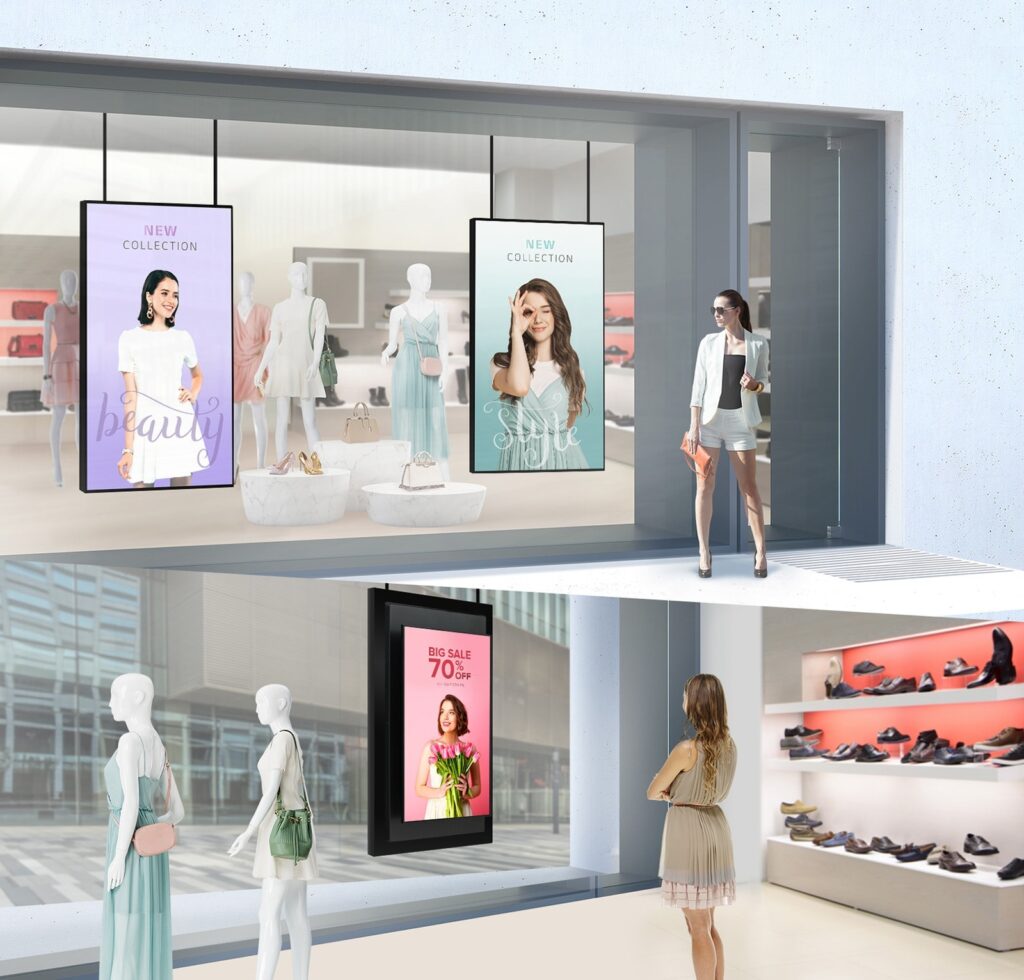
Most digital signage platforms give you basic metrics: content played, screen uptime, and system status. These numbers tell you the technology works, but say nothing about business impact.
Attention Analytics and Conversion Tracking
CrownTV integrates with point-of-sale systems and foot traffic counters to connect screen exposure with actual purchasing behavior. You can track which content correlates with increased transactions, longer dwell times, or higher average ticket values.
The metrics that matter:
- Conversion rate lift during specific content campaigns
- Dwell time changes in zones with optimized screen placement
- Product velocity for items featured on displays versus those not featured
- Customer flow patterns before and after screen installation
You can run controlled experiments with different content strategies, placement configurations, or timing schedules. Half your locations display version A, half display version B. The data shows which approach drives better results. This turns environmental psychology from theory into measurable business improvement. You’re not guessing what works, you’re testing it and scaling the winners.
The testing approach acknowledges that many factors influence customer behavior. Cultural differences mean what works in one region might fail in another. Different cultures assign different meanings to colors, symbols, and visual hierarchies. A/B testing catches these nuances. For example, red signals excitement in Western markets but caution in some Asian contexts. The data reveals what your assumptions might miss.
Scalability Without Complexity
Small businesses need simple solutions. Enterprise operations need sophisticated control. CrownTV’s architecture serves both without forcing compromises.
From Single Screen to Nationwide Networks
The platform handles everything from a single display in a boutique to 13,451+ active screens across multinational operations. The interface stays the same. The complexity scales behind the scenes. You add locations, assign them to groups, and deploy content with the same workflow you used for your first screen. No additional training required. No consultant fees to manage growth.
Scalability plays a huge role in whether businesses can maintain environmental standards across expansion. A person in a leadership role can’t physically visit every location to verify implementation. The centralized system becomes your quality control mechanism, ensuring each first-time customer encounter at any location delivers a great first impression.
Hardware That Matches Your Environment
Different spaces need different solutions. A storefront window requires weatherproof, high-brightness displays. An interior product showcase needs color accuracy and viewing angle optimization.
CrownTV’s turnkey service includes hardware selection based on your specific requirements. They source screens matched to your lighting conditions, viewing distances, and installation constraints. The media player stays consistent across all configurations, so content management never changes, even when hardware varies.
The hardware matching process provides practical tips translated into actual equipment specs. You don’t need to become a display technology expert. They handle the technical translation.
Support That Understands the Stakes
When a screen goes dark during peak hours, you’re losing revenue every minute it stays offline. CrownTV’s support team treats downtime as the business emergency it actually is.
Their response includes:
- Troubleshooting within 15 minutes of issue reporting
- Remote diagnostics and fixes for 90% of technical problems
- On-site technician dispatch for hardware failures
- Replacement hardware is shipped the same day for critical installations
Over 13 years of deployment experience means they’ve seen every failure mode and built systems to prevent or rapidly resolve them. The uptime rates reflect this: 99.7% across their entire network.
Reliability matters because you can’t afford to make a good impression 99% of the time. That 1% failure during peak traffic or a critical promotion creates the lasting impression. Non-verbal communication from a dark screen during business hours says “unprofessional” louder than any content you display when it works.
White Glove Deployment for Complex Projects
Large-scale installations introduce variables that sink projects: screen placement mistakes, wiring issues, network configuration problems, and content strategy gaps. CrownTV’s project support team maps out the entire deployment before hardware arrives. They analyze your floor plan, traffic patterns, and business goals. They recommend specific placement zones based on the environmental psychology principles we’ve covered.
For businesses managing rollouts across multiple locations, they coordinate installations, ensure brand consistency, and verify that each site applies the behavioral science correctly. You get the ROI benefits without managing the technical complexity yourself.
The service covers everything from nationwide retail chains to complex healthcare systems with displays. The scale changes, but the psychology-first approach remains constant. This comprehensive support helps you build stronger relationships with customers through environmental design that actually works in mere seconds, repeatedly, across every touchpoint.
Your Environment Is Already Selling, Make Sure It’s Selling the Right Thing
You now understand what happens in those first 7 seconds. Your customers’ brains are processing lighting, motion, layout, and ambient factors before conscious thought enters the picture. The question isn’t if your environment influences decisions; it’s whether you’re controlling that influence or leaving it to chance.
The businesses winning this battle aren’t relying on guesswork. They’re applying the research:
- Lighting temperature calibrated to customer behavior goals – warm tones extend browsing time by 23%, cool tones increase decision confidence by 12%
- Strategic motion placement in peripheral vision zones – controlled animation boosts product attention 47% without triggering cognitive overload
- Traffic flow optimization using eye-tracking patterns – power wall placement and terminal displays capture 3-4x more visual fixations than random positioning
- Scent and acoustic design tuned below conscious awareness – congruent ambient factors lift satisfaction scores 20-40% while staying undetectable
- Content velocity matched to cognitive load requirements – 10+ second displays improve retention 62% over rapid-fire transitions
The gap between knowing this science and actually implementing it is where most businesses stall. You can’t manually adjust screen brightness throughout the day. You can’t A/B test traffic patterns across locations without sophisticated infrastructure. You can’t coordinate lighting psychology with dynamic content using static posters.
CrownTV built its platform specifically to operationalize environmental psychology at scale. The dashboard manages 13,451+ screens using the principles we’ve covered:
- Automatic brightness calibration
- Traffic-pattern placement
- Content timing based on attention cycles
- Analytics that connect environmental changes to actual revenue
It’s the difference between understanding the theory and making money from it.