
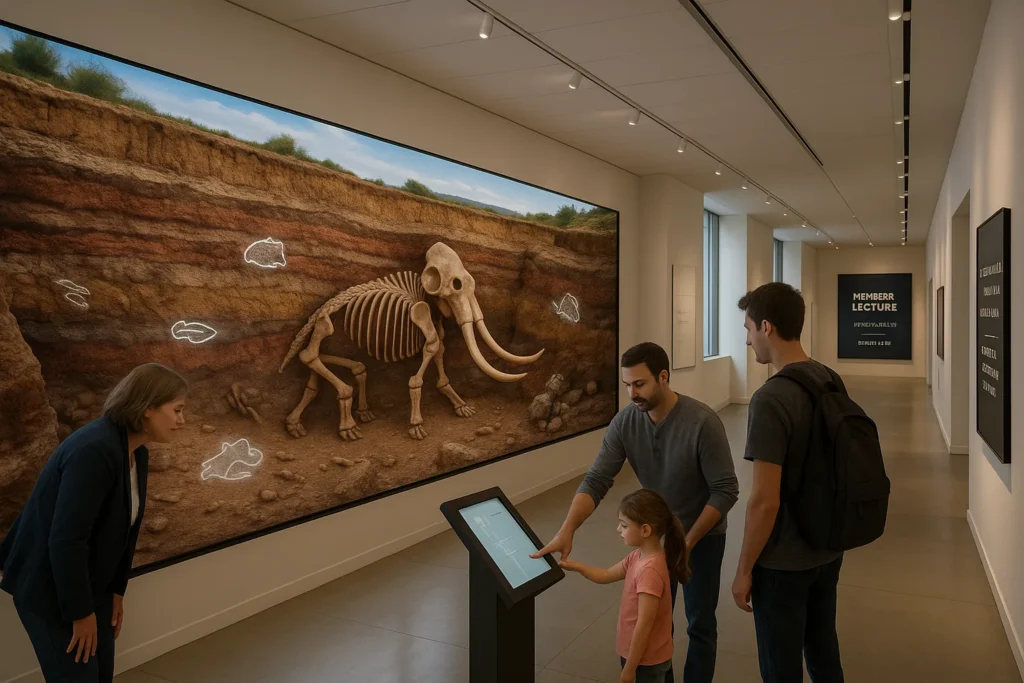
Walk into any world-class museum today, the Smithsonian, the Louvre, even your regional history center, and you’ll notice something that wasn’t there a decade ago. Screens. Not the clunky TV-on-a-stand kind, but sleek, high-resolution displays woven seamlessly into the architecture of the space. Museum digital signage has gone from a novelty to a near-necessity, and if you’re a director or curator who hasn’t seriously explored it yet, you’re likely already fielding questions from board members, visitors, and staff about when it’s coming.
Here’s the thing: digital signage isn’t just about replacing a printed poster with a glowing rectangle. Done well, it transforms how people move through your space, interact with your collections, and remember their visit long after they’ve left the gift shop. In this guide, we’ll walk through exactly what museum digital signage entails, the use cases that matter most, how to choose the right hardware and software, and how to plan a rollout that doesn’t leave your team overwhelmed.
Key Takeaways
- Museum digital signage transforms visitor experiences by replacing static displays with dynamic, interactive content like touchscreen exhibits, LED video walls, and real-time wayfinding maps.
- Interactive exhibits and immersive installations powered by digital signage measurably increase visitor dwell time, engagement, and knowledge retention.
- Choosing commercial-grade hardware with fine pixel pitch, high color accuracy, and long duty cycles is critical for reliable museum AV performance.
- A cloud-based content management system (CMS) lets curators and staff update every screen from a single dashboard—no IT expertise required.
- Over a 5–7 year horizon, museum digital signage typically pays for itself through reduced printing costs, improved sustainability, and operational efficiency.
- Start your rollout by auditing visitor pain points, choosing scalable solutions, and testing with real visitors before expanding building-wide.
Table of Contents
- What Museum Digital Signage Is and Why It Matters
- Key Use Cases Across Museums and Art Galleries
- Choosing the Right Museum AV Solutions
- Benefits of Digital Signage for the Modern Museum
- How to Plan and Implement a Strategy
- Conclusion
What Museum Digital Signage Is and Why It Matters
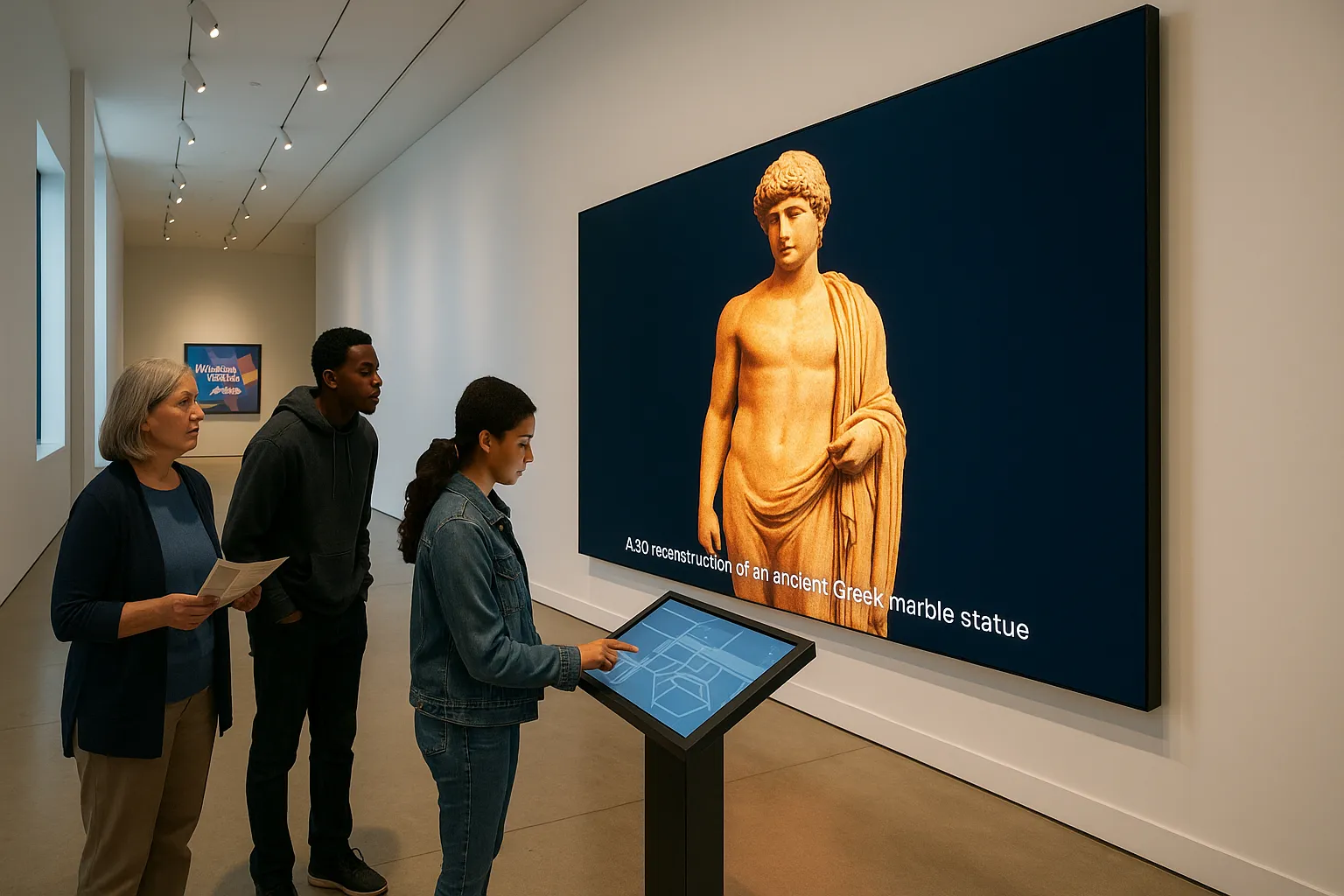
At its core, museum digital signage is the use of electronic displays, LED video walls, touchscreen kiosks, projection-mapped surfaces, to deliver dynamic, multimedia content within museum and gallery environments. Think video, animation, interactive maps, real-time data feeds, and multilingual text, all managed through a central content management system (CMS).
Why does it matter? Because static signage has real limitations. A printed wayfinding map can’t update when a gallery closes for renovation. A text-heavy placard next to an artifact can’t show a 3D reconstruction of what that artifact looked like 2,000 years ago. And a paper flyer in the lobby can’t promote tonight’s members-only event to visitors who are already inside the building.
Digital signage solves all of these problems simultaneously. It integrates hardware, LED walls, commercial-grade screens, touchscreens, with software that lets your team push real-time updates to every display in the building from a single dashboard. For institutions managing large, multi-floor spaces, this isn’t a luxury. It’s operational efficiency.
The shift is already well underway. Museums across the country are investing in digital signage solutions purpose-built for their spaces, recognizing that today’s visitors arrive with smartphone-calibrated expectations for visual quality and interactivity. Meeting those expectations isn’t optional anymore, it’s part of staying relevant.
Key Use Cases Across Museums and Art Galleries
So where does museum digital signage actually show up in practice? The applications are broader than most people realize, and they extend well beyond just “showing videos next to paintings.”
Interactive Exhibits and Immersive Art Installations
This is where the magic happens, and where visitor engagement metrics tend to spike dramatically. Interactive exhibits powered by digital signage let visitors touch, explore, and manipulate content in ways that static displays simply can’t match.
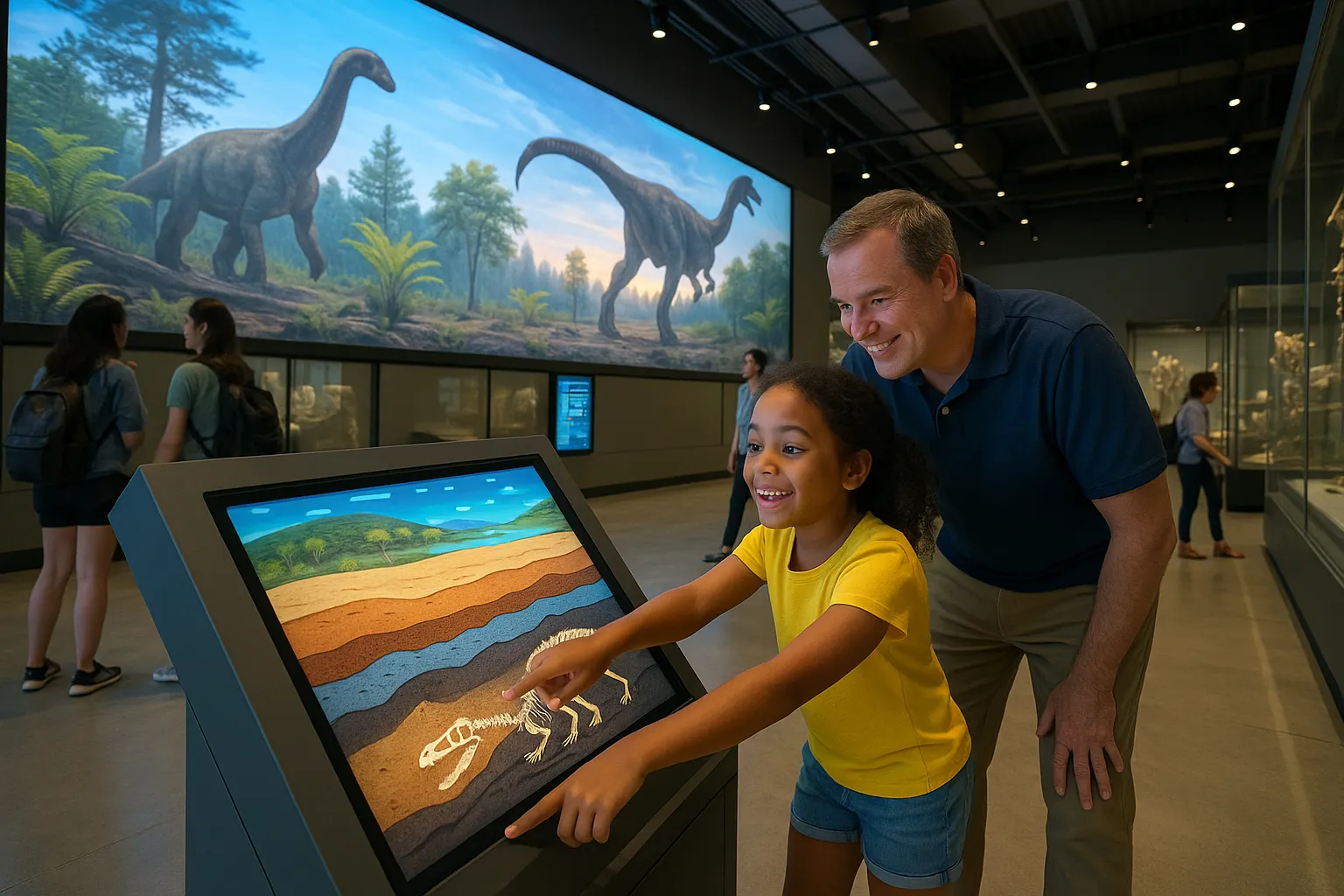
Imagine a natural history museum where a large touchscreen lets visitors peel back geological layers of a dig site, watching animated reconstructions of what archaeologists found at each depth. Or consider a contemporary art gallery where an LED video wall museum installation responds to visitors’ movements, creating an immersive art installation that blurs the line between audience and artwork.
These aren’t hypothetical scenarios. Museums are already using multimedia storytelling, combining archival footage, 3D animation, audio, and live data feeds (think NASA satellite imagery in a space exhibit), to bring collections to life in ways that resonate with visitors of all ages. The technology behind these interactive exhibits has matured significantly, and the barrier to entry is lower than you’d expect. Cloud-based platforms, including those built on scalable American Alliance of Museums highlights how enterprise infrastructure, now make it possible to stream high-resolution content to displays without needing a dedicated IT team on-site.
Wayfinding, Event Promotion, and Visitor Information
Let’s be honest: nobody enjoys being lost in a 200,000-square-foot building. And yet, wayfinding remains one of the most underserved aspects of the museum experience.
Digital signage changes that. Interactive wayfinding displays, placed at entrances, elevator banks, and major intersections, can show real-time maps, highlight current exhibitions, and even reroute visitors around crowded galleries. Some institutions are pairing these with crowd-density data to actively manage flow during peak hours.
Beyond navigation, lobby and corridor screens serve as powerful promotional tools. Upcoming lectures, film screenings, membership drives, special exhibitions, all of it can be scheduled and rotated automatically. Multilingual support is another huge win, particularly for institutions in tourist-heavy areas. Institutions across the Northeast, from museums in New York to cultural institutions in New Jersey, are finding that digital wayfinding alone justifies the investment.
Ready to Transform Your Museum or Gallery With Digital Signage?
CrownTV provides turnkey digital signage solutions designed for museums, galleries, and cultural institutions. From LED video walls to cloud-based content management, we handle everything so you can focus on your visitors. Get a free quote today and discover how easy it is to modernize your space.
Choosing the Right Museum AV Solutions and Displays
Hardware decisions can make or break a museum digital signage deployment. The wrong screen in the wrong environment leads to washed-out visuals, unreliable performance, and frustrated staff. Here’s how to think about it.
Art Gallery LED Displays and LED Video Walls
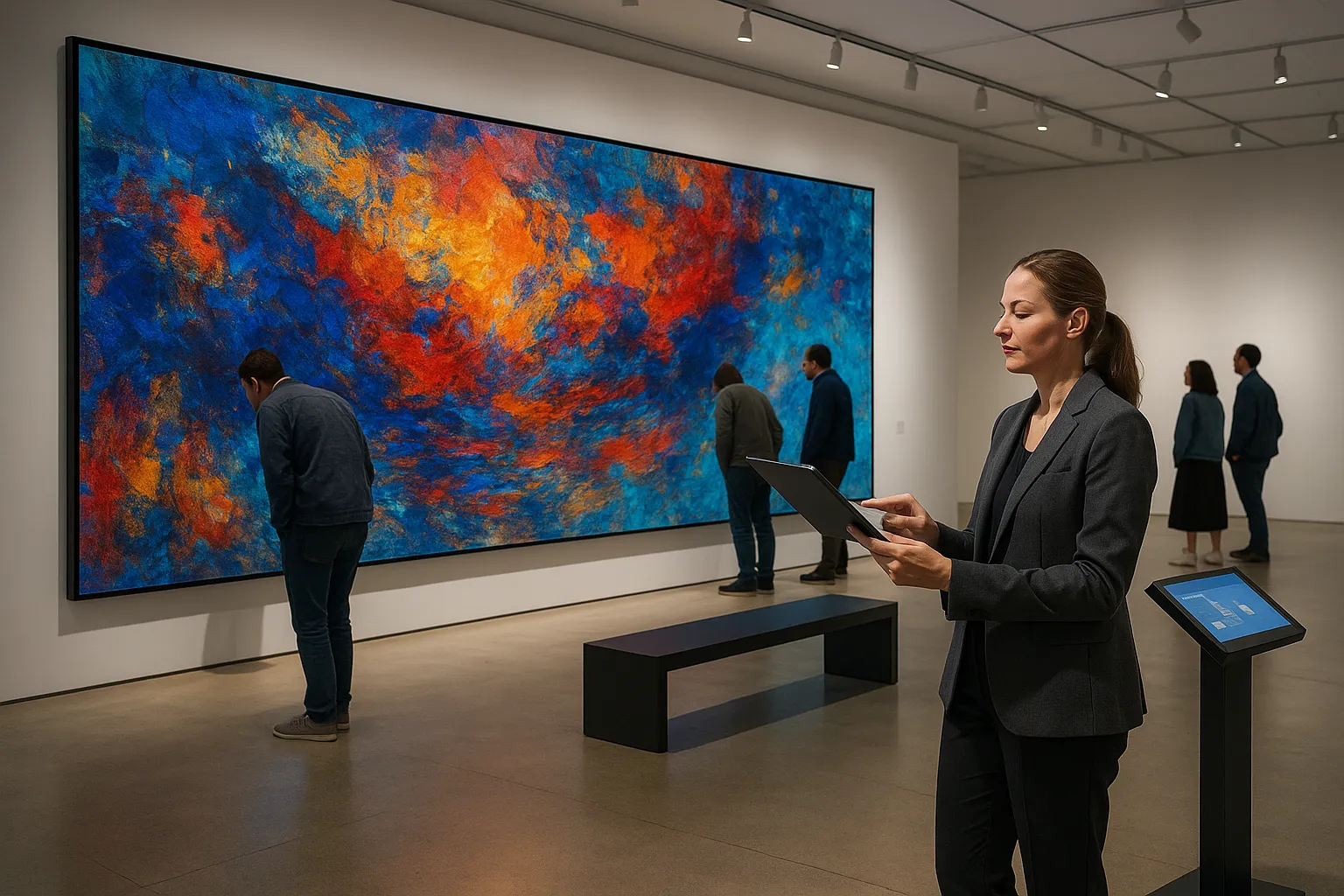
For large-format visual impact, art gallery LED displays and LED video walls are the gold standard. Unlike traditional LCD panels, LED video walls offer seamless, bezel-free surfaces that can be configured to virtually any size or aspect ratio. That’s critical in gallery environments where the display itself becomes part of the aesthetic.
When evaluating museum AV solutions, we recommend prioritizing:
- Pixel pitch: For close-viewing environments (galleries where visitors stand 3–6 feet away), you’ll want a fine pixel pitch, typically under 2mm, to maintain image clarity.
- Brightness and color accuracy: Galleries with controlled lighting can get away with lower brightness, but lobbies and atriums with ambient daylight need higher nit counts. Color accuracy matters enormously when displays are reproducing artwork.
- Durability and duty cycle: Museum displays often run 10–14 hours a day, seven days a week. Commercial-grade panels are built for this: consumer TVs are not.
Touchscreen overlays or standalone kiosks add an interactive layer, ideal for exhibits where visitors need to select content, zoom into details, or navigate timelines. For institutions handling complex web-based interactive applications, modern signage hardware supports full HTML5 rendering, making it possible to run browser-based exhibit experiences directly on the display.
Content Management Software for Effortless Updates
Here’s where content management simplicity becomes essential, and where we’ve seen many museums stumble. You can have the most gorgeous LED video wall in the world, but if updating it requires a call to your IT department or an outside vendor, the content goes stale fast.
A good CMS for museum digital signage should let curators and marketing staff schedule content, push real-time updates, and manage every screen from a single cloud-based dashboard, no technical expertise required. At CrownTV, that’s exactly how we’ve designed our platform: one dashboard, all your screens, drag-and-drop simplicity. Whether you’re managing two displays or two hundred across multiple buildings, the workflow stays the same.
Look for software that supports content zoning (splitting a single screen into multiple content areas), scheduling by time and date, and remote management so you can make changes from anywhere. Integration with enterprise cloud tools can also streamline content pipelines for larger institutions with existing IT ecosystems.
Benefits of Digital Signage for the Modern Museum
We’ve touched on several benefits already, but it’s worth consolidating them, because the ROI case for museum digital signage is genuinely compelling when you stack everything up.
Enhanced engagement and education. Immersive art installations and interactive exhibits don’t just look impressive: they measurably increase dwell time and knowledge retention. Visitors who interact with content remember more of it. That’s not a hunch, it’s a well-documented principle of experiential learning.
Real-time flexibility. Gallery closed for maintenance? Update the wayfinding screens in seconds. New temporary exhibition opening tomorrow? Push promotional content to every lobby display tonight. This kind of agility is impossible with printed materials, which require lead times, printing costs, and physical installation.
Long-term cost savings and sustainability. Yes, there’s an upfront investment. But consider the cumulative cost of designing, printing, shipping, and installing new signage every time something changes. Over a 5–7 year horizon, digital signage typically pays for itself, and you’re eliminating significant paper and material waste in the process.
Improved accessibility. Multi-language support, adjustable text sizes, audio descriptions triggered by screen interactions, digital signage opens your institution to a wider, more diverse audience. That’s not just good practice: for publicly funded museums, it may be a compliance requirement.
Data and analytics. This one’s often overlooked. Modern digital signage platforms can track which content gets the most interaction, which wayfinding routes visitors follow, and how foot traffic patterns shift throughout the day. That data is gold for exhibition planning, staffing decisions, and grant applications.
Institutions in states like Michigan and Pennsylvania are already leveraging these benefits to modernize their visitor experience while keeping operational costs in check.
Planning a museum digital signage project? CrownTV offers end-to-end solutions including hardware, software, installation, and ongoing support. Our team has helped cultural institutions nationwide bring their spaces to life. Request a personalized consultation →
How to Plan and Implement a Museum Digital Signage Strategy
Planning a museum digital signage rollout doesn’t need to be overwhelming, but it does require some structured thinking. Here’s a practical framework we recommend.
1. Audit your spaces and define your goals. Walk your building with fresh eyes. Where do visitors get lost? Where do they linger? Where is foot traffic thinnest? Map those observations against your goals, better wayfinding, increased event attendance, deeper exhibit engagement, and you’ll quickly see where displays belong.
2. Choose scalable hardware and software. Don’t buy for today’s needs alone. Select a CMS and display hardware that can grow with your institution. A cloud-based platform like CrownTV’s makes this straightforward: you can start with a handful of screens and expand to dozens without rearchitecting anything.
3. Integrate with existing systems. Your digital signage shouldn’t exist in a silo. Connect it to your event calendar, ticketing system, and website CMS where possible. This reduces duplicate data entry and ensures consistency across channels.
4. Design for your audience, not your ego. It’s tempting to go full spectacle, but the best museum digital signage is purposeful. Every screen should answer a visitor question or deepen their experience. If a display doesn’t serve one of those functions, reconsider whether it’s necessary.
5. Test with real visitors before full launch. Soft-launch a few displays and observe. Are people interacting with the touchscreens? Are they following the wayfinding directions? Collect feedback, adjust placement and content, then expand.
6. Analyze and iterate post-launch. Use your CMS analytics to track performance. Which content gets the most engagement? Which screens are being ignored? Treat your signage network as a living system that improves over time, not a set-it-and-forget-it installation.
Related Reading
- Immersive Digital Signage Experiences: How Experiential Technology Is Transforming Brand Engagement
- Indoor LED vs LCD Display: How To Choose the Right Commercial Screen
- Hospitality Digital Signage: A Complete Guide for Hotel GMs
Conclusion
Museum digital signage isn’t a trend, it’s infrastructure. The institutions that adopt it thoughtfully are seeing measurable improvements in visitor engagement, operational efficiency, and accessibility. And the ones that wait? They’re increasingly competing for attention against institutions that have already made the leap.
The good news is that the technology has matured to the point where implementation doesn’t require a massive IT department or a seven-figure budget. With the right partner, the right hardware, and a CMS built for simplicity, even small and mid-sized museums can deploy professional-grade digital signage that punches well above its weight.
Whether you’re exploring your first LED video wall or planning a building-wide rollout, the key is to start with clear goals, choose scalable solutions, and keep your visitors, not the technology, at the center of every decision.
Take the Next Step With CrownTV
Whether you are upgrading an existing gallery or planning a new museum installation from scratch, CrownTV is your turnkey partner for digital signage. We provide the displays, software, installation, and support — all under one roof. Get a free quote and let us show you what is possible.