
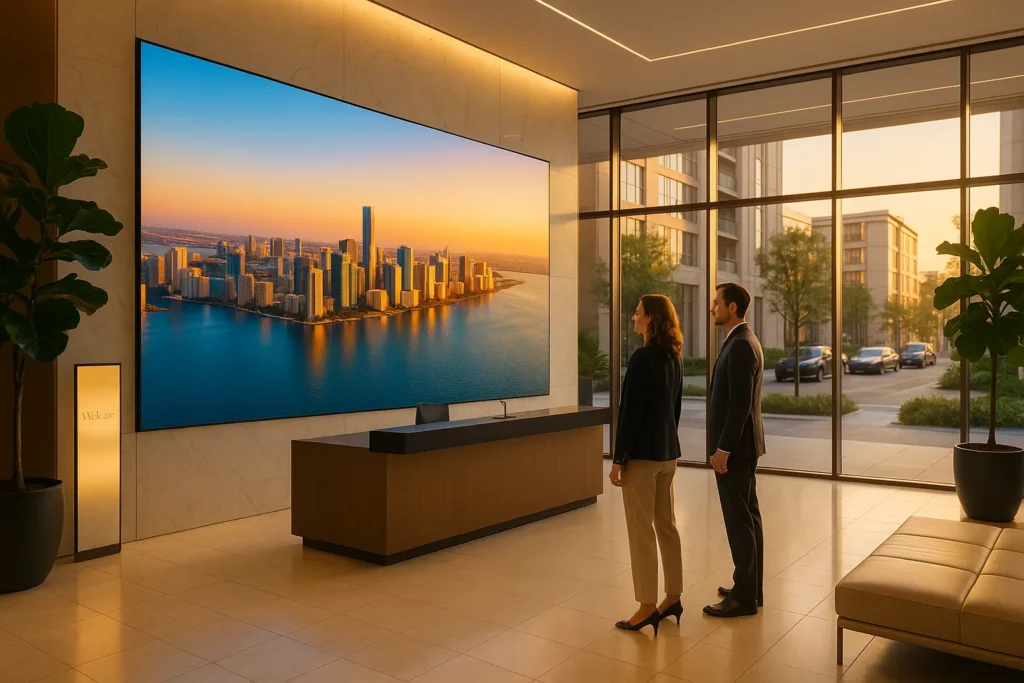
There’s a moment in every luxury property tour when a prospective buyer walks through the lobby and forms an opinion, often within seconds. That first impression? It’s increasingly shaped by technology. Luxury real estate digital signage has become a defining element of high-end developments, transforming static lobbies and sales galleries into immersive, visually striking environments that communicate prestige before a single word is spoken.
For developers and property managers competing at the top of the market, the question isn’t whether to invest in digital displays, it’s how to deploy them strategically. From real estate lobby displays that greet residents with personalized content to property showcase displays in sales galleries that bring unbuilt penthouses to life, the right signage strategy can accelerate sales, elevate brand perception, and keep tenants feeling like they made the right choice. Let’s break down exactly how to make that happen.
luxury real estate digital signage: Key Takeaways
- Luxury real estate digital signage transforms lobbies and sales galleries into immersive environments that shape buyer perception within seconds of arrival.
- Strategically placed property showcase displays in high-traffic zones—like lobbies, sales galleries, and amenity centers—drive the most engagement and accelerate sales.
- Fine pixel pitch (under 2mm), auto-brightness sensors, and slim bezel-free panels are essential when selecting real estate LED displays for high-end spaces.
- Content strategy matters as much as hardware—use automated scheduling, targeted messaging, and cinematic video to keep luxury condo signage feeling bespoke and current.
- Interactive features like virtual tour kiosks, lead capture forms, and personalized welcome screens convert passive viewers into active prospects.
- Centralize content management with a cloud-based platform to scale your digital signage network across multiple luxury properties while maintaining brand consistency.
Table of Contents
- Why Luxury Properties Need Digital Signage
- Where Property Showcase Displays Make The Biggest Impact
- Choosing The Right Real Estate LED Displays
- Content Strategies For Luxury Condo Signage
- Interactive Features That Engage Prospective Buyers
- Best Practices For Managing And Scaling Your Network
- Frequently Asked Questions
Why Luxury Properties Need Digital Signage
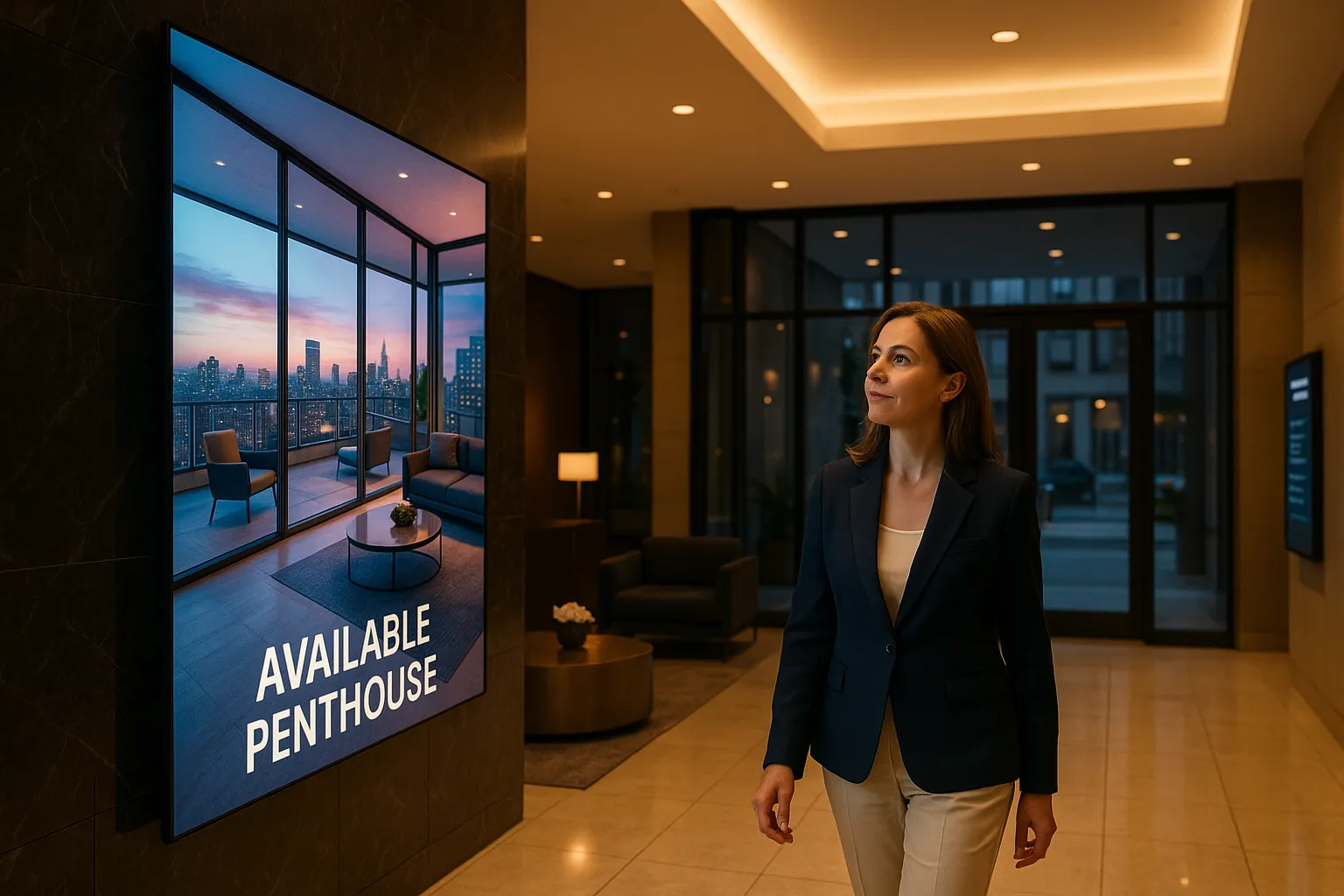
Luxury isn’t just about marble countertops and panoramic views anymore. Today’s high-end buyers and tenants expect a tech-forward experience that matches the caliber of the finishes around them. And the data backs this up, roughly 57% of tenants say cutting-edge displays elevate a property’s perceived status, which directly impacts retention rates and willingness to pay premium rents.
Digital signage delivers on that expectation in ways traditional marketing simply can’t. Static brochures and printed posters feel dated in a building where everything else screams modern sophistication. Real estate LED displays, on the other hand, create a living, breathing visual layer that can shift with the time of day, the season, or the audience walking through the door.
There’s also a practical angle we shouldn’t overlook. Energy-efficient LED panels and cloud-managed content systems reduce the ongoing costs of print while offering far more flexibility. A single screen can promote available units in the morning, display community events at noon, and showcase neighborhood highlights in the evening, all without anyone physically swapping out a poster. For property managers juggling multiple responsibilities, that kind of efficiency is a genuine advantage.
Beyond operations, there’s the brand story. Luxury developments are selling a lifestyle, and digital signage lets you tell that story dynamically, with motion, light, and interactivity that printed collateral simply can’t replicate.
Where Property Showcase Displays Make The Biggest Impact
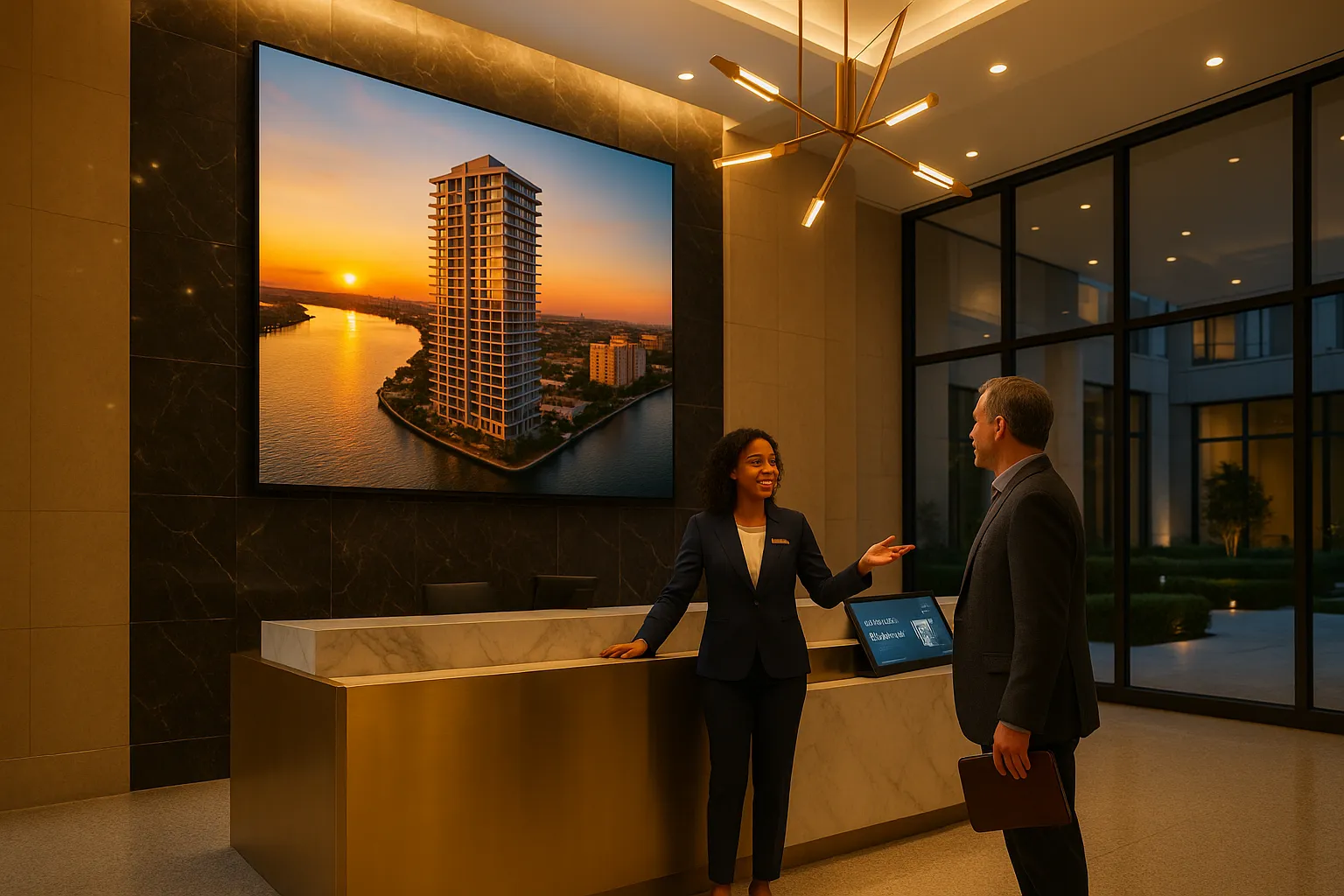
Not every wall needs a screen. The key is placing property showcase displays where they’ll actually shape perception and drive action. That means focusing on high-traffic zones where residents, prospects, and visitors naturally pause or gather.
Real Estate Lobby Displays And Reception Areas
The lobby is ground zero for first impressions. A well-placed real estate lobby display transforms a reception area from a waiting room into an experience. Think large-format screens running cinematic property footage, welcome messages for VIP guests, or real-time building updates like weather, transit schedules, and concierge information.
We’ve seen developers integrate lobby signage with their CRM systems so that when a prospective buyer arrives for a scheduled tour, the display can greet them by name or showcase the specific unit they’re interested in. It’s a subtle touch, but in luxury, subtlety is everything. MLS integrations also keep availability data fresh without manual updates, a huge time-saver for leasing teams.
Modern cloud-based content management platforms make it straightforward to push updates to lobby screens remotely, which is especially valuable for management companies overseeing multiple properties across different cities.
Sales Galleries And Amenity Centers
Sales galleries are where the deal often gets done, and digital signage can be the closer. Large LED video walls running drone footage, 3D renderings, and virtual walkthroughs let buyers experience a property that may not even be fully built yet. For pre-construction developments, this is critical, you’re essentially selling a vision, and high-resolution displays make that vision tangible.
Amenity centers benefit too. Screens near pools, fitness centers, and resident lounges can promote reservable spaces, upcoming social events, or local partnerships. Some properties even use signage in amenity areas to drive ancillary revenue, displaying curated ads from premium local businesses like spas, restaurants, or boutique retailers. It’s a revenue stream that also enhances the resident experience when done tastefully.
Choosing The Right Real Estate LED Displays For High-End Spaces
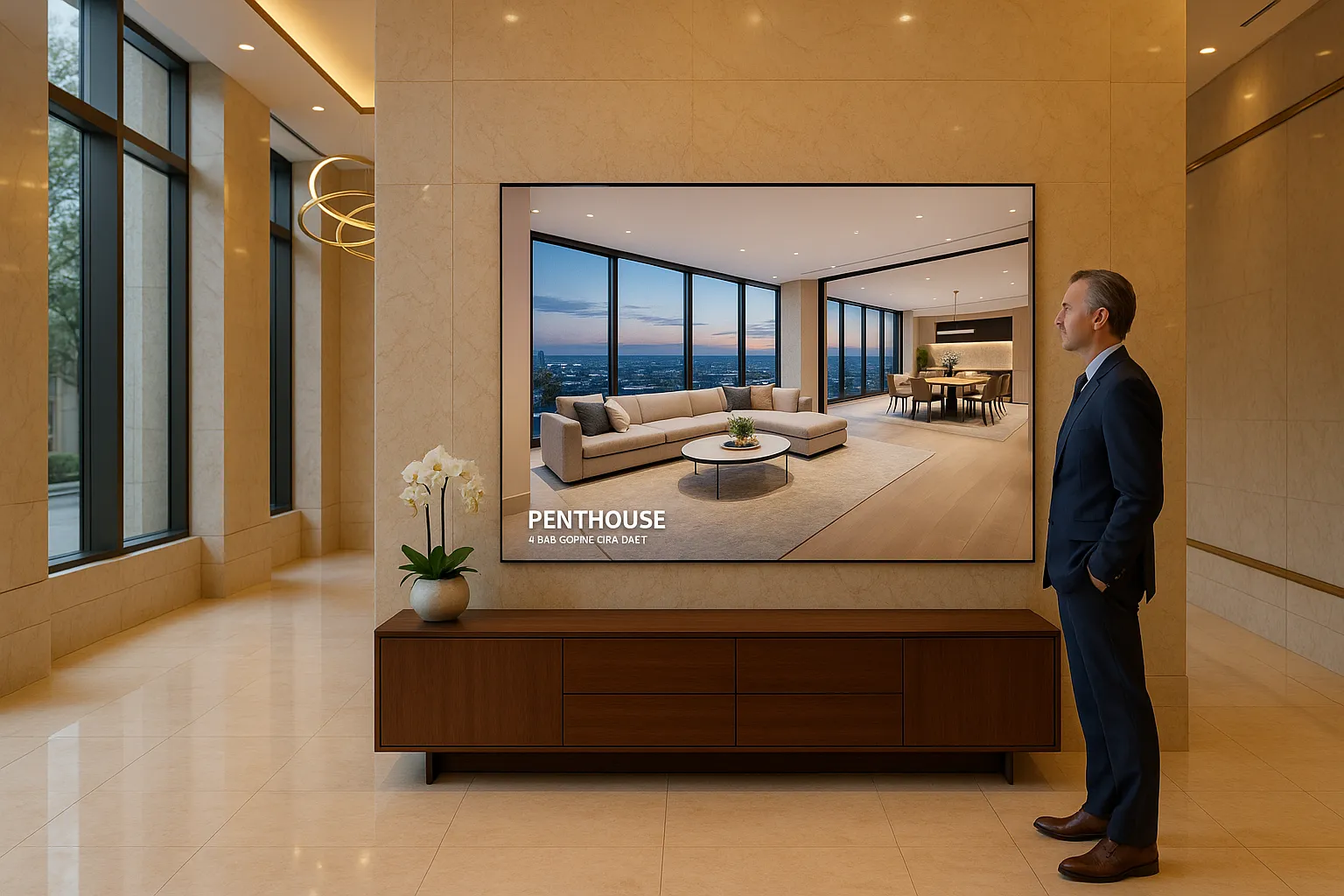
Picking the wrong display for a luxury environment is a fast way to undermine the very prestige you’re trying to project. A bulky, dim screen with visible bezels won’t cut it in a building where every design detail has been curated by an architect or interior designer.
Here’s what we recommend prioritizing when selecting real estate LED displays for upscale properties:
- Resolution and pixel pitch: For close-viewing environments like lobbies and galleries, fine pixel pitch (under 2mm) ensures imagery looks crisp even at short distances. Nobody should see individual pixels on a screen they’re standing three feet from.
- Brightness and auto-adjustment: Displays near windows or in sun-drenched lobbies need auto-brightness sensors to maintain visibility without washing out or glaring. This also contributes to energy efficiency.
- Form factor and aesthetics: Slim-profile, bezel-free panels integrate more seamlessly into designed interiors. Some properties opt for custom-mounted displays that blend into feature walls or architectural elements.
- Scalability: If you manage a portfolio, you want displays and a content management system that scale across buildings without requiring completely different hardware at each location. CrownTV’s turnkey approach is worth considering here, they handle everything from sourcing commercial-grade displays to nationwide installation with licensed technicians, plus their cloud dashboard lets you manage every screen across your portfolio from one place.
Don’t overlook durability, either. Commercial-grade panels are built for 16–24 hour daily operation, unlike consumer TVs that overheat or degrade quickly in always-on scenarios. The upfront cost is higher, but the total cost of ownership for enterprise-grade hardware is significantly lower over a five-year lifecycle.
Elevate Your Property With CrownTV Digital Signage
CrownTV delivers turnkey digital signage solutions tailored for luxury real estate — from sleek lobby displays to interactive sales gallery screens. We handle hardware, software, installation, and support. Get a free quote today and see how digital signage can transform your property experience.
Content Strategies For Luxury Condo Signage
Having beautiful screens means nothing if the content running on them feels generic or outdated. Luxury condo signage demands a content strategy as polished as the property itself.
Start with automated scheduling. Your displays should be running different content at different times without anyone manually pressing buttons. Morning content might feature calming visuals and building updates. Afternoon rotations could shift toward available units and open house announcements. Evening content might highlight the building’s nightlife-adjacent location or rooftop lounge.
Targeted messaging is another lever. If your property attracts a mix of demographics, young professionals, downsizing empty-nesters, international investors, you can tailor content by daypart or even by screen location. A display near the fitness center speaks to a different audience than one in the business lounge.
Social media integration is surprisingly effective in luxury settings. Curating an Instagram feed of resident life, building events, or neighborhood moments adds authenticity and community feel. Just make sure there’s a moderation layer so nothing off-brand slips through.
Finally, lean into what makes the property unique. Luxury condo signage should spotlight the USPs that justify the price tag, imported stone finishes, smart home integrations, private elevator access, whatever sets the development apart. Use cinematic video, not stock photography. The content should feel as bespoke as the residences themselves.
Interactive Features That Engage Prospective Buyers
Static content informs. Interactive content converts. That’s the fundamental difference, and it’s why we see more luxury developments incorporating touchscreen capabilities into their signage strategy.
The most impactful interactive features we’ve encountered include:
- Virtual tour kiosks: Prospects can explore floor plans, rotate 3D models, and even “walk through” units using touchscreen interfaces. This is particularly powerful for pre-construction sales where physical model units don’t yet exist.
- Lead capture forms: A well-designed touchscreen can prompt interested visitors to enter their contact information, schedule a tour, or request a brochure, feeding leads directly into the sales team’s CRM.
- Personalized welcome screens: As mentioned earlier, integrating signage with appointment scheduling systems allows displays to greet visitors by name, which sets a white-glove tone from the moment they arrive.
- Neighborhood and lifestyle exploration: Interactive maps that let buyers explore nearby restaurants, schools, parks, and transit options help them envision daily life in the area, not just the unit itself.
The analytics side matters too. Modern interactive display frameworks can track which units get the most attention, which content drives the most engagement, and where prospects drop off. That data feeds back into both your content strategy and your sales approach, creating a feedback loop that sharpens over time.
For developers considering this route, CrownTV’s platform supports interactive applications through its cloud-based dashboard, making it relatively simple to deploy and update touchscreen experiences across multiple locations without heavy IT overhead.
Best Practices For Managing And Scaling Your Digital Signage Network
Deploying one great screen in a single lobby is straightforward. Scaling a cohesive digital signage network across a portfolio of luxury properties? That’s where most teams hit friction.
Here are the practices we’ve seen work best:
Centralize content management. A cloud-based CMS is non-negotiable for multi-property operations. You need the ability to push updates, swap campaigns, and troubleshoot remotely, not send someone to each building with a USB stick. CrownTV’s cloud dashboard is built exactly for this, giving property managers a single pane of glass across all their screens.
Integrate with existing systems. Your signage should pull from your MLS feeds, CRM, event calendars, and building management systems. Manual data entry is both slow and error-prone. The more automated your content pipeline, the more current and relevant your displays will be.
Start small, then expand. We always recommend beginning with high-impact locations, the main lobby, the sales gallery, and proving the ROI before rolling out to elevators, amenity centers, parking garages, and common areas. This phased approach keeps budgets manageable and lets you refine your content strategy with real-world feedback.
Maintain brand consistency. Every screen in your network should feel like it belongs to the same property brand. Templates, color palettes, typography, and content guidelines should be standardized, even as individual properties customize their messaging for local audiences.
Track performance. Use analytics to understand what content drives engagement and adjust accordingly. Over time, you’ll build a library of high-performing assets that can be reused and adapted across properties, a significant cost saving compared to continuously producing new print materials.
The properties that get the most out of digital signage treat it as an evolving platform, not a one-time installation. Regular content refreshes, seasonal campaigns, and responsiveness to tenant feedback keep the experience feeling alive and intentional.
Ready to wow buyers and residents? CrownTV specializes in digital signage for luxury real estate. From concept to installation, our team ensures a seamless experience. Request a personalized consultation →
Related Reading
- Immersive Digital Signage Experiences: How Experiential Technology Is Transforming Brand Engagement
- Indoor LED vs LCD Display: How To Choose the Right Commercial Screen
- Digital Signage for Luxury Retail: How Premium Brands Elevate Customer Experiences
Conclusion
Luxury real estate digital signage isn’t a novelty, it’s rapidly becoming a baseline expectation for high-end developments. The properties that invest thoughtfully in real estate LED displays, interactive features, and scalable content strategies are the ones creating memorable buyer experiences and stronger tenant loyalty.
What separates a good implementation from a great one is intentionality. It’s choosing the right hardware for the space, crafting content that genuinely reflects the property’s identity, and building a management infrastructure that keeps everything running smoothly as you grow. For developers and property managers ready to elevate their properties, the technology is mature, the ROI is proven, and the competitive advantage is real. The question now is simply how far you want to take it.
Frequently Asked Questions
Why is luxury real estate digital signage important for high-end properties?
Luxury real estate digital signage elevates perceived prestige by delivering dynamic, high-resolution visuals and real-time updates that match the sophistication buyers expect. Research shows 57% of tenants say cutting-edge displays boost a property’s status, directly improving retention rates and willingness to pay premium rents.
Where should property showcase displays be placed for maximum impact?
Property showcase displays make the biggest impact in high-traffic zones like lobbies, reception areas, sales galleries, and amenity centers. These are locations where residents and prospects naturally pause, making them ideal for delivering personalized content, virtual tours, and real-time building updates that shape perception and drive action.
What features should I look for in real estate LED displays for upscale spaces?
Prioritize fine pixel pitch under 2mm for crisp close-range visuals, auto-brightness sensors for sun-drenched lobbies, and slim bezel-free form factors that blend with curated interiors. Choose commercial-grade panels rated for 16–24 hour daily operation and a scalable cloud-based CMS to manage screens across an entire portfolio.
How does interactive digital signage help convert luxury real estate buyers?
Interactive features like virtual tour kiosks, 3D floor plan exploration, and lead capture forms transform passive viewing into active engagement. Prospective buyers can walk through unbuilt units, submit contact details, and schedule tours on-screen—feeding leads directly into CRM systems while analytics track which units and content drive the most conversions.
What content strategies work best for luxury condo signage?
Effective luxury condo signage relies on automated scheduling that rotates content by time of day and audience, targeted messaging by demographic, and cinematic video showcasing unique selling points like smart home integrations or private elevator access. Social media feeds add authenticity, while dynamic campaigns keep displays feeling fresh and intentional.
How can property managers scale digital signage across multiple luxury developments?
Centralizing management through a cloud-based CMS lets teams push updates, swap campaigns, and troubleshoot remotely across every property. Integrating with MLS feeds, CRMs, and event calendars automates content pipelines. Starting with high-impact locations like lobbies and sales galleries, then expanding after proving ROI, keeps scaling cost-effective and brand-consistent.
Partner With CrownTV for Your Luxury Property
Whether you manage a single high-rise or a portfolio of luxury developments, CrownTV provides the displays, software, installation, and ongoing support you need. Get your free quote and discover what turnkey digital signage can do for your properties.