
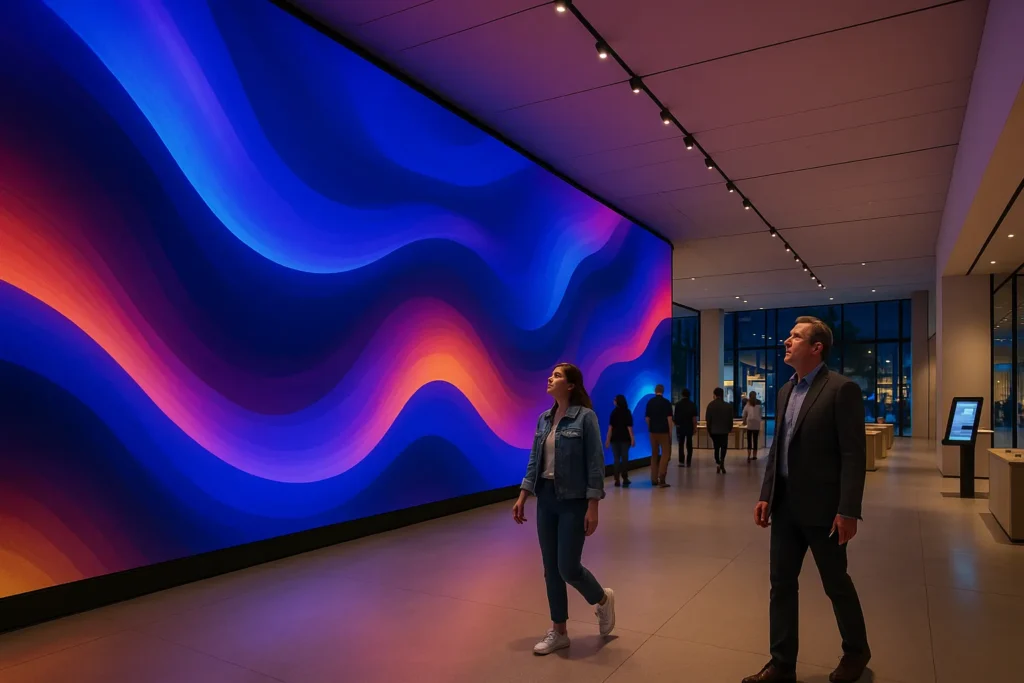
Walk into a Nike flagship store or a Samsung experience center, and you’ll notice something immediately: the space itself feels alive. Screens wrap around corners, content reacts to your movement, and the boundary between physical environment and digital storytelling dissolves. That’s the power of immersive digital signage experiences, and increasingly, they’re not reserved for brands with billion-dollar budgets.
We’ve been watching this shift for years now. What used to require custom-built hardware and six-figure installations has become far more accessible, thanks to cloud-based software, modular LED technology, and smarter content management systems. Today, a boutique hotel or regional museum can create the kind of experiential technology environment that once belonged exclusively to Times Square or Las Vegas. The question isn’t whether immersive signage matters, it’s how to do it well, at a scale that makes sense for your business.
Table of Contents
- What Makes Digital Signage Truly Immersive
- The Role of Experiential Technology in Modern Signage
- Types of Interactive Digital Signage That Drive Immersion
- How LED Brand Experiences Elevate Customer Engagement
- Design Principles for Creating Memorable Experiences
- Real-World Applications Across Industries
- Managing Immersive Signage at Scale
- Future Trends Shaping Immersive Digital Signage
- Conclusion
- Frequently Asked Questions
What Makes Digital Signage Truly Immersive
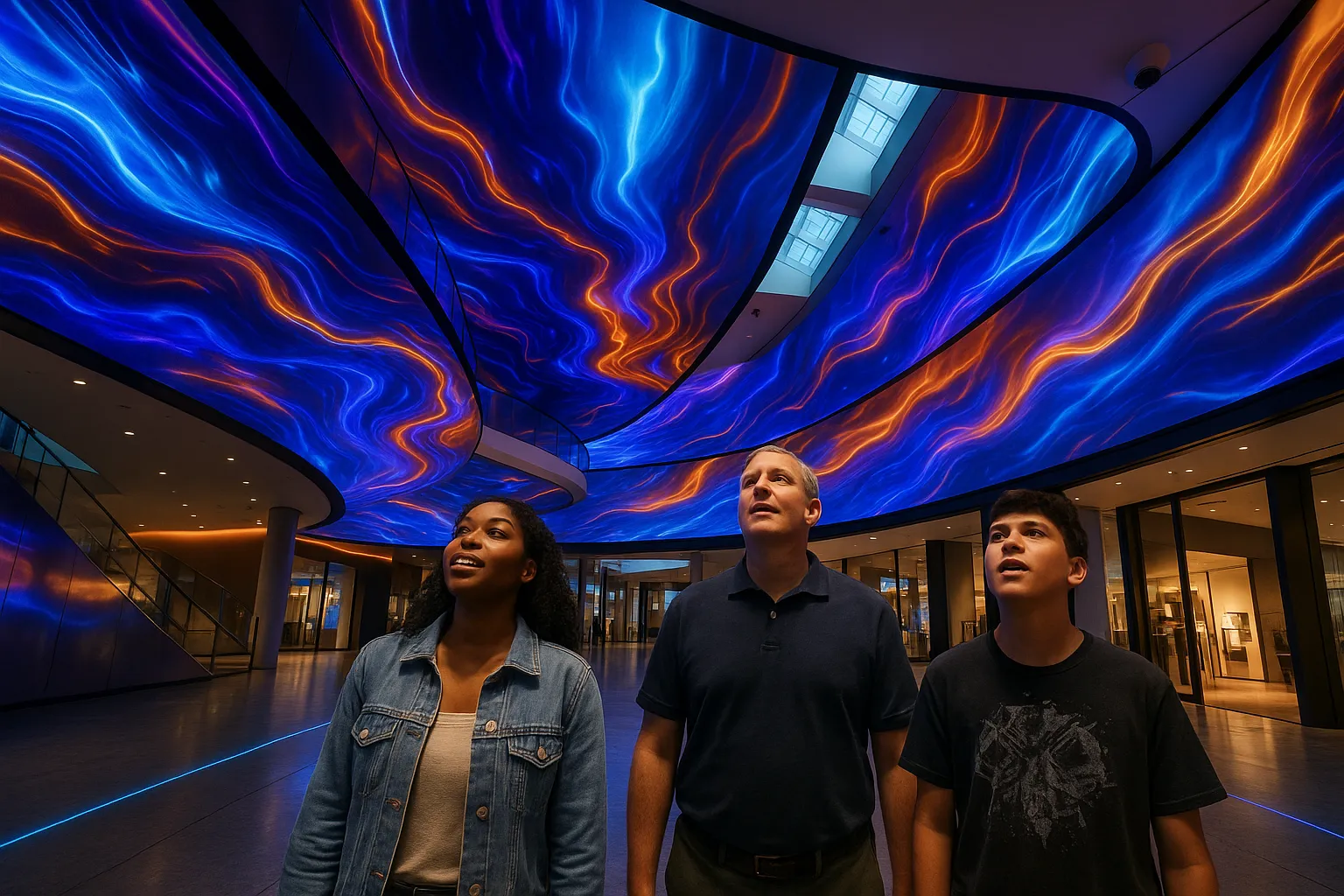
Let’s be honest: slapping a 4K screen on a wall and playing a looping video doesn’t qualify as immersive. True immersion happens when the environment responds, adapts, and pulls the viewer into a narrative they didn’t expect.
At its core, immersive digital signage experiences share a few defining characteristics:
- Spatial awareness, The content accounts for the physical space around it. A wraparound LED installation in a retail atrium, for instance, uses architecture as part of the storytelling canvas.
- Interactivity, Whether through touch, gesture, proximity sensors, or mobile integration, the audience has agency. They’re not passive viewers: they’re participants.
- Contextual relevance, The content shifts based on time of day, audience demographics, weather, or real-time data feeds. It feels alive because, in a very real sense, it is.
- Sensory depth, Sound design, lighting synchronization, and even haptic feedback can layer on top of visual content to create a multi-sensory experience.
The best immersive installations feel intuitive. People don’t need instructions, they walk in and the environment meets them. That’s a design philosophy, not just a technology stack. And it’s what separates a truly memorable brand moment from another screen playing another video.
The Role of Experiential Technology in Modern Signage
Experiential technology is the engine behind immersive signage. It’s what transforms static displays into dynamic environments that respond, learn, and evolve. Let’s break down the two biggest categories driving innovation right now.
Extended Reality and Sensor-Driven Interactions
Extended reality (XR), the umbrella term covering augmented, virtual, and mixed reality, has matured significantly. We’re no longer talking about clunky headsets or gimmicky AR filters. Modern XR in signage means depth-sensing cameras that track body movement, LiDAR-equipped installations that map crowd density in real time, and mixed-reality overlays that blend digital content with physical objects.
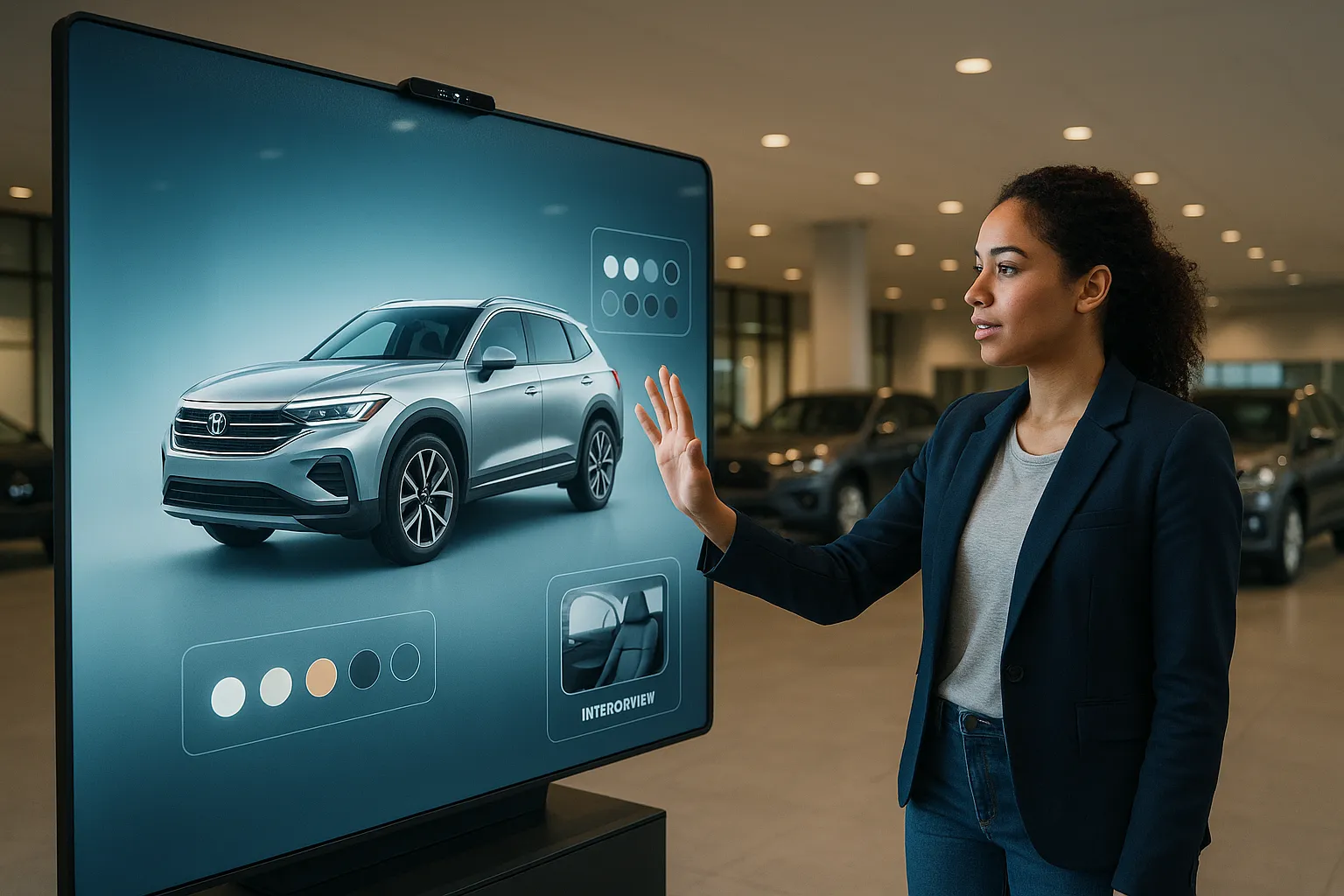
Consider a car dealership where a large-format display lets customers “build” their vehicle in 3D, rotating it, swapping colors, and peering inside, all using hand gestures captured by Intel RealSense or similar depth sensors. No app download. No headset. Just walk up and interact.
Sensor-driven interactions also extend to more subtle experiences. Proximity-triggered content, where a display changes as someone approaches, creates moments of surprise and delight without requiring any active participation from the viewer. As modern web platform APIs evolve to support richer browser-based interactions, we’re seeing more signage systems leverage web technologies for lightweight, device-agnostic interactivity.
AI-Powered Personalization and Real-Time Content
Artificial intelligence has quietly become one of the most impactful forces in interactive digital signage. Computer vision can estimate a viewer’s age range and gender (anonymously, without storing personal data) and serve content that’s statistically more relevant. A cosmetics retailer might display different product recommendations to a 22-year-old than to a 55-year-old, automatically, in real time.
But AI-powered personalization goes beyond demographics. Natural language processing enables voice-activated wayfinding kiosks. Machine learning algorithms optimize content scheduling based on engagement data, learning which messages perform best at which times and adjusting accordingly. Cloud infrastructure like AWS has made the computational power behind these AI models scalable and affordable, even for mid-market deployments.
The result? Signage that doesn’t just display content, it curates experiences.
Types of Interactive Digital Signage That Drive Immersion
Not every immersive installation needs to be a $500,000 spectacle. The range of interactive digital signage available today spans from accessible touchscreen kiosks to jaw-dropping architectural LED installations. Here’s where the action is.
Touchscreen and Gesture-Based Displays
Touchscreens remain the workhorse of interactive signage, and for good reason. The interaction model is universal (thanks, smartphones). Modern commercial-grade touchscreens support up to 40 simultaneous touch points, enabling collaborative interactions where multiple users explore content together.
Gesture-based displays take this a step further by removing the need for physical contact entirely. Post-pandemic, touchless interfaces gained significant traction, and the technology has only gotten better. Time-of-flight sensors and infrared arrays can detect hand waves, swipes, and grabs from several feet away, making them ideal for high-traffic public spaces.
LED Video Walls and 3D Anamorphic Installations
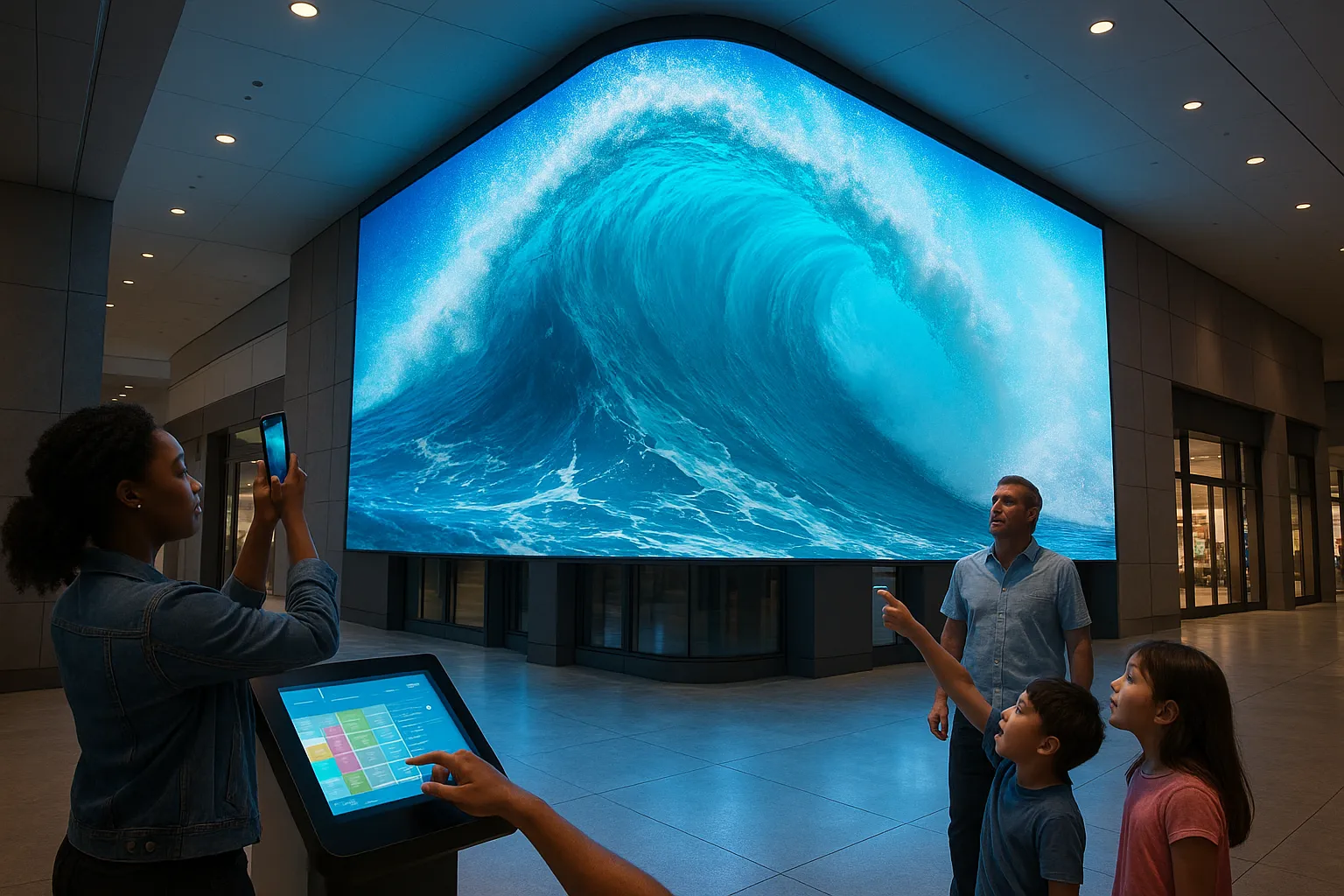
If you’ve seen those viral “3D billboard” videos from Seoul or Shinjuku, the ones where a giant wave seems to crash out of a building corner, or a spaceship appears to launch from a rooftop, you’ve seen anamorphic LED content in action. These installations use forced perspective on curved or corner-wrapped LED video walls to create stunning optical illusions visible to the naked eye.
The underlying hardware? Fine-pitch LED panels with pixel pitches as tight as 0.9mm, delivering seamless visuals even at close viewing distances. We’ve put together a detailed breakdown of how to build engaging video wall installations that covers everything from panel selection to content optimization.
What’s exciting is how modular LED technology has become. You’re no longer locked into a single form factor. Curved panels, transparent LED film, floor-mounted tiles, the creative possibilities have expanded enormously, and pricing has dropped enough to put serious LED installations within reach of regional retailers and mid-tier hospitality brands.
Augmented Reality Integrations
AR in signage typically falls into two camps: device-based (requiring a smartphone or tablet) and device-free (using large displays with camera feeds and real-time overlays).
The device-free approach tends to perform better in public spaces. Think of a museum exhibit where visitors stand in front of a large screen and see themselves “wearing” historical armor or surrounded by a recreated ancient marketplace. The camera captures their image, the software overlays contextual AR elements, and the result feels magical, especially for kids.
Device-based AR, meanwhile, works well when you want to extend the experience beyond the physical installation. QR codes on signage can launch AR content on a visitor’s phone, blurring the line between the in-venue experience and the take-home memory. Development resources on platforms like MDN Web Docs have made WebAR increasingly viable, reducing the friction of app-based AR by running experiences directly in mobile browsers.
Ready to Create Immersive Experiences for Your Brand?
CrownTV helps businesses deploy stunning digital signage experiences with commercial-grade displays, cloud software, and expert installation. Get a free quote today.
How LED Brand Experiences Elevate Customer Engagement
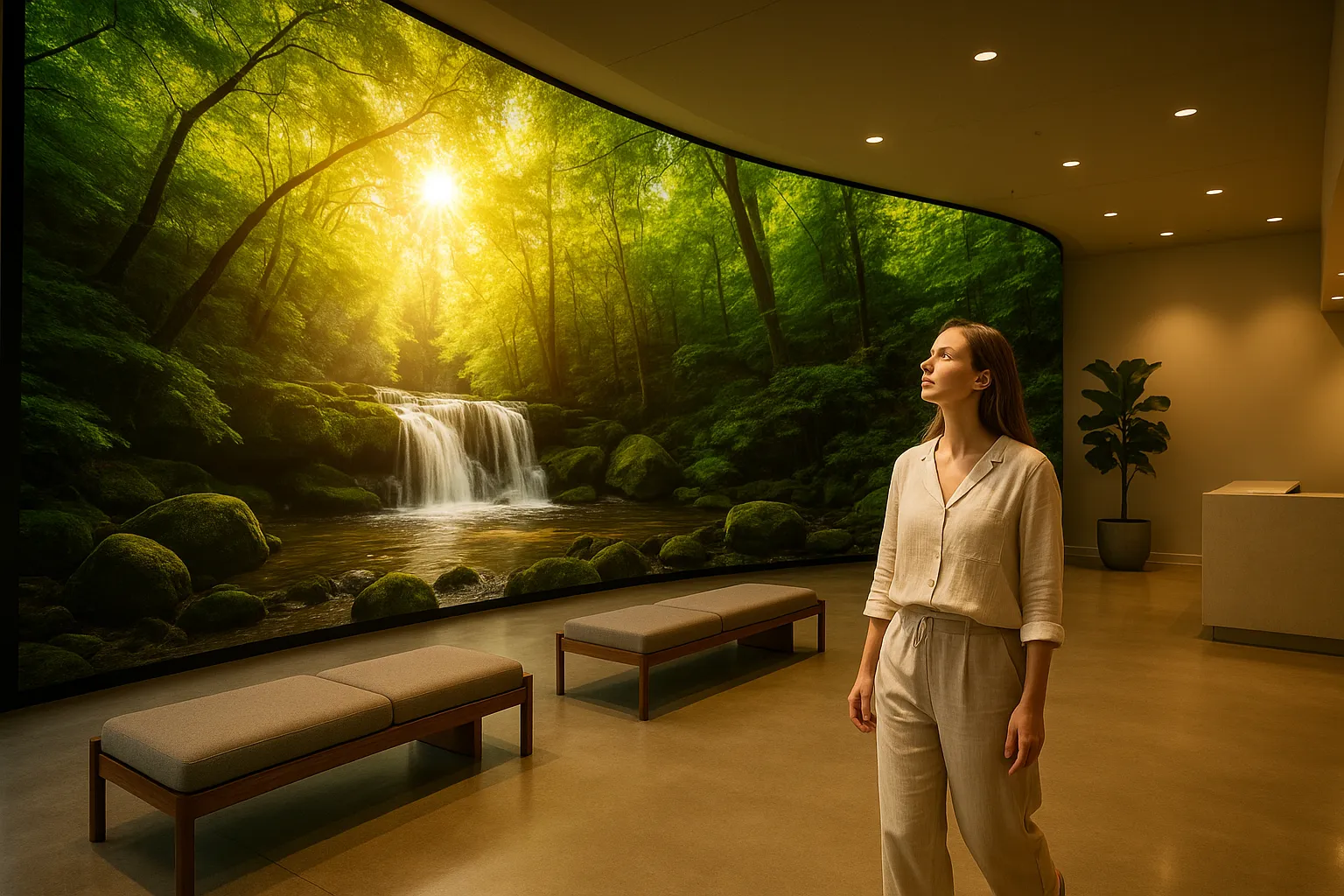
Here’s a number that should get your attention: according to multiple industry surveys, digital signage captures 400% more views than static displays. But LED brand experiences go well beyond simple attention metrics.
When a customer walks into a space dominated by a stunning LED installation, say, a floor-to-ceiling curved wall displaying immersive nature footage in a wellness spa, their emotional state shifts. The environment primes them. It communicates brand values (calm, luxury, escape) before a single word is spoken or a brochure is handed over.
That’s the real value proposition of LED brand experiences: they create emotional context. And emotional context drives purchasing behavior far more effectively than rational messaging alone.
We’ve seen this play out across our own deployments. Retailers using large-format LED signage consistently report longer dwell times, customers literally spend more minutes in the store. Hospitality clients tell us their lobby installations become conversation starters, generating organic social media posts from guests. And corporate clients find that immersive signage in common areas measurably improves employee engagement scores.
The data backs up what feels intuitively obvious: when you create customer experiences that feel genuinely elevated, people notice, remember, and respond.
Design Principles for Creating Memorable Immersive Experiences
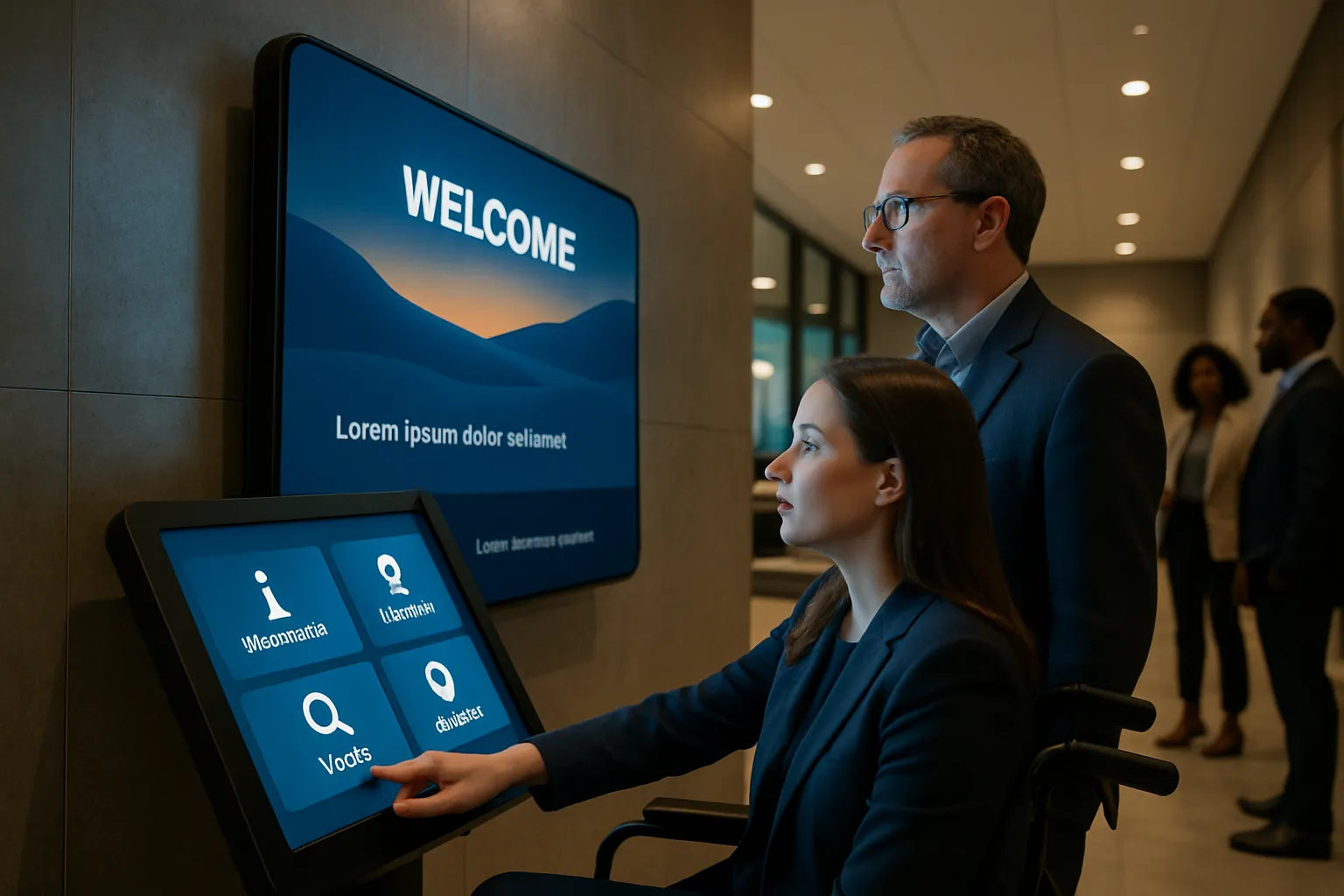
Technology is only half the equation. Without thoughtful design, even the most advanced hardware becomes noise. Here are the principles we follow when creating immersive digital signage experiences that actually resonate.
User-Centered Content Strategy
Start with the audience, not the screen. Before specifying hardware or designing content, ask: Who’s walking through this space? What are they feeling? What do we want them to feel when they leave?
A user-centered content strategy means:
- Mapping the journey, Understanding where the signage sits within a broader customer or visitor experience. A display at the entrance serves a different purpose than one near checkout.
- Prioritizing clarity, Immersive doesn’t mean overwhelming. The most effective installations use restraint. A single powerful visual with minimal text often outperforms a screen crammed with information.
- Designing for dwell time, If people pass by in three seconds, your content needs to communicate in three seconds. If they’re seated in a waiting area, you have minutes to unfold a narrative. Match content length to context.
- Testing and iterating, Use analytics to see what’s working. Modern signage platforms can track engagement metrics (views, interactions, dwell time) and feed that data back into content decisions.
Accessibility and Inclusivity in Experiential Design
This one matters more than most brands realize. Immersive signage that’s only accessible to able-bodied adults with perfect vision isn’t just ethically problematic, it’s bad business. You’re excluding a significant portion of your potential audience.
Design for accessibility from the start:
- Ensure touchscreen kiosks are reachable from wheelchair height (ADA guidelines specify 48 inches maximum for forward reach).
- Use high-contrast color schemes and readable fonts for viewers with low vision.
- Provide audio descriptions or captions for video content.
- Avoid exclusively relying on gesture-based interfaces, always offer an alternative input method.
- Consider sensory sensitivities: rapidly flashing content or extremely loud audio can be distressing for people with epilepsy, autism, or other conditions.
Inclusive design isn’t a compromise on creativity. It’s a constraint that, handled well, actually leads to more thoughtful and universally appealing installations.
Real-World Applications Across Industries
Theory is useful, but real-world case studies tell a richer story. Here’s how immersive digital signage experiences are being deployed across different verticals, and why they work.
Retail and Flagship Stores
A mid-size fashion retailer we worked with in the Midwest wanted to compete with the experiential retail environments their customers were seeing in places like SoHo and the Magnificent Mile, but without the Manhattan budget. We installed a modular LED video wall in their flagship entrance paired with CrownTV’s cloud-based dashboard for remote content management.
The result? They rotate seasonal campaigns, designer spotlights, and user-generated social content, all managed by a single marketing coordinator from her laptop. Foot traffic in the entrance zone increased 35% in the first quarter after installation, and the retailer reported a measurable lift in social media mentions, with customers photographing themselves in front of the display. That’s LED brand experiences doing their job.
Bigger retailers are pushing even further. We’re seeing interactive fitting room mirrors, in-aisle product discovery screens, and checkout-area displays that suggest complementary items based on what’s in the customer’s basket.
Museums, Events, and Public Spaces
Museums have always been natural homes for immersive technology, and digital signage has become a cornerstone of modern exhibition design. The shift from static plaques to interactive storytelling displays has fundamentally changed how visitors engage with collections.
One regional history museum deployed touchscreen timelines and projection-mapped dioramas to bring their permanent collection to life. Visitor engagement times at those exhibits nearly doubled compared to the traditional displays they replaced. For entertainment venues specifically, we’ve documented how digital signage transforms the audience experience at movie theaters, a model that translates well to concert halls, convention centers, and live event spaces.
Public art installations are another growing category. Cities from Austin to Seoul are commissioning large-scale LED artworks that serve as both cultural landmarks and wayfinding aids.
Corporate Lobbies and Hospitality
The corporate lobby is undergoing a quiet revolution. What used to be a space with a reception desk and maybe a potted ficus is now a brand storytelling environment. Companies are using immersive signage to communicate culture, values, and achievements to visitors, recruits, and employees alike.
One of our hospitality clients, a boutique hotel chain with 12 properties, deployed CrownTV across their lobbies and common areas. Each location features locally themed content: regional art, neighborhood guides, real-time local event feeds. The content is managed centrally but customized per property, which is exactly the kind of scale-plus-personalization that cloud software makes possible.
In healthcare, meanwhile, immersive signage is showing up in unexpected ways. Calming nature visuals in hospital waiting areas have been shown to reduce perceived wait times and lower patient anxiety, a genuinely meaningful application of the technology.
Managing Immersive Signage at Scale With Cloud-Based Software
Here’s the dirty secret of immersive signage: the hardware is the easy part. The real challenge, especially when you’re managing more than a handful of screens, is content management, scheduling, monitoring, and troubleshooting.
This is where cloud-based signage software becomes essential. And frankly, it’s where a lot of the “immersive signage is only for big budgets” myth falls apart.
With a platform like CrownTV’s dashboard, a single operator can manage screens across dozens of locations from one interface. Schedule content by time, day, or location. Push updates instantly. Monitor screen health remotely so you’re not dispatching a technician every time something glitches.
The economics shift dramatically when you factor in cloud-based management. Instead of needing on-site IT staff at every location or flying in specialists for content changes, you’ve got a centralized system that scales linearly. Add a new location? Ship the hardware, have a licensed technician handle the install, and the new screens appear in your dashboard within minutes.
For organizations running interactive digital signage specifically, cloud software also handles the data layer, collecting interaction metrics, anonymized audience analytics, and content performance data that informs future creative decisions. It’s a feedback loop that makes your investment smarter over time.
CrownTV’s turnkey approach, commercial-grade displays, nationwide installation, and the cloud dashboard, was specifically designed to make this accessible. We’re not selling a six-month custom integration project. We’re delivering a solution that’s operational in weeks, manageable by non-technical staff, and scalable from one screen to one thousand.
That’s what makes immersive signage practical for the rest of us, not just the brands with unlimited R&D budgets.
Future Trends Shaping Immersive Digital Signage
We’re keeping a close eye on several trends that will define the next wave of immersive digital signage experiences:
Transparent and flexible LED, Samsung, LG, and several Chinese manufacturers are pushing transparent OLED and microLED panels that can be integrated into windows, glass partitions, and curved architectural surfaces. Expect these to go mainstream within two to three years as prices continue to drop.
Generative AI content, We’re already seeing early adopters use generative AI to create dynamic signage content that adapts in real time. Imagine a restaurant menu board where the food photography shifts based on the time of day, or a retail display that generates fresh promotional visuals every morning without a designer touching it.
Spatial computing, Apple’s Vision Pro and Meta’s Quest lineups are pushing spatial computing forward. While headset-based experiences won’t replace public signage anytime soon, the spatial computing paradigm is influencing how we think about blending digital and physical layers in shared environments.
Sustainability-driven design, Energy-efficient LED panels, solar-powered outdoor installations, and recyclable display materials are becoming competitive differentiators. Clients increasingly ask us about the environmental footprint of their signage, and the industry is responding.
Deeper data integration, Expect signage to connect more tightly with CRM, POS, inventory, and IoT systems. A retail display that automatically promotes overstocked items, or a hotel lobby screen that greets loyalty members by name (with their permission), represent the kind of contextual intelligence that’s coming fast.
The thread connecting all of these trends? They all make immersive experiences more accessible, more personalized, and more integrated into the broader digital ecosystem.
Transform Your Space With Immersive Digital Signage
From interactive touchscreens to LED video walls, CrownTV delivers turnkey immersive signage solutions tailored to your brand. Request a free consultation to explore your options.
Related Reading
- LED Video Walls for Art Galleries & Museums: The Complete Guide
- Digital Signage for Luxury Retail: How High-End Brands Use LED Displays In-Store
- Indoor LED vs LCD Display: How To Choose the Right Commercial Screen
Conclusion
Immersive digital signage experiences have moved well past the novelty phase. They’re a proven tool for deepening customer engagement, differentiating brand environments, and creating the kind of memorable moments that translate into loyalty and revenue.
What’s changed most dramatically in recent years isn’t the technology itself, it’s the accessibility. Cloud-based management, modular hardware, and turnkey installation services mean that creating genuinely immersive spaces no longer requires a Fortune 500 budget or a dedicated AV engineering team. Whether you’re a boutique retailer, a regional hospital, or a hotel chain, the tools exist to build something remarkable.
The brands that move first don’t just install screens. They build environments. And those environments become stories their customers tell for them.
Let’s Build Your Immersive Signage Strategy
Whether you’re planning a flagship retail experience or a hotel lobby transformation, our team can help. Talk to a signage specialist today.
Frequently Asked Questions About Immersive Digital Signage Experiences
What makes digital signage truly immersive?
Immersive digital signage experiences go beyond standard screen displays by incorporating spatial awareness, real-time interactivity, contextual relevance, and sensory depth. The environment responds to viewers through sensors, touch, or gesture controls, pulling them into an adaptive narrative rather than presenting passive, looping content.
How does AI-powered personalization improve interactive digital signage?
AI uses anonymous computer vision and machine learning to tailor content in real time based on audience demographics, time of day, and engagement data. This means signage can automatically serve more relevant messaging, optimize scheduling, and continuously improve performance — creating curated experiences rather than generic displays.
Can small businesses afford immersive digital signage experiences?
Yes. Cloud-based management platforms, modular LED technology, and turnkey installation services have dramatically lowered the barrier to entry. A boutique retailer or regional hotel can now deploy and manage immersive signage without a Fortune 500 budget or dedicated AV engineering team, scaling from one screen to hundreds.
What are the best types of interactive digital signage for high-traffic spaces?
Touchscreen kiosks, gesture-based displays, and 3D anamorphic LED video walls are among the most effective. Post-pandemic, touchless gesture interfaces using time-of-flight sensors have gained traction in public venues, while video wall installations with fine-pitch LED panels deliver stunning visuals even at close range.
How do LED brand experiences impact customer engagement and dwell time?
Digital signage captures up to 400% more views than static displays. LED brand experiences create emotional context that primes purchasing behavior — retailers consistently report longer dwell times, increased foot traffic, and more organic social media mentions after deploying large-format immersive installations. Learn more about how digital signage enhances customer experiences.
What future trends will shape immersive digital signage by 2027?
Key trends include transparent and flexible LED panels for architectural integration, generative AI for real-time content creation, spatial computing influences, sustainability-driven design with energy-efficient hardware, and deeper data integration connecting signage with CRM, POS, and IoT systems for highly contextual, personalized experiences.