Hospitality Digital Signage Solutions for Hotels & Resorts
CrownTV helps hotels, resorts, and hospitality venues create unforgettable guest experiences with stunning digital signage displays. From lobby welcome screens and event directories to poolside promotions and concierge information boards, our turnkey solution covers everything — hardware, software, professional installation, and ongoing support. Whether you manage a boutique hotel, a full-service resort, or a conference center, CrownTV makes it easy to communicate with guests, promote amenities, and elevate your brand at every touchpoint.
Hospitality Digital Signage Elevates the Guest Experience
Guests notice digital screens faster than static signs. The right display can direct attention, reinforce branding, and increase average order value.
Capture Attention
Dynamic digital displays grab guests’ attention 4x faster than traditional static signage.
Boost Sales
Promote featured products, limited-time offers, and upsells right at the point of decision.
Enhance Experience
Create an immersive, modern on-property experience that keeps customers engaged longer.
Why Hospitality Brands Choose CrownTV
for Digital Signage
Most digital signage companies only sell software, leaving you to figure out the hardware, installation, and content management on your own. CrownTV is the only provider that handles every step — from selecting the right commercial-grade displays for your lobby, restaurant, spa, and conference areas to installing them and providing a cloud-based dashboard that lets you update content across all your properties from anywhere.
Full Hardware + Installation
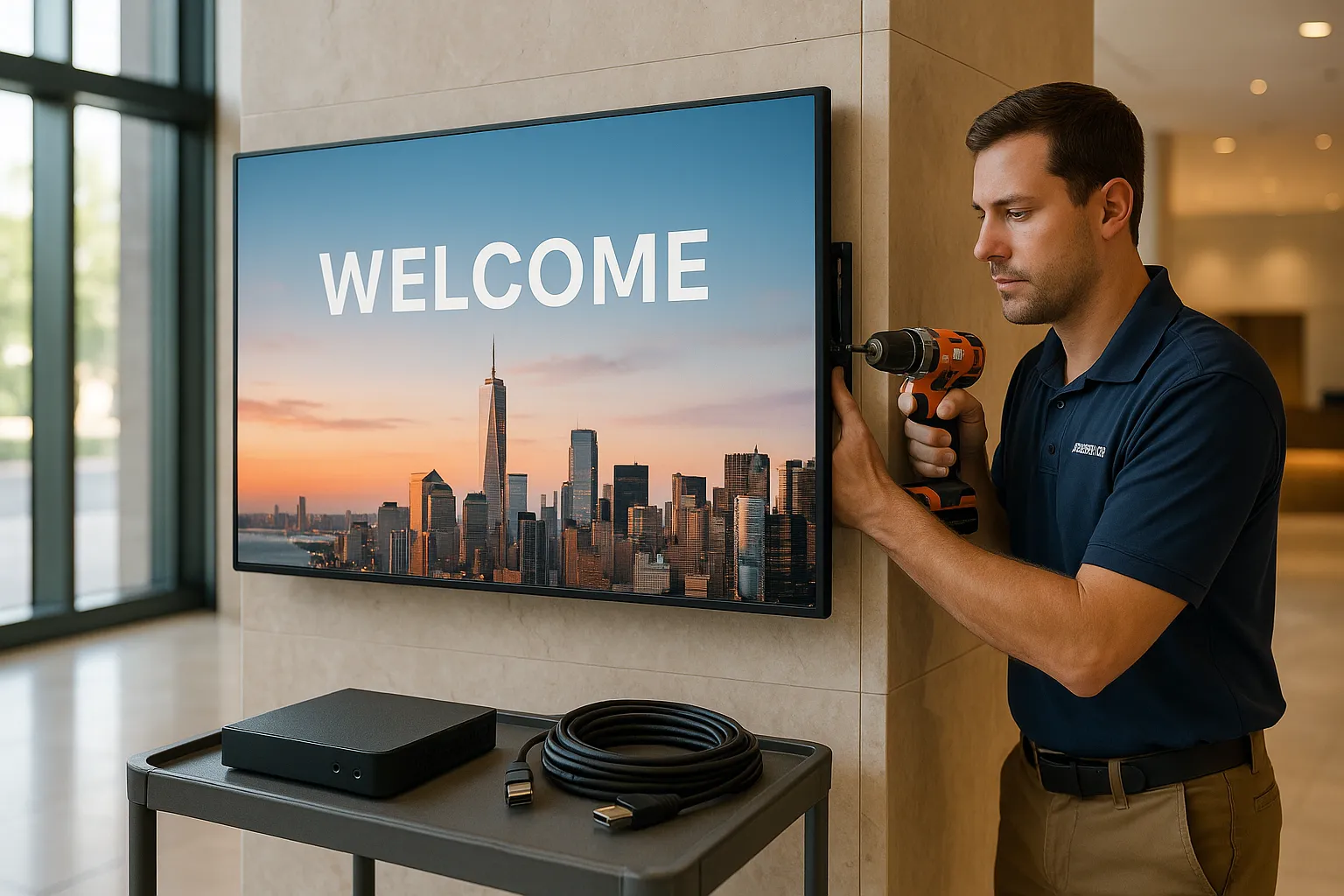
We supply the commercial display, the mount, the media player, and licensed technicians to install everything cleanly. No guesswork, no third-party vendors, no headaches.
Commercial-Grade Hospitality Displays
Your store gets high-quality 4K hospitality screens built for long operating hours, consistent brightness, and a clean, modern look — not consumer TVs.
Easy Content Updates From Anywhere
Update promos, campaigns, and pricing instantly. One dashboard controls every screen in every location, with playlists, schedules, and day-parting built in.
Nationwide Installation Network
Whether you have one boutique or 200 hotel propertys, our technicians handle onsite surveys, mounting, wiring, and configuration with precision.
Why Hospitality Brands Choose CrownTV
Hospitality environments need displays that look clean, stay bright, and operate smoothly. CrownTV delivers hardware, installation, and software in one integrated system — tailored for hospitality.
Commercial-Grade Screens Installed by Professionals
Every display is mounted securely, aligned perfectly, and connected to your network with minimal disruption.
✓Bright, sharp, and color-consistent
✓Made for long daily hours
✓Backed by full warranties
✓Supported by CrownTV after installation
Indoor & High-Brightness Window Displays
Street-facing hotels need screens that stay visible in daylight. Our high-brightness window displays (2,500–3,500 nits) cut through sun glare and attract pedestrians.
★Promote sales and new arrivals
★Display brand videos & seasonal campaigns
★Drive walk-in traffic every day
★4K displays enhance product stories inside
Ready To Elevate Your Hotel or Resort With Digital Signage?
CrownTV installs the screens, provides the hardware, and gives you a simple cloud-based CMS dashboard to manage all your content from any device. Change welcome messages, update event schedules, promote dining specials, and highlight spa offers — all in real time, from anywhere. Our team handles everything from initial consultation to nationwide installation, so your staff can focus on delivering exceptional guest experiences.
Digital Signage Drives Real Results in Hospitality
68% of hotel guests say digital displays in the lobby positively influence their first impression — making strategic screen placement essential for hospitality properties looking to set the tone from the moment guests arrive.
Hotels using digital signage for in-house promotions see a 15–25% increase in ancillary revenue from spa services, dining, and excursions — turning every screen into a revenue driver for your property.
Digital wayfinding and event directories reduce front desk inquiries by up to 30%, freeing your staff to focus on personalized guest service instead of answering repetitive questions about schedules and directions.
Video content on hotel lobby and restaurant displays increases guest engagement with promotions 2.5× over static signs — helping you drive more bookings for room upgrades, loyalty programs, and on-site experiences.
Real Hospitality Installations Powered by CrownTV
Trusted by Hotels & Resorts Across the U.S.
Hotels, resorts, and hospitality venues across the country rely on CrownTV for clean, professional installations and a signage platform that just works. Here’s what property managers and hospitality professionals have to say about working with us.
Hospitality Digital Signage – Frequently Asked Questions
What is digital signage?
Hospitality digital signage refers to digital screens used inside hotels, resorts, conference centers, and other lodging and event properties to communicate with guests, promote services, and enhance the overall experience. Common uses include lobby welcome displays, event directories, wayfinding maps, restaurant menu boards, spa promotion screens, and concierge information kiosks. Unlike static printed signage, digital displays can be updated instantly from CrownTV’s cloud-based dashboard, making it easy to keep content fresh, relevant, and personalized to your guests — whether you manage one boutique hotel or a portfolio of properties.
How does digital signage help hotel or resorts increase sales?
The cost of hospitality digital signage depends on the number of screens, display sizes, mounting requirements, and whether you need indoor or outdoor-rated hardware. CrownTV offers all-inclusive packages that bundle commercial-grade screens, media players, software, professional installation, and ongoing support — so there are no surprise fees. Most hotel properties start with lobby, restaurant, and conference area displays and expand from there. Contact our team for a custom quote based on your property’s specific needs, layout, and guest communication goals.
What types of digital screens work best for hospitality?
Yes. CrownTV’s cloud-based CMS dashboard lets you manage digital signage across multiple hotel properties from one centralized login. You can push brand-consistent content to every location, schedule property-specific promotions, and update individual screens or groups of screens — all in real time, from any device. This makes CrownTV ideal for hotel groups, resort chains, and multi-property hospitality brands that need consistent guest messaging without the hassle of managing each property’s signage independently.
Do I need special hardware for hospitality digital signage?
The most effective hospitality digital signage content includes welcome messages with guest names (for VIP arrivals), event schedules and conference directories, restaurant and bar specials, spa and fitness center promotions, local attraction guides, wayfinding maps, loyalty program promotions, and weather or travel information. CrownTV’s dashboard supports images, video, live data feeds, social media walls, and scheduled playlists — so you can rotate content throughout the day to match your guests’ journey from check-in to check-in area.
How do content updates work for hospitality digital signage?
CrownTV provides a cloud-based content management dashboard that makes updating your hospitality screens simple and fast. You can upload new images, swap out video content, schedule promotions for specific dates (like holiday weekends or conference events), and manage playlists — all from your laptop, tablet, or phone. Changes push to your screens in real time, so your front desk staff never needs to manually update anything. It’s designed to be intuitive enough for any team member to use without technical training.
Can digital signage be installed in hotel entrance windows?
CrownTV exclusively uses commercial-grade displays designed for 24/7 operation in demanding hospitality environments. Unlike consumer TVs, commercial displays handle the heat, humidity, and constant use that hotels, pool areas, and conference rooms demand. They feature brighter panels for high-ambient-light lobbies, anti-glare coatings, slim bezels for clean mounting, and built-in media player compatibility. Every screen we install is rated for continuous operation — so your digital signage performs flawlessly whether it’s behind the front desk or next to an outdoor pool.
Do you provide installation for hospitality digital signage?
Yes. CrownTV offers outdoor and window-facing digital signage solutions built specifically for hospitality properties. Our outdoor-rated displays are weatherproof, high-brightness (up to 3,000+ nits), and designed to handle direct sunlight, rain, and extreme temperatures. Hotels and resorts commonly use outdoor screens for poolside promotions, entrance welcome displays, valet and parking information, event signage near outdoor venues, and wayfinding at resort properties with multiple buildings. Every outdoor installation is engineered for durability and visibility in all conditions.
Is digital signage worth it for small hotel or resorts?
Yes — CrownTV provides full professional installation services nationwide. Our certified technicians handle everything: site surveys, electrical planning, mounting, cable management, display calibration, and network configuration. We coordinate with your property management team and schedule installations during low-occupancy periods to minimize guest disruption. Whether you need screens mounted in a grand lobby, behind a front desk, inside elevators, or across a multi-building resort campus, our team ensures every display looks polished and operates perfectly from day one.
Do you work with multi-location hospitality brands?
Absolutely. Even boutique hotels and smaller properties see immediate benefits from digital signage. A single screen in the lobby can replace printed event boards, promote your restaurant or bar specials, display local attraction guides, and create a modern first impression that guests remember. CrownTV’s system scales from a single screen to hundreds — so you can start small and expand as your property grows. The cloud-based dashboard is just as easy to use for one screen as it is for fifty, and our turnkey approach means you don’t need a dedicated IT team to manage it.
How much does hospitality digital signage cost?
Yes. CrownTV specializes in multi-property deployments for hotel groups and hospitality brands. Our centralized dashboard lets you manage digital signage across every property from one login — push brand-standard content to all locations, run property-specific promotions, and monitor screen health remotely. We provide dedicated project management for chain-wide rollouts, including phased installation schedules, standardized hardware configurations, and remote monitoring. Whether you operate 5 properties or 500, CrownTV delivers consistent guest-facing digital experiences at every location with ongoing support and maintenance.
Start Your Hospitality Digital Signage Project
Get in touch with our hospitality digital signage specialists today. CrownTV provides everything your hotel or resort needs — hardware and software, professional installation, and ongoing support — so you can focus on delivering exceptional guest experiences while we handle the technology.
A guest walks into a five-star hotel lobby and is greeted by a sleek, floor-to-ceiling display showing a personalized welcome message, local weather, and curated event recommendations. No printed flyers. No cluttered bulletin boards. Just a seamless first impression that sets the tone for their entire stay.
That scenario isn’t futuristic, it’s happening right now at properties that have embraced hospitality digital signage. And for hotel GMs and property managers still relying on static signage or outdated AV setups, the gap between their guest experience and a competitor’s is widening fast.
In this guide, we’ll walk through everything you need to know about deploying digital signage across hotel properties in 2026, from lobby displays and conference rooms to cloud-based management and scalable installation. Whether you’re running a single boutique property or overseeing a portfolio of luxury hotels, this is the playbook.
Key Takeaways
Hospitality digital signage replaces static, outdated communication with dynamic, real-time displays that elevate the guest experience across every touchpoint.
Strategic screen placement in lobbies, conference rooms, restaurants, and common areas turns digital signage into a powerful operational and revenue-driving tool.
Integrating digital signage with property management systems enables personalized guest interactions, from welcome messages to curated dining and spa promotions.
Commercial-grade hospitality LED displays rated for brightness, durability, and extended daily operation far outperform consumer-grade alternatives in hotel environments.
Cloud-based signage software allows hotel GMs to manage content across multiple properties from a single dashboard, with scheduling, automation, and real-time monitoring built in.
Planning installation holistically—covering network infrastructure, power, aesthetic integration, and scalability—prevents costly delays and ensures a smooth, future-proof rollout.
What Is Hospitality Digital Signage and Why It Matters
At its core, hospitality digital signage refers to networked digital displays deployed throughout hotel and resort properties to communicate with guests, staff, and visitors in real time. Think beyond a TV playing the news in the breakfast area. We’re talking about dynamic, content-managed screens that serve a strategic purpose, wayfinding, branding, promotions, event schedules, and personalized messaging.
So why does it matter now more than ever? A few reasons.
First, guest expectations have changed dramatically. Travelers in 2026 are accustomed to digital-first experiences in retail, airports, and restaurants. When they check into a hotel that still uses paper tent cards and static poster frames, it feels dated. Hotel digital signage bridges that gap, delivering information in a format guests actually engage with.
Second, operational efficiency improves significantly. Instead of printing and distributing updated event schedules or restaurant menus across a 300-room property, a single content update from a dashboard pushes changes to every screen instantly. That’s hours of labor saved weekly.
And third, there’s the revenue angle. Digital displays in lobbies, elevators, and common areas are prime real estate for promoting on-site dining, spa packages, local partnerships, and loyalty programs. Properties that leverage these touchpoints see measurable upticks in ancillary revenue, something every GM cares about.
Key Placement Areas for Hotel Digital Signage
Where you place screens matters just as much as what you put on them. Strategic placement turns digital signage from a nice-to-have into a genuine operational tool. Let’s break down the highest-impact locations.
Hotel Lobby Displays and Welcome Screens
The lobby is your property’s handshake. It’s the first and last physical space a guest interacts with, which makes hotel lobby displays arguably the most important placement in your entire signage network.
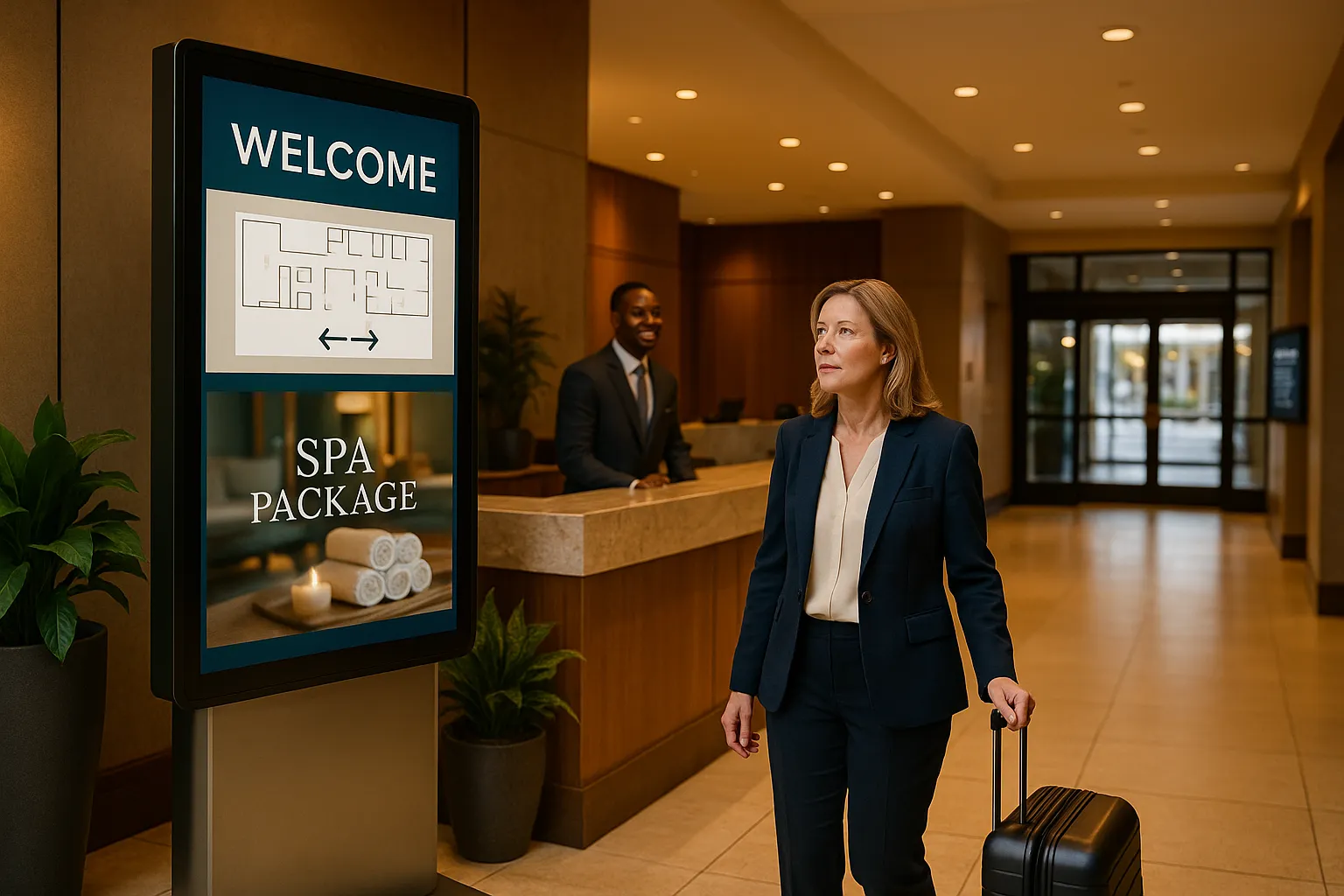
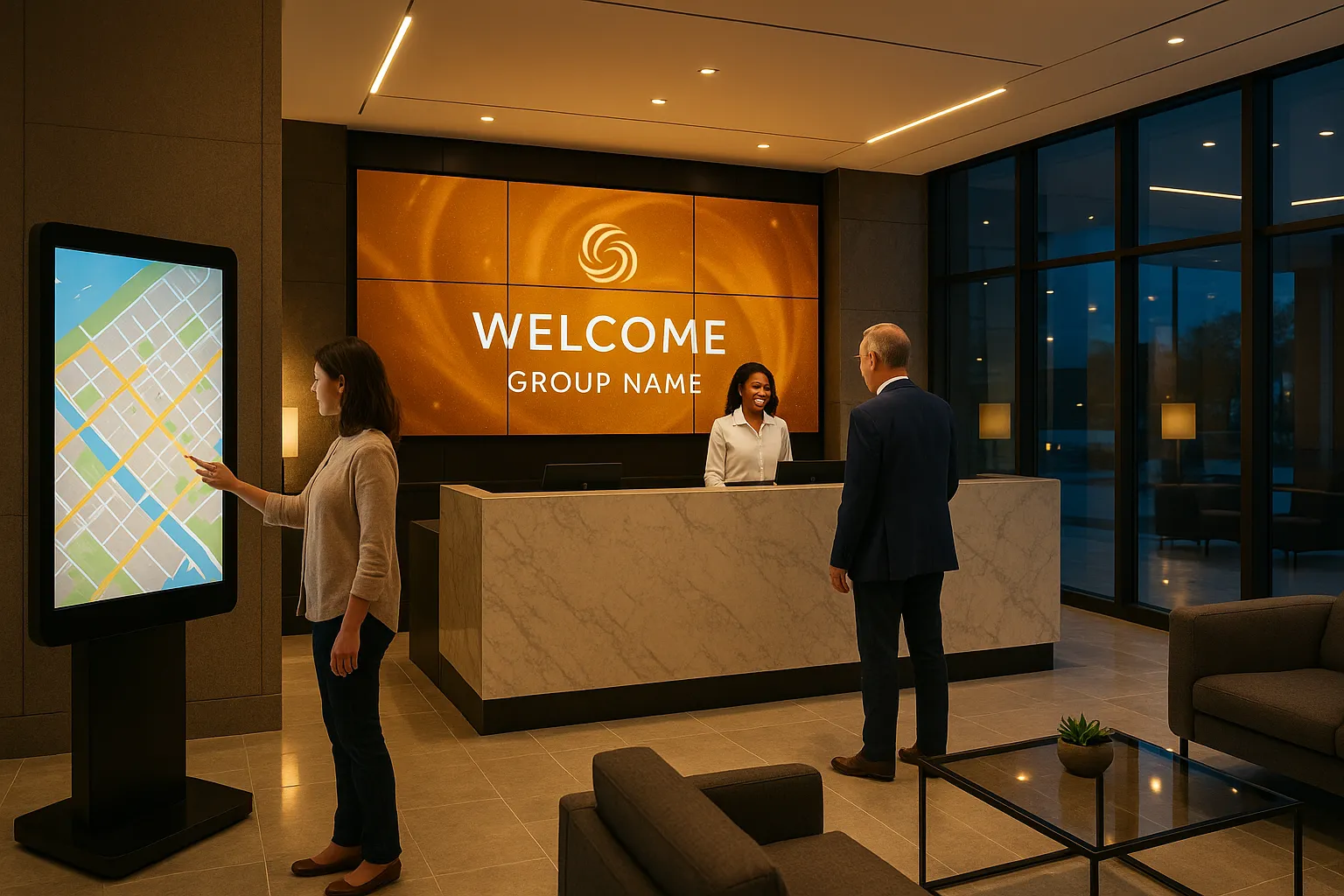
Welcome screens near the front desk can greet arriving groups by name, especially useful for weddings, corporate retreats, and conferences. A large-format video wall behind reception sets an ambient mood while reinforcing brand identity. And interactive kiosks in the lobby can handle self-check-in, local area maps, or concierge-style recommendations, reducing front desk bottlenecks during peak check-in hours.
Luxury properties like the Four Seasons and Marriott Marquis brands have leaned heavily into lobby digital experiences, using curated content loops that blend property storytelling with real-time information. The result? A lobby that feels alive rather than static.
Conference Rooms, Restaurants, and Common Areas
Beyond the lobby, there’s a network of high-traffic zones that benefit enormously from digital signage.
Conference and meeting rooms use displays for room scheduling, event agendas, and wayfinding. A screen outside each meeting room showing the current booking status eliminates the awkward “is this room available?” shuffle, a small detail that corporate clients notice and appreciate.
On-site restaurants and bars benefit from digital menu boards that can shift content based on time of day. Breakfast offerings at 7 AM, lunch specials at noon, happy hour promotions at 5 PM, all automated. No reprinting, no staff intervention.
Pool areas, fitness centers, and spa lobbies are often overlooked but offer excellent placement opportunities. Screens in these spaces can promote upgrade packages, display class schedules, or simply provide ambient content that enhances the atmosphere. Modern cloud infrastructure platforms make it straightforward to schedule content across all these zones from a single interface, syncing updates property-wide in seconds.
How Guest Experience Technology Elevates Luxury Properties
Guest experience technology isn’t just about screens on walls, it’s about creating moments that feel intentional and personalized. And in the luxury hospitality segment, those moments are what justify premium room rates.
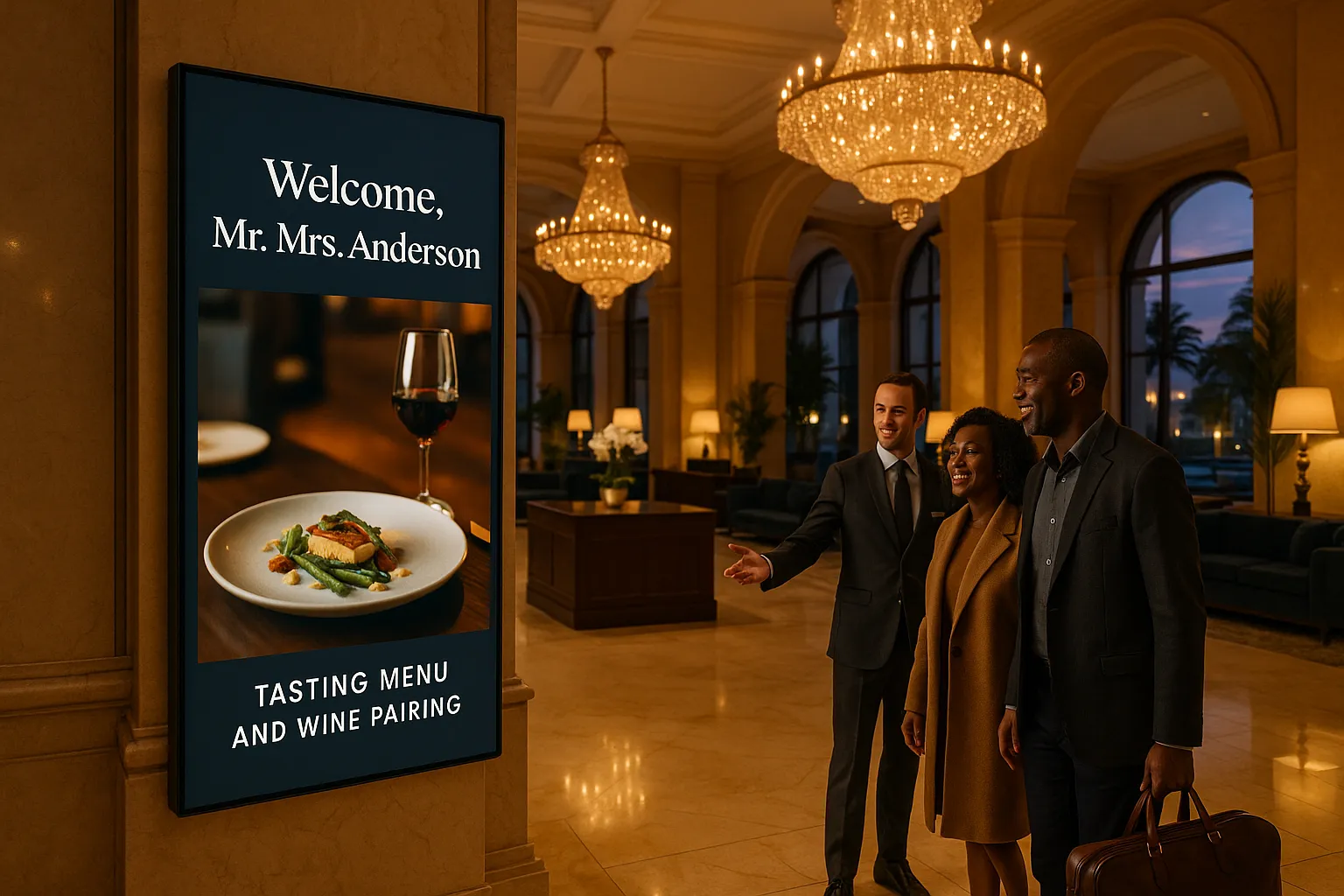
Consider a high-end resort that integrates its digital signage with its property management system (PMS). When a VIP guest arrives, the lobby display shifts to a personalized welcome. The restaurant screens feature the evening’s tasting menu alongside a wine pairing curated by the sommelier. The spa lobby promotes a package that aligns with the guest’s previous booking history. Every touchpoint feels considered.
This kind of integration is increasingly feasible thanks to modern API frameworks and developer tools that allow signage platforms to connect with existing hotel tech stacks, PMS, CRM, booking engines, and loyalty systems.
But you don’t need to be a five-star resort to benefit. Even mid-scale properties can use guest experience technology to punch above their weight. A well-placed digital concierge screen in the elevator bank, cycling through local dining recommendations and transit info, gives guests the kind of value-add that shows up in reviews. And reviews, as we all know, drive bookings.
At CrownTV, we’ve seen properties transform their guest satisfaction scores simply by replacing outdated information channels with dynamic, well-designed digital content. It’s not magic, it’s just meeting guests where their expectations already are.
Choosing the Right Hospitality LED Displays and Hardware
Hardware selection is where a lot of hotel signage projects go sideways. Consumer-grade TVs from big-box stores might seem like a budget-friendly shortcut, but they’re not built for the demands of a hospitality environment, and they’ll remind you of that fact when they fail 18 months in.
Hospitality LED displays need to handle 16+ hours of daily operation, varying ambient light conditions, and sometimes challenging mounting environments (think outdoor pool areas or sun-drenched lobbies). Commercial-grade panels are rated for this kind of use and typically offer brighter output, better color accuracy, and longer warranties.
Here’s what to evaluate when selecting hardware:
Brightness (nits): Lobby and window-facing displays need 700+ nits to remain legible in daylight. Standard meeting room screens can get by with 350–500.
Panel size and aspect ratio: A 55″ display works for room scheduling. A lobby video wall might require multiple 46″ or 55″ narrow-bezel panels tiled together.
Durability and rating: For outdoor or semi-outdoor placements, look for IP-rated enclosures that protect against moisture and dust.
media player integration: Some displays have built-in SoC (System on Chip) players, while others pair with external media players for more processing power and flexibility.
CrownTV’s approach simplifies this decision. We source commercial-grade displays matched to each property’s specific needs and pair them with our own media player hardware, so there’s no guesswork about compatibility. It’s a turnkey setup, displays, players, mounts, and installation handled as one project.
Many open-source signage projects hosted on collaborative development platforms can work for basic use cases, but enterprise hospitality deployments typically demand the reliability and support that come with a dedicated provider.
Upgrade Your Hotel With CrownTV Digital Signage
CrownTV provides turnkey digital signage for hotels and hospitality — from lobby displays to conference room screens to digital menu boards. We handle hardware, software, installation, and support. Get a free quote today.
Managing Multiple Properties With Cloud-Based Software
If you manage more than one property, or even a single large resort with dozens of screens, cloud-based digital signage software isn’t optional. It’s the backbone of the entire operation.
Cloud-based platforms let you control every screen across every property from a single dashboard, anywhere with an internet connection. Need to update the branding across 12 hotels before a franchise-wide campaign launch? Done in minutes, not days. Want to schedule seasonal content for your ski resort property while simultaneously managing your beachfront location’s summer programming? No problem.
The best platforms offer:
Role-based access: Corporate can set brand guidelines while individual property managers control local content.
Scheduling and automation: Content playlists that shift based on time, day, or even triggered events.
Real-time monitoring: See which screens are online, flag hardware issues, and push emergency messaging instantly.
Integration capabilities: Connect with PMS, social media feeds, weather APIs, and review platforms.
CrownTV’s cloud-based dashboard was built with exactly this use case in mind. It’s designed so that a hotel GM who isn’t a tech expert can log in, drag-and-drop content, schedule it, and walk away, while still giving IT teams the granular control they need for larger deployments. That balance between simplicity and power is what separates a hospitality-grade platform from generic signage software.
Planning Your Hotel AV Solutions: Installation and Scalability
We’ve seen too many signage projects stall at installation. A property buys great displays, selects solid software, and then spends months trying to coordinate electricians, mount fabricators, network technicians, and AV integrators. The screens sit in boxes. The launch date slips.
Hotel AV solutions need to be planned holistically from day one. That means thinking about:
Network infrastructure: Do your display locations have reliable wired or wireless connectivity? Hardwired ethernet is preferred for stability, especially for video walls.
Power and conduit: Are outlets accessible at mounting locations, or does electrical work need to happen first?
Aesthetic integration: In a luxury property, visible cables and clunky mounts are non-starters. Recessed mounts, cable channels, and custom millwork may be required.
Scalability: Start with your highest-impact locations (lobby, front desk, main restaurant), but plan your network architecture so adding screens to conference rooms and secondary areas later is plug-and-play, not a full redesign.
This is one area where CrownTV’s nationwide installation service really shines. We handle the full scope, site surveys, mounting, cabling, network configuration, and content setup, using licensed technicians in all 50 states. For multi-property rollouts, that consistency matters. You get the same quality of install in Miami as you do in Minneapolis.
Scalability also means thinking about your content pipeline. It’s one thing to launch with 10 beautiful screens. It’s another to keep them fed with fresh, relevant content six months later. Build a content calendar, assign ownership, and lean on your software’s scheduling features to keep things running smoothly without constant manual intervention.
Hospitality digital signage in 2026 isn’t a luxury add-on, it’s infrastructure. It shapes first impressions, streamlines operations, drives ancillary revenue, and delivers the kind of polished, modern guest experience that earns loyalty and five-star reviews.
The properties getting this right aren’t necessarily the ones with the biggest budgets. They’re the ones that approach digital signage strategically: choosing the right hardware, placing screens where they actually impact the guest journey, and managing everything through a platform that makes ongoing operation sustainable.
Whether you’re upgrading a single boutique hotel or rolling out signage across a portfolio of properties, the fundamentals we’ve covered here, placement, hardware, software, and installation planning, will keep your project on track. And if you want a partner who handles the entire process end-to-end, that’s exactly what we do at CrownTV.
Frequently Asked Questions
What is hospitality digital signage and how does it work?
Hospitality digital signage refers to networked digital displays deployed across hotel properties to communicate with guests and staff in real time. These screens deliver dynamic content such as wayfinding, event schedules, promotions, and personalized welcome messages, all managed remotely through cloud-based software from a single dashboard.
Where should hotels place digital signage for the biggest impact?
The highest-impact placements for hospitality digital signage include the hotel lobby, front desk area, conference room entrances, on-site restaurants, and spa lobbies. Lobby displays shape first impressions, while restaurant digital menu boards and meeting room scheduling screens streamline operations and enhance the overall guest experience.
How does cloud-based digital signage software help multi-property hotel managers?
Cloud-based platforms allow managers to control every screen across multiple properties from one dashboard. Features like role-based access, automated content scheduling, real-time hardware monitoring, and integrations with PMS and booking systems make it easy to push brand-wide updates in minutes rather than days.
Why should hotels use commercial-grade LED displays instead of consumer TVs?
Hospitality LED displays are built for 16+ hours of daily operation, high ambient light, and demanding mounting environments. They offer superior brightness (700+ nits for lobbies), better color accuracy, and longer warranties compared to consumer-grade TVs, which typically fail prematurely in commercial hospitality settings.
Can hospitality digital signage integrate with hotel property management systems?
Yes. Modern hospitality digital signage platforms connect with PMS, CRM, booking engines, and loyalty systems through API frameworks. This enables personalized guest experiences, such as displaying VIP welcome messages or promoting services based on a guest’s booking history, all triggered automatically.
What are the best practices for planning a hotel digital signage installation?
Start by auditing network infrastructure, power access, and mounting aesthetics at each display location. Prioritize high-traffic areas like the lobby and main restaurant first, then design your network architecture so future screen additions are plug-and-play. Build a content calendar early to keep screens fresh long after launch.
Elevate Hospitality Experience with Dynamic Digital Signage
Welcome each visitor with customized messages and intuitive navigation maps—ensuring every stay is effortless and memorable. Engage, inform, and enchant with CrownTV, where every sign is a sign of hospitality excellence.
Enhance and positively impact guest experience by 75%
Transform guest satisfaction with our personalized, interactive digital signage. Keep your guests engaged and enhance their overall experience every step of the way.
Increase brand awareness and company mission by 48%
Make your brand stand out and share your mission with eye-catching digital displays. Our engaging visuals not only increase brand recognition but also connect deeply with viewers.
Enhance hotel staff efficiency and productivity by 25%
Streamline workplace communication and boost efficiency with our digital signage solutions. Better communication leads to increased productivity and smoother service, making every interaction count.
Expert Display Selection Advisory
Selecting the right digital displays is key to effective communication in hospitality. At CrownTV, we guide you in choosing displays that perfectly match your environment and meet your business goals.
Showcase Your Brand with Impact
Leverage our top-tier software and content creation tools to present your brand’s message, promotions, and products clearly and impactfully. Make sure your message stands out and grabs attention.
Real-Time Updates and Adaptive Content Management
Stay agile with our digital signage that offers real-time updates and flexible content management. Adapt quickly to shifts in business conditions, update promotions on the fly, and keep your information fresh and relevant.
Engage Customers and Create Lasting Impressions
Draw in your audience with content that sticks like loyalty programs, hotel amenities, and events. Our eye-catching visuals and interactive displays not only captivate but also create memorable interactions that boost both customer and employee engagement.
The White Glove Experience
Enjoy the complete convenience of our White Glove Experience. From initial consultation to final installation and ongoing support, we handle it all. Our comprehensive service package includes:
End-to-End Installation: We take care of the entire setup process for your digital displays, from mounting to launching the software.
Strategic Consultation: Receive expert guidance on where to place your displays and which technology to use to maximize both visibility and impact.
Hands-On Training and Support: We ensure your team is fully prepared and confident in utilizing the technology to its fullest potential.
Different businesses need different display solutions based on industry, lighting, aesthetic preferences, and design objectives. CrownTV offers a versatile selection of digital display systems tailored to meet these varied requirements, including:
Video Walls
Create immersive, large-scale visual experiences.
High-Brightness Window Displays
Ensure clear visibility even in direct sunlight.
Indoor Digital Displays
Perfect for indoor environments, offering sharp images and vibrant colors.
TV Screens
Versatile screens that adapt to various content types and settings.
Digital Menus
Ideal for displaying food and beverage options, digital menu boards, and promotions clearly and attractively.
Expert Installation and Mounting Services
Experience hassle-free setup with our professional installation services for your digital signage systems. Our skilled installation team excels in a variety of setups:
Standard Installations
Efficiently mounting screens on walls and ceilings in traditional settings.
Complex Configurations
Expertly managing intricate setups like video walls and custom structures.
Outdoor and Window Displays
Installing high-brightness displays designed to perform well even in direct sunlight.
Discover the Ideal Mounting Solutions for Your Displays
We offer a diverse range of mounting options to perfectly suit your requirements, combining functionality with aesthetic appeal for your digital displays:
Free-standing Mounts
These provide flexibility and mobility, allowing you to position displays optimally across different areas.
Ceiling and Wall Mounts
Utilize your space efficiently and increase the visibility of your displays with strategically positioned mounts.
Custom Mount Solutions
Receive mounts custom-designed to meet specific spatial or aesthetic needs, ensuring a perfect fit for any unique environment.
Technology and Hardware for
Maximum Impact.
Built by the pros. We take pride in crafting technology that strikes the perfect balance between sophistication and user-friendliness, opening up unlimited possibilities for your business.
Dashboards
Developed with genius. Packed with features. Still easy to use.
Starting at $39/month. Discounts are available for multiple unit purchases.
It might be techy, but it doesn’t have to be technical. Go for easy digital signage software solutions:
cloud-based software
It might be techy, but it doesn’t have to be technical. Go for easy digital signage software solutions:
Explore our app store's
full range of integration possibilities for unlimited content and streaming options.
Manage unlimited displays worldwide
effortlessly from one dashboard without compromising security, flexibility, or user-friendliness.
Manage thousands of remote screens easily, as though they were a single display.
Tractable access controls and responsibilities for individuals or teams.
Tractable access controls and responsibilities for individuals or teams.
Content takeover management for instant screen prioritization.
Split-screen display option for dual content.
Group displays for synchronized content.
Manage screen power and settings remotely.
Customize content from the dashboard, access a library of pre-designed templates, and collaborate with CrownTV designers for custom creations.
Ensure seamless content delivery and management across all your hotel displays with CrownTV’s robust digital media player.
Universal Compatibility: Our player handles a wide range of formats and resolutions, offering a flexible and dynamic viewing experience that adapts to your guest’s needs.
Remote Content Control: Update and manage your displays from anywhere, ensuring that your content remains fresh, engaging, and timely for every guest.
Personalized Display Options: Tailor content and designs to fit different areas of your hotel, from the lobby to guest rooms, making every message resonate with impact and relevance.
Warm Welcomes: Personalized Greetings for Every Guest
Kick off every stay on a high note with our digital signs. Greet guests warmly, provide essential information, and provide entertainment to hotel guests, crafting an inviting and memorable first impression.
Digital Concierge: Seamless Integration with Your Hotel’s Decor
Our digital displays blend perfectly with your hotel’s aesthetic, offering guests convenient access to important details about their stay and insightful local information—all without disrupting the style of your surroundings.
Engage in the Queue: Transform Waiting Times
Enhance the experience of waiting at reception with our engaging digital signage. Entertain and inform your guests simultaneously, turning every moment at your hotel into a positive and enjoyable part of their visit.
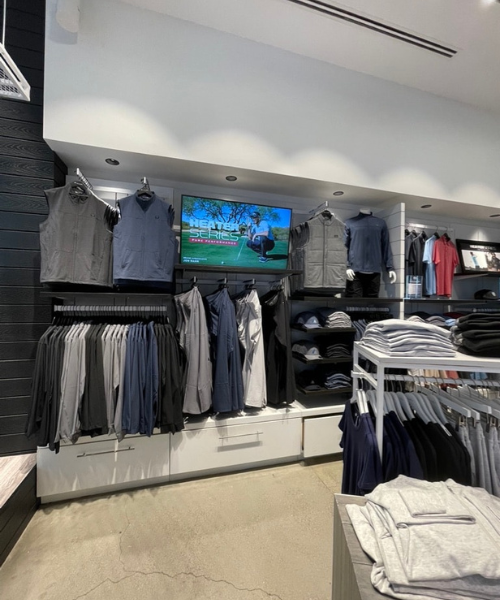
Installed by CrownTV, the Bonobos Brookfield store features a digital display that significantly elevates the retail experience. This storefront digital signage is not merely a screen; it’s a customized visual storyteller, encased to harmonize with the store’s branding and merchandising.
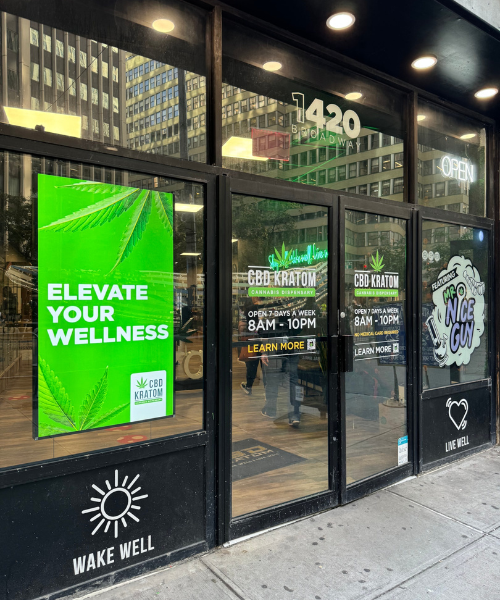
CBD Kratom SoHo, strategically located in the bustling streets of SoHo, now features a stunning 55″ high-brightness window display, expertly installed by CrownTV. This display isn’t just a piece of technology; it’s a beacon drawing in the high foot and vehicle traffic typical of SoHo.
Chase Contemporary, nestled in the heart of SoHo’s vibrant art scene, has embraced the digital age with a striking 75-inch high-brightness window display, installed by the skilled technicians at CrownTV. This display, fully tilted for optimal viewing, isn’t just a window into the gallery; it’s a dynamic canvas that showcases ever-changing art pieces.
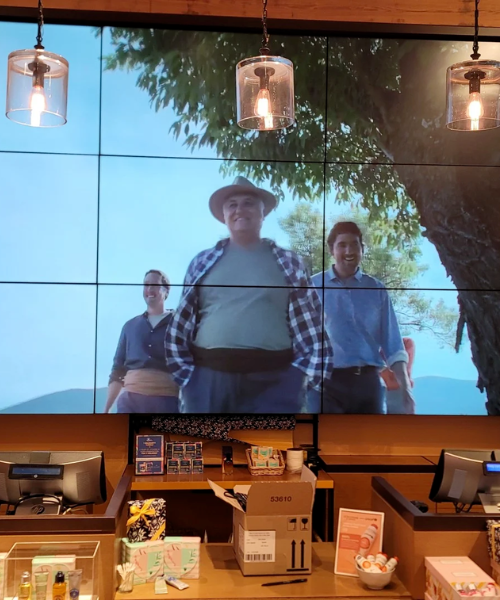
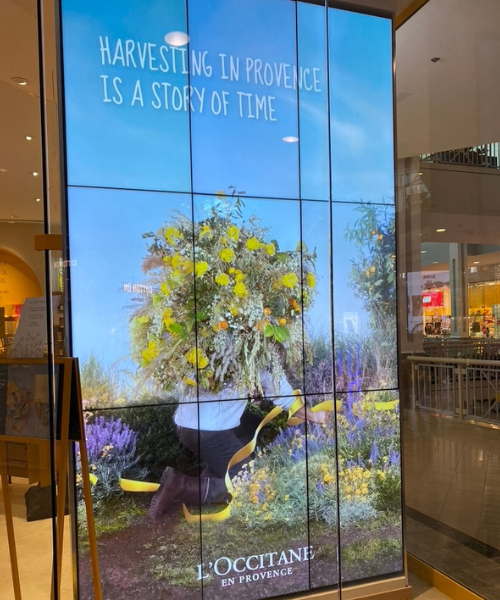
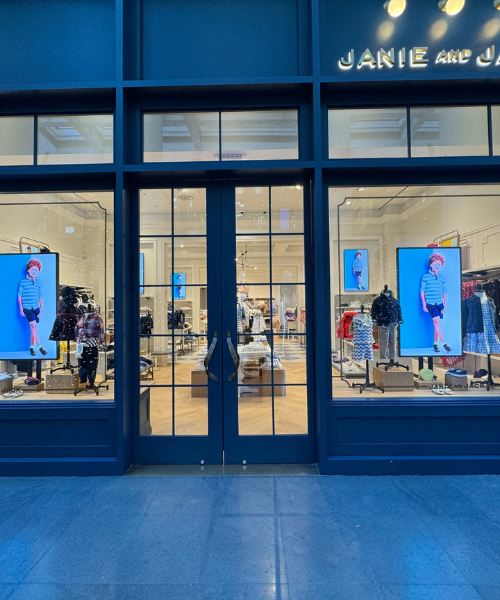
Janie and Jack in Brookfield Place Mall have taken their visual appeal to new heights with CrownTV’s installation of two synchronized 55-inch high-brightness digital window displays. These screens are in perfect harmony with four indoor 55-inch displays, creating a stunning, unified visual experience. Managed through CrownTV’s dashboard, the content across all screens is synchronized to deliver a powerful ‘wow’ effect as customers walk into the store.
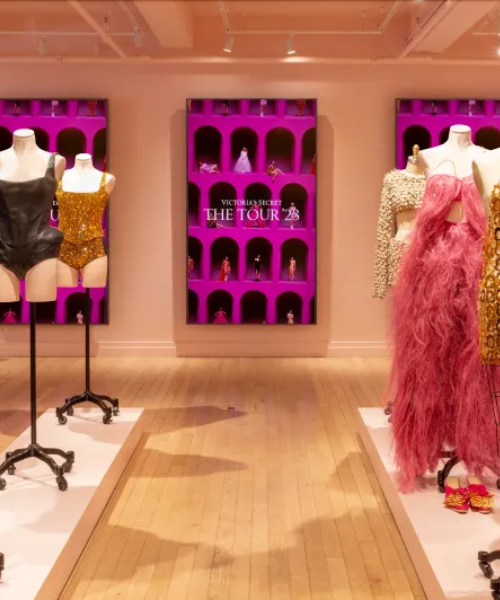
Victoria’s Secret & PINK on Fifth Avenue has redefined the shopping experience with breathtaking digital signage installation services by CrownTV. The store features four 98-inch displays and six 85-inch indoor digital displays, creating a fully immersive environment. The content on these displays is synchronized in pairs, with special content shown in the Victoria Cafe, enhancing the customer’s experience.
CrownTV implemented both the window and cash wrap displays, offering a full-service solution for these areas with heavy foot traffic. Our system allows the team to update video content remotely as necessary, keeping the displays lively and captivating. Additionally, specialized mounts were set up to secure the displays in a custom enclosure, boosting both the aesthetic and practical aspects of the arrangement.
Why Choose crownTV?
CrownTV goes beyond standard digital signage for hospitality by offering a comprehensive package of software, service, and hardware. Unlike competitors who only provide software, we also supply media players, TV displays, and installation services.
Enterprise-Grade Security
Manage your displays worldwide with our robust security measures, ensuring optimal flexibility without sacrificing safety.
Unified Dashboard & Content Control
Effortlessly oversee thousands of screens with precise access controls and content management features, including split-screen capabilities for diverse content delivery.
Exclusive Design & Affordability
Our products are developed through intensive R&D and strategic partnerships, reducing costs while maintaining high quality. This approach offers superior value, blending intuitive technology with durability for long-term cost savings.
Professional Installation & Expert Advice
Benefit from the convenience of having our local technicians install your screens. Plus, receive tailored advice on the best placement and setup to maximize the impact and functionality of your digital signage according to your specific needs and goals.
More than
Active displays
0
Used by
Businesses & organizations
0
Over
Years of digital signage experience
0
Serviced
countries across the globe
0
Let’s Talk
Get in touch for all of your digital signage needs
FAQs
How do I start using CrownTV digital signage in my hotel?
To begin with CrownTV digital signage, contact our sales team to discuss your specific hospitality needs. We provide complete solutions, including hardware, software, and full installation services, ensuring a seamless setup tailored to your hotel’s ambiance.
What types of content can I display to enhance guest experiences?
CrownTV allows you to display diverse content such as welcome messages, hotel services, event listings, local attractions, and promotional offers. Enhance guest engagement with videos, images, live data feeds, and interactive content, all supported in various media formats.
Can I manage CrownTV digital signage across multiple hotel locations remotely?
Yes, our cloud-based platform enables remote management of content for multiple hotel locations. Update and manage digital signage content from anywhere, ensuring consistent communication across all your properties.
How can CrownTV digital signage improve guest wayfinding within my hotel?
Implement dynamic wayfinding solutions with CrownTV digital signage to help guests navigate your hotel efficiently. Display interactive maps and directory information to guide guests to their rooms, facilities, and event locations within the hotel.
What customer support options does CrownTV offer for urgent needs in a hotel setting?
CrownTV provides comprehensive customer support through phone, email, and live chat. Our support team is especially responsive to the urgent needs of the hospitality industry, ensuring your digital signage operates flawlessly around the clock.
How does CrownTV ensure the security of content displayed in a hotel environment?
Our systems are equipped with encrypted communications and advanced data protection measures to secure your content against unauthorized access, safeguarding guest information and promotional content.
Can CrownTV digital signage interface with my hotel’s content management system?
Yes, CrownTV can integrate seamlessly with your existing hotel systems, such as event management and reservation systems, to display real-time updates and information, enhancing operational efficiency and guest communication.
Get Started with crownTV
Experience Digital Signage Made Easy, Professional, and Affordable.